

Issue #2(20) 2019 Lounge

Reinventing the space museum

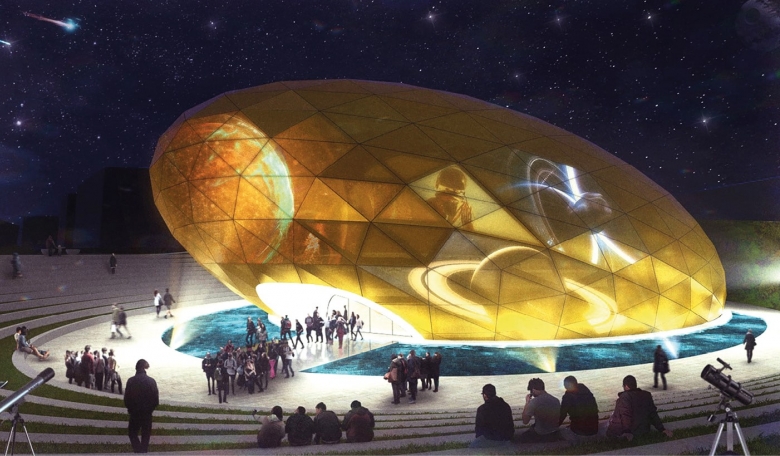
Planetarium: Seed of Life, proposal for the 2016 Kırsehir Planetarium Competition by Keremcan Kirilmaz & Erdem Batirbek.
Wael Bazzi Exosphere, Dubai, UAE

Visiting a space museum should be an ‘out of this world’ experience. After all, space is vast, mysterious, exciting and awesome – but do we get a real sense of this as a visitor? Wael Bazzi believes a change of focus is needed from traditional object-based curation to a blend of science and art, providing a platform for space scientists and creatives, where inspiration more that education is the mission of the new space museum. He argues that adopting a curatorial attitude usually reserved for contemporary art museums will include a larger section of society, broaden the space museum demographic and in particular, reach more adults.

Museums and the exhibits they house are designed to leave us with a sense of intrigue and escapism. The art of designing and delivering that experience is what’s commonly referred to as curation. In many ways, curation is a deeply intuitive form of visual storytelling, intended to strike the most emotive nerve in one’s audience.

What’s the most powerful museum exhibit you’ve ever visited? Perhaps a detailed neo-classical painting, a stunning natural artefact, a performance piece, or a contemporary interactive installation? Whichever it is there’s a good chance that the experience was intentionally designed to be as much an emotive one as it was informational.
If you already have a login and password to access www.room.eu.com - Please log in to be able to read all the articles of the site.

Popular articles

See also

Astronautics

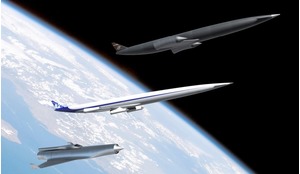
Delivering a revolutionary reduction in space launch costs

Astronautics

Small is the new big: why micro-satellites require new laws

Lounge

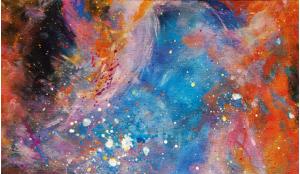
The universe in acrylics - an artist’s passion

Popular articles

Space agencies and the armed forces are susceptible to conspiracy theories, largely due to the perceived lack of transparency concerning their activities. Above: Major Jesse A. Marcel holds a piece of foil-lined material related to the Roswell, New Mexico, UFO incident at Fort Worth Army Airfield, 8 July 1947 (Photo: University of Texas at Arlington Libraries Special Collections Division). Astronautics

Winning the Space Race at home

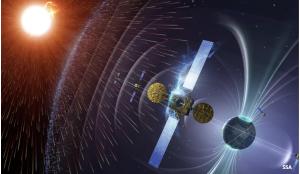
The space beyond Earth is awash with radiation – charged particles emitted from the Sun, confined within Earth’s magnetosphere or originating from the wider Universe, are a major cause of satellite anomalies and malfunctions. Opinion

Spacecraft protection and resilience - a convergent approach