


Issue #4(18) 2018 Opinion

The challenge of procreation for future off-world settlers

L. Joseph Parker MD, Arkansas, USA

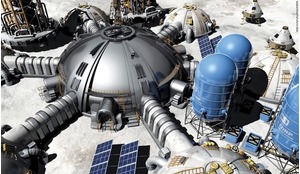
Technological challenges faced by the first people living permanently on the Moon, Mars and perhaps other bodies in the solar system are immense and low gravity will present significant problems, particularly when it comes to human health, gestation and infant development. Here, Dr L Joseph Parker examines some of the health problems of low gravity living and offers one innovative solution that might one day provide a viable option for an artificial gravity system.

More and more nations and private companies are setting goals of establishing human colonies in the solar system. While early settlers on the Moon and Mars will be carefully selected with precautions against reproduction, the permanent colonisation of these and other destinations will require colonists to partake in normal human reproduction cycles.

In the excitement to develop the technologies necessary to accomplish their goals it is important to include the long-term health of colonists.

If you already have a login and password to access www.room.eu.com - Please log in to be able to read all the articles of the site.

Popular articles

See also

Specials

The promise of solar energy for sustainable development and space exploration

Astronautics

Space 1.0 to Space 3.0: from Gagarin to market growth

Specials

Surviving bacteria in space

Popular articles

Operators who view space primarily as infrastructure, a functional zone for communications or defence, tend to see debris as an operational risk rather than a symptom of an extractive system. Astronautics

The imagined sky – power, inequality and the future of space sustainability

Portrait of astronaut and former director of the Johnson Space Center, Ellen Ochoa who in 1993 became the first Latina woman to go to space when she served on a nine-day mission aboard the Space Shuttle Discovery. Lounge

Art, imagination and the human spirit