

Internationally-agreed and regulated policies for what we do in space have become increasingly necessary the further we have explored and developed the space environment. We have only to look at the number of magazine articles on space debris to realise that space policy is no longer confined to the dusty academic universe and is something that serious space companies recognise as important for the commercial development of space.
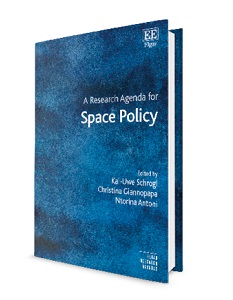
That said, this is demonstrably an academic text on space policy, complete with chapter notes, bibliographies and an index. As the blurb confirms, “Space policy is now a top priority in international relations”, although the book “takes the definition of space policy itself as an object of analysis rather than as an unquestioned premise”. Its 14 multi-author (and mutually peer-reviewed) chapters cover everything from space law and international cooperation to the use of space resources and the militarisation of space – indeed, everything you’d expect from a book on space policy.
The overall aim of the text is to “set out a forward-looking research agenda for the 2020s, identifying key problems and conflicts related to the topic and exploring policy, regulatory approaches and diplomatic mechanisms to reach possible solutions”. How well it does this will be down to individual readers, who each have their own views, opinions and preconceived notions; after all, if space policy was easy, it would have already been signed, sealed and delivered!
Sadly perhaps, policy is often development-driven and, of course, politically influenced – take orbital debris and resource exploitation as two examples – but there is a place for considered academic research on this multifaceted subject. This book is a useful contribution to the debate.