

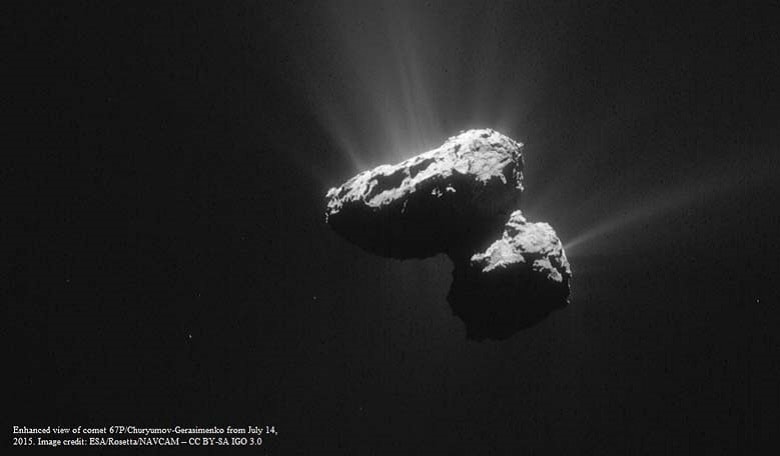
Data analysis from the Rosetta mission is giving scientists at the European Space Agency a lot to ponder.
The historic comet landing on 67P/ChuryumovGerasimenko last November has given humanity an unprecedented look at the processes that occur on comets.
ESA has just published a thrilling report on the matter in a special edition of Science magazine – and it should appeal to both the science community and laymen alike. On ESA’s site, you can even watch an animation of how the Philae lander approached the comet’s surface.
Of particular interest is the discovery of complex molecules on 67P/ChuryumovGerasimenko. Their presence could go along way towards explaining how biological life arose in our solar system.
What’s also obvious is that we are still at the beginning of analysing the full impact of the comet landing and the insights it has offered us. As usual, more knowledge results in more questions.