

European AstroFest, the UK’s longest-running annual astronomy conference and exhibition, returns to London this February, bringing together leading astronomers, space scientists and amateur astronomers for two days of talks, discussion and discovery.
Organised by Polestar Publications, the event takes place on 6-7 February at the Kensington Conference and Events Centre and continues a tradition that stretches back more than three decades. Since its beginnings in the early 1990s, AstroFest has established itself as a fixture in the European astronomy calendar, drawing audiences from across the UK and overseas.
The conference programme for 2026 reflects the breadth of modern astronomy and planetary science, with speakers ranging from academic researchers and mission scientists to communicators and astrophotographers.
Among those appearing this year are Prof Michele Dougherty of Imperial College London, discussing recent insights from the exploration of Jupiter and Saturn’s icy moons; Prof Stephen Eales from Cardiff University, reflecting on infrared astronomy and the legacy of the Herschel Space Telescope; and Gaitee Hussain of the European Space Agency, offering a perspective on ESA’s current and future missions.
Other highlights include a presentation of Islands in Infinity: Galaxies 3-D by Sir Brian May, Prof Derek Ward-Thompson and J-P Metsavainio, alongside talks exploring interstellar magnetic fields, meteorites, mirror-making and the latest techniques in astrophotography. The programme is designed to appeal both to specialists and to members of the public with a serious interest in space science.
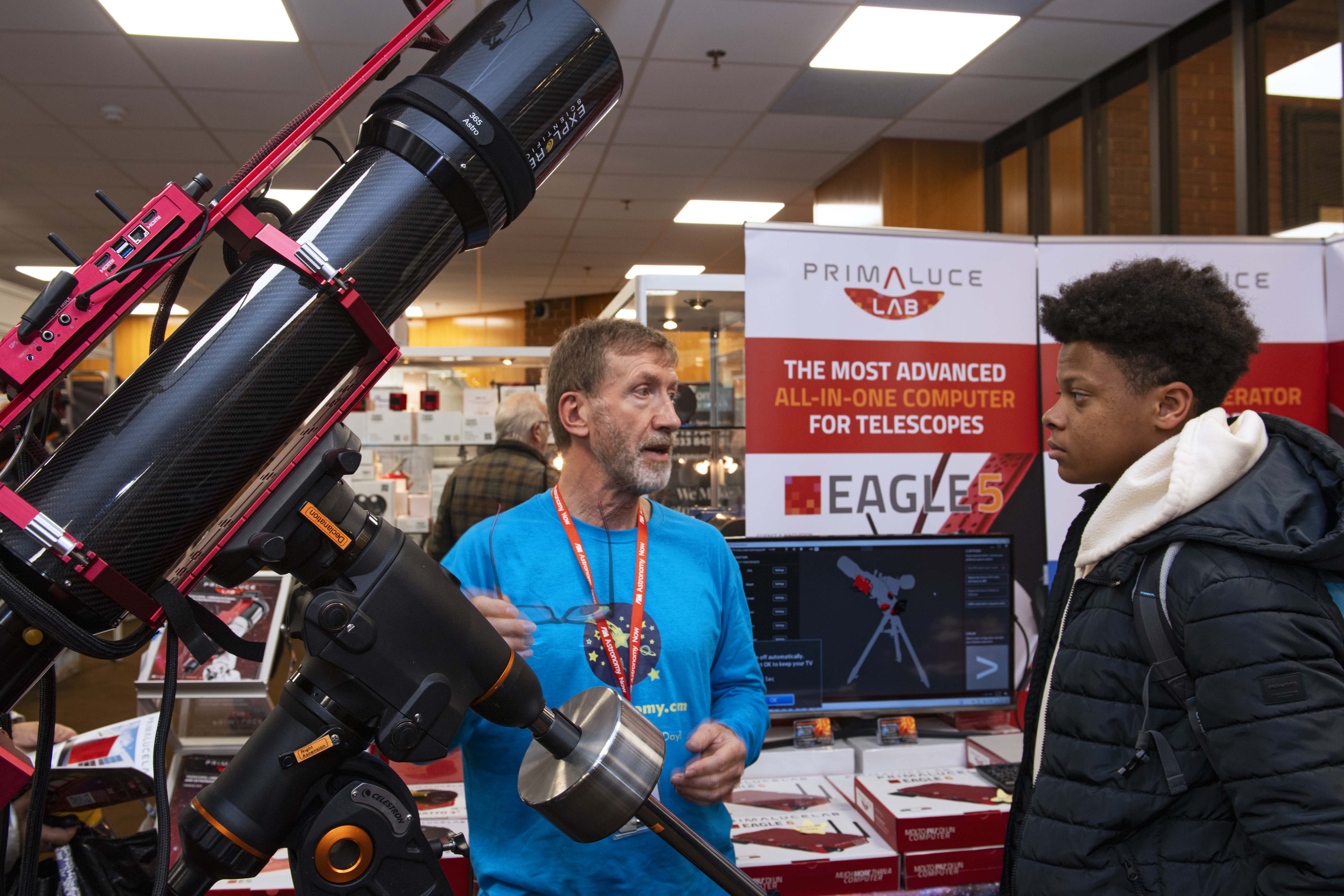
Alongside the conference, European AstroFest hosts a large multi-floor exhibition showcasing telescopes, mounts, cameras and accessories, as well as publishers, astronomical societies and outreach organisations, including ROOM Space Journal. For many of the 2,000 attendees, the opportunity to speak directly with equipment manufacturers, researchers and fellow observers is as much a draw as the formal talks themselves.
After the disruption of the pandemic years, AstroFest re-established its role as a meeting place for the astronomy community, balancing cutting-edge science with practical engagement and informal networking. Its continued popularity reflects a wider public appetite for space science at a time of renewed exploration, from planetary missions to next-generation observatories.
Steve Young, organiser of European AstroFest, says the event remains rooted in the idea of bringing the whole astronomy community together in one place.
“AstroFest has always been about making astronomy accessible without dumbing it down,” he said. “Whether you’re a professional researcher, an experienced observer or someone who’s just bought their first telescope, the aim is to leave inspired, informed and excited about what we’re discovering in the universe.”
For details of the programme and to book tickets (full conference, day passes or just the exhibition) visit: https://europeanastrofest.com/