 20 June 2016
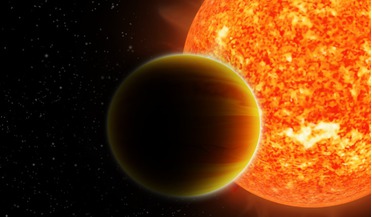
Trio of hot Jupiters give clue to their formation
20 June 2016
Trio of hot Jupiters give clue to their formation
... can persist for very long timescales. Since 2008, an international team of researchers has used high-precision radial velocity (RV) measurements to detect the signatures of hot Jupiters around main-sequence stars – stars such as our Sun – and...
 02 August 2016
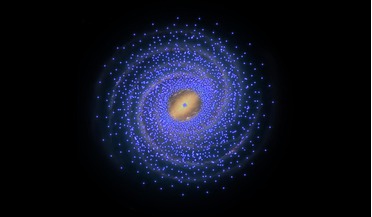
Astronomers detect large void in the centre of our Galaxy
02 August 2016
Astronomers detect large void in the centre of our Galaxy
... be revealed, Matsunaga and team conclude ‘that detailed observations of these objects, such as high-resolution spectroscopy for radial velocities and metallicities, would provide a new path to a global picture of Galactic structure and evolution.’
 14 September 2016
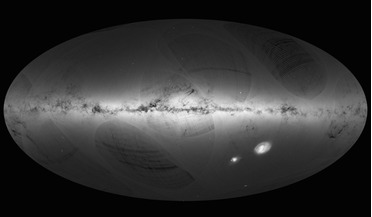
Gaia's first map hints at big things to come
14 September 2016
Gaia's first map hints at big things to come
... – just one per cent of the stars in the Galaxy – up to seventy times and use the positional and radial velocity measurements to answer questions about the origin and evolution of the Milky Way. Launched 1000 days ago...
 23 June 2017
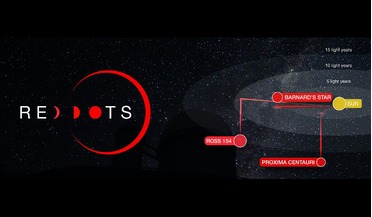
Will our next nearest exoplanet be found soon?
23 June 2017
Will our next nearest exoplanet be found soon?
... respectively. Photometric observations of the stars have already begun by the scientific team using ESO’s High Accuracy Radial velocity Planet Searcher (HARPS) and other instruments across the globe and spectrographic observations started two days...
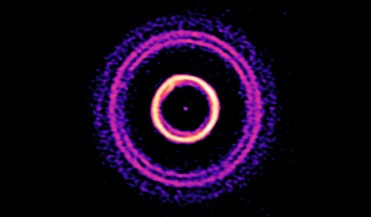 17 June 2019
Filling in the gaps of Jupiter-like planet formation
17 June 2019
Filling in the gaps of Jupiter-like planet formation
... unobserved in past searches, such as those conducted by the Kepler Space Telescope transit survey and other past radial velocity observations – which looks for telltale wobbles in a star’s motion to help locate an exoplanet – as they look at planets...
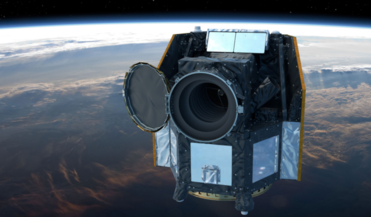 16 December 2019
Cheops, ESA's exoplanet watching telescope launches tomorrow
16 December 2019
Cheops, ESA's exoplanet watching telescope launches tomorrow
... rocky worlds or perhaps harbouring an ocean for example. “By measuring the radius and by knowing the mass through radial velocity, we can place these different planets and try to figure out what they’re made of,” said Willy Benz...