

Mars was a target for human exploration well before the dawn of the Space Age, but now that the technology is becoming available the questions concerning its practicability are increasing. In this thought-provoking article, Donald Robertson addresses some of those questions and strives to maintain an optimistic viewpoint.
Human culture, like anything else, cannot develop, or even survive, in a closed system. Human thought requires input from external sources, gained by observation and physical interaction with new environments. It is no accident that the cultural and technological renaissances in central Europe, between the 15th and 17th centuries, occurred during a period of unprecedented physical exploration and discovery. For example, while exploring the globe, Britain’s navy drove innovation in everything from nutrition to navigation and timekeeping, and what they discovered pushed the arts and sciences in new and surprising directions.
Russian astronautics pioneer Konstantin Tsiolkovsky, who published much of the mathematical underpinnings of early spaceflight in 1903, said it best: our planet is “the cradle of the mind, but one cannot live in the cradle forever”.
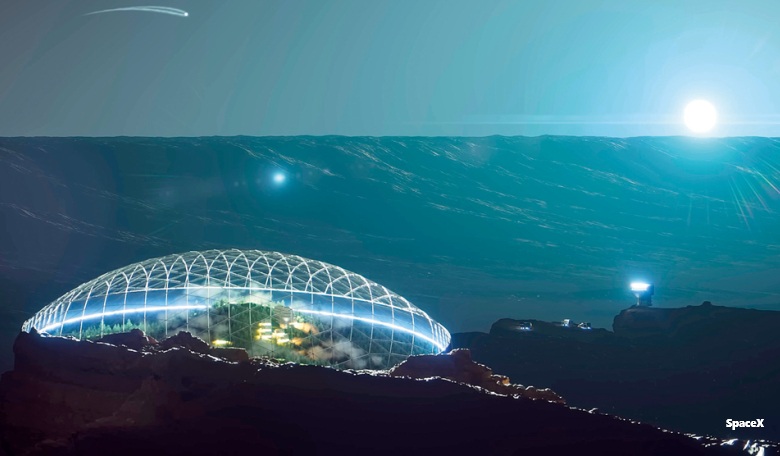
Occasionally, someone will look wistfully to the outer solar system, or even to interstellar space, but Mars remains the cultural goal. It is a dream in the collective mind of would-be space explorers, like Elon Musk, who correctly argues that, for humanity to have a positive future, we cannot forever remain confined to one planet. However, as we have learned more about the Martian environment, it has become clear how inhospitable it is. Despite the doubts, many of us hold on to the Martian dream.
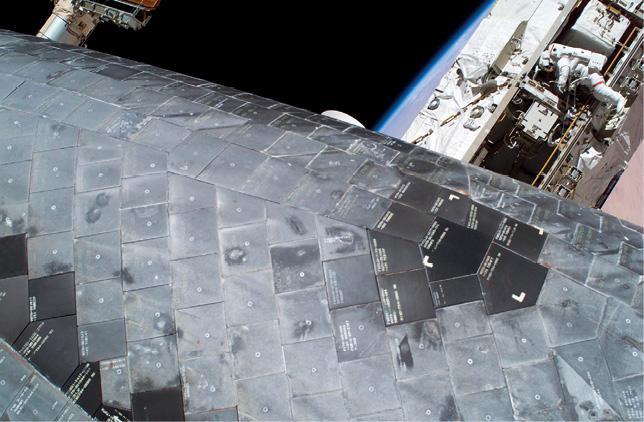 The third EVA (extravehicular activity) of the STS-114 mission in 2005 included taking a close-up look and the repair of the damaged heat shield. Gap fillers were removed from between the orbiter’s heat-shielding tiles located on the craft’s underbelly. Never before had any repairs been done to an orbiter while still in space. JAXA astronaut Soichi Noguchi can be seen in the background perched on a Space Station truss. Heat protection is still one of the biggest challenges for manned spaceflight missions.
Key questions
Occasionally, someone will look wistfully to the outer solar system, or even to interstellar space, but Mars remains the cultural goal
Measuring the costs and benefits of sending people to Mars is all well and good, but is realising the Martian dream even possible and, if it is, will anyone actually do it?
In recent years, a private company, SpaceX, has driven much of the interest and progress toward exploring Mars. As this article went to press, both SpaceX and NASA pivoted toward developing Earth’s moon as a more immediately achievable goal. If history is any guide, that will not last for long. Humanity may well return to the lunar surface in the next few years, but our gaze will soon drift back to a world we envision more like our own.
To determine whether humans can successfully explore and inhabit Mars, several questions must be answered: the most obvious include whether humans can get to Mars, land successfully and then return to Earth. However, there are many deeper questions to consider: can humans survive on Mars, ‘live off the land’, finding and refining materials of sufficient quality and quantity to support human life… and can we protect ourselves from the many natural hazards? Moreover, can we discover and send valuable materials or products back to Earth to trade for what we cannot find or make on Mars? In other words, can we create a Martian economy? Finally, can we make the remote and isolated frontier of Mars a place where people want to stay, and generate wider benefits that make the exercise financially and culturally worthwhile?
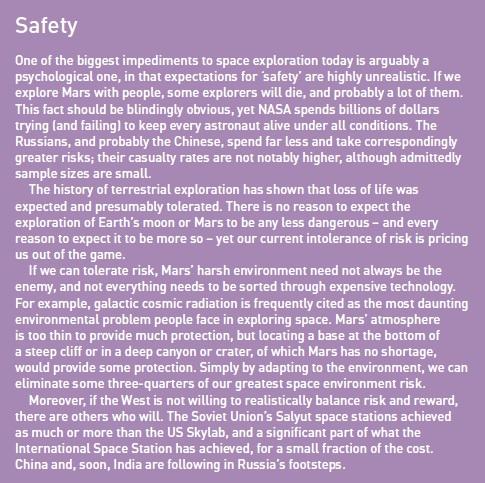
Few people have thought much beyond the first, obvious set of questions, but this will have to change if the first crewed Mars mission is to be more than a flags and footprints endeavour.
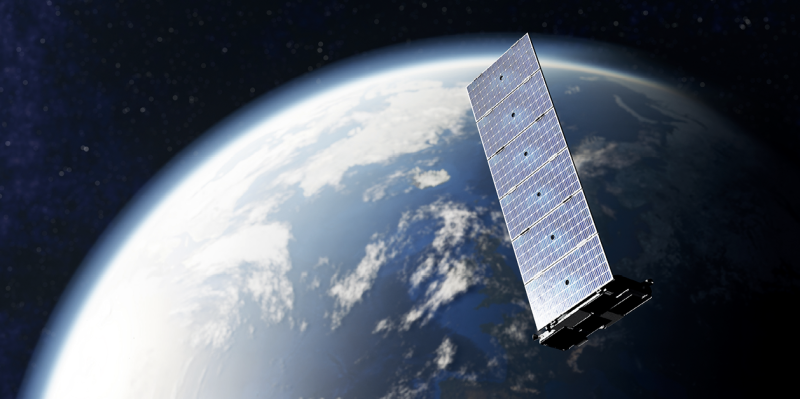 Profits from SpaceX’s Starlink satellite network have provided funding for Starship’s many test flights.
Can we get there?
As we have learned more about the Martian environment, it has become clear how inhospitable it is
Starting with the easier questions, the answer to whether we can get to Mars is becoming clearer. SpaceX, by any measure the most innovative and successful space development company of our time, is developing Starship, a new spacecraft explicitly designed to send humans to Mars at far lower cost than previously considered possible. Many in the traditional space engineering community dismissed Starship as an unachievable fantasy, but the ‘Mars community’ consider this vehicle all but a fait accompli. This author has sustained considerable doubts, but has also learned not to underestimate SpaceX.
Starship involves many counterintuitive technologies and operations. These include a stainless steel structure that can accommodate high-stress manoeuvres while deep in the atmosphere and launch towers that literally catch both giant stages to enable rapid turnarounds between flights. However, SpaceX was unable to avoid using fragile heat-resistant tiles, similar to those that contributed to the loss of two Space Shuttles and their crews, and failures of sample tiles have caused heat damage on every Starship test to date. Musk frankly admits that re-entry heat protection is the hardest part of the project.
The Starship design clusters dozens of extraordinarily large and powerful engines that must operate in close proximity without interfering with each other and without heavy shielding. It is worth remembering that the Soviet Union lost the Moon race in part because it could not make a similar vision work even once on the N1 lunar rocket.
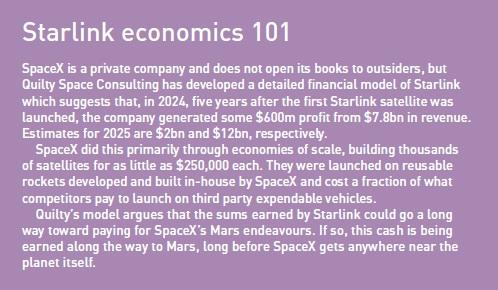
Developing and testing a spacecraft able to send people to Mars requires more than technology. It takes unprecedented quantities of mostly-private capital. To his credit, Musk addressed this problem early on by developing Starlink to raise those funds [see Box 1: Starlink Economics 101]. Starlink provides fast, reliable and relatively low-cost Internet access worldwide and has rapidly become a commercial success, probably beyond even Musk’s dreams. But more importantly, Starlink has funded Starship’s many test flights.
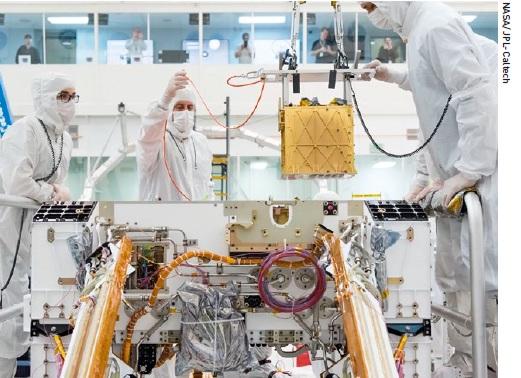 MOXIE is lowered into the chassis of NASA’s Perseverance rover in 2019. During the mission, MOXIE extracted oxygen directly from the Martian atmosphere. The system was run multiple times over a period of months, producing typically six grams of pure oxygen per run for a total of 122 grams. The test surpassed its goals with no serious issues and should be scalable to supply a human mission.
So, Musk’s most important insights were not designing rockets around ease of manufacturing to reduce costs, or reusing first stages to further reduce launch costs, or even building a rocket sized to launch almost anything, thus creating economies of scale in a limited market. He seems to have realised that getting to Mars would require an integrated economic ecosystem. That meant finding the markets that could pay for building the satellites and rockets that would themselves raise enough additional funds to build rockets and spacecraft optimised for Mars missions. And all of that needed to succeed in rapid succession before the money ran out and well before the first trip to Mars. Put simply, while everyone else was still dreaming about Mars exploration, Musk figured out how to pay for it.
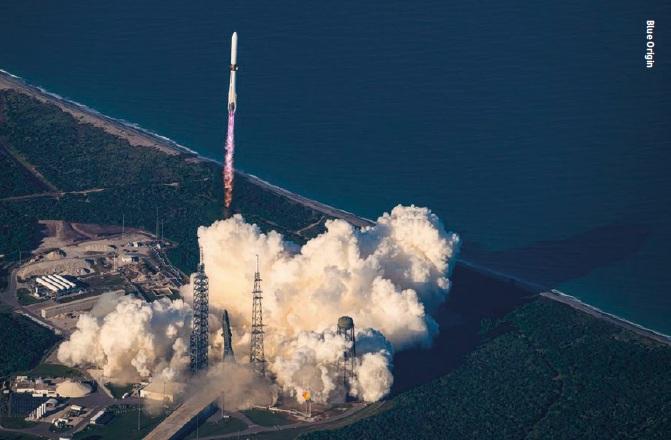
After a very slow start, Jeff Bezos’ Blue Origin is also making progress, albeit focussed on reducing heavy launch costs and building lunar landers for NASA.
So far, this article has not brought NASA’s Mars plans into the discussion. SpaceX is at the beginning of a very long and difficult road, but at least it is on that road.
To determine whether humans can successfully explore and inhabit Mars, several questions must be answered
NASA has developed, demonstrated and distributed a lot of the necessary technologies, and without NASA none of this would be possible. Unfortunately, NASA has also generated countless studies and plans that last only until the next presidential administration. It is hopelessly bogged down in inefficient and overly conservative development practices, local conflicts over jobs, contractor greed and now – as if all that were not enough – political conflict.
NASA’s new Administrator, Jared Isaacman, is attempting to simplify the Artemis lunar program, but it remains to be seen whether vested interests in the Senate and NASA will let him.
SpaceX, in contrast, has combined a relentless goal-oriented drive toward a singular vision with the wherewithal to take great technical and financial risks. With its test, fail, fix and test again philosophy, SpaceX has demonstrated technological systems that were thought to be impractically difficult… and done so in an astonishingly short time.
SpaceX’s ostensible competitors are focused on copying the successful Falcon 9, not competing with the impending Starship-launched Starlink or developing new ideas of their own. All monopolies eventually fail, but right now SpaceX’s monopoly looks very durable.
That said, with his newly aggressive political meddling, Musk is courting unnecessary trouble for his companies and his Mars and lunar ambitions. Unfortunately, he and his political patrons have succeeded in politicising a famously bipartisan dream. That, more than any technical or management issue, may be what finally throws a wrench into the SpaceX machine… and with it the possibility of getting to Mars
Can we live on Mars?
Assuming we can get to Mars, the more difficult questions become relevant. The most important resource needed for human survival and technology is oxygen. We need it with a buffer gas like nitrogen to breathe, with hydrogen as water to drink and as an oxidiser for rocket fuel. Oxygen is heavy, making it expensive to deliver from Earth. Obtaining a ready supply of local oxygen is likely to be a financial requirement for the success of even the very first Mars mission.
Put simply, while everyone else was still dreaming about Mars exploration, Musk figured out how to pay for it
Of course, oxygen can readily be separated from water and water ice is known to exist near the surface at high Martian latitudes. Even so, a first mission is unlikely to be in a position to prospect for and mine underground water.
Here, NASA has come to the rescue. The Perseverance Mars rover is exploring an ancient river delta in Jezero Crater. It carries a small add-on payload called MOXIE (for Mars oxygen in situ resource utilisation experiment) and, for the first time, has enabled a small, relatively low-cost gadget to process an essential Martian resource into a usable form.
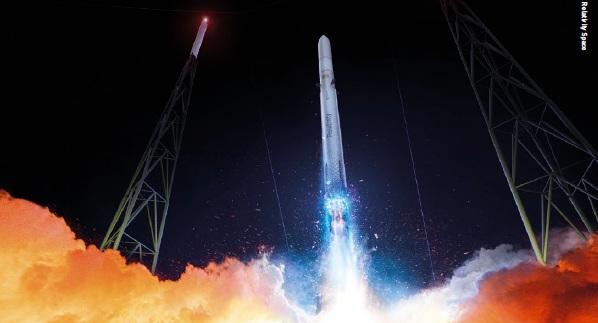 Relativity Space’s two-stage reusable Terran R rocket is one of several launch vehicles in development that use methane/liquid oxygen propellants. This combination will also be used in SpaceX’s Starship, United Launch Alliance’s Vulcan Centaur, Blue Origin’s New Glenn and Rocket Lab’s Neutron.
MOXIE takes in Martian air and filters out the dust, mechanically compresses the air, heats it and passes it over a nickel-ceramic cathode. The process decomposes carbon dioxide from the atmosphere into carbon monoxide (CO) molecules and oxygen ions, the CO being released back into the atmosphere, while the oxygen ions are combined into molecules and stored.
The system was run multiple times on Mars over a period of months, producing typically six grams of pure oxygen per run for a total of 122 grams. The test surpassed its goals with no serious issues and should be scalable to supply a human mission. Since MOXIE produces oxygen directly from the atmosphere, no industrial mining or processing of water is required. Non-trivial energy is required to run the heater and compressor, but not so much that it cannot be generated with solar power even in Mars’ weak sunlight.
With its test, fail, fix and test again philosophy, SpaceX has demonstrated technological systems that were thought to be impractically difficult…and done so in an astonishingly short time
To return to Earth, you need rocket fuel to burn with the oxygen. Methane/liquid oxygen (LOX) rockets are being developed by SpaceX, Blue Origin and various Chinese organisations, but they are not as efficient as hydrogen/LOX engines. However, methane is easier to store than hydrogen, because it does not boil away as easily, and can be made on Mars. The heaviest part of methane is carbon, and carbon dioxide is the major part of Mars’ atmosphere, meaning that it does not need to be imported from Earth.
Methane is synthesised from carbon dioxide using a number of catalysts, but requires the addition of four hydrogen molecules to each carbon dioxide molecule. Hydrogen is scarce on Mars, but is available in water ice – so we are back to mining ice. While it would be difficult to excavate ice on the first mission, it should be relatively straight forward on later missions. However, unlike obtaining oxygen with MOXIE, generating methane has not been demonstrated on Mars; it is a more complex process that might be harder to scale.
Nevertheless, without belittling the difficulties, it should be possible to generate all the components of rocket fuel and life support on Mars. Indeed, Mars mission analyst Dr Donald Rapp believes the simplest solution for the first Mars mission is to use Starship to carry the hydrogen as water from Earth. Starship’s likely low costs should make that more reasonable than carrying heavy commodities from Earth has appeared in the past.
So, yes, we can survive on Mars at least for months or a few years – as long as food and the comparatively small mass of other supplies that cannot be generated on Mars are delivered from Earth. And as long as nobody asks awkward questions about growing food, conducting complex surgery or bringing healthy babies to term in the low gravity!
Too little data exists to speculate about a permanent and fully self-sufficient settlement, so the only way to determine if that is possible is to establish the Mars base, live there, and find out. Moreover, to achieve even a basic base, we need to take a hard look at some of the other practical issues such as safety and planetary protection.
 In the same way that our species learned to live in the Canadian arctic (shown here) and the Arabian deserts by adopting new ways of life, human culture will adapt to Mars. The harsh environment may also foster invention as technologies adapt, change and advance.
A Martian economy?
Unfortunately, NASA has also generated countless studies and plans that last only until the next presidential administration
As if the purely technical issues were not enough, there remains the question of whether we can develop an Earth-Mars economy. And can we create a sufficiently high quality of life for people to want to stay on Mars?
If SpaceX is seriously considering a cis-Mars resource and trading economy, it is keeping it quiet. This is understandable, as it has a lot on its plate just getting Starship to work and launching Starlinks to pay for it. Indeed, trade might be the hardest nut to crack. Without a Martian economy, even a basic outpost on Mars will ultimately fail.
There are not a lot of commodities known to be available on Mars that are needed on Earth, let alone valuable enough to make them worth transporting from Mars. The one obvious exception is knowledge, which in and of itself weighs nothing and is easy to send to Earth.
Our rovers have determined that, in the distant past, Martian conditions were somewhat similar to those on Earth when life first appeared and conditions suitable for sustaining life may persist in some locations to this day, particularly deep underground. It is impossible to prove the negative – that life never developed on Mars – but if it did and we look long and hard enough, we might find it and prove that terrestrial life is not unique. That is knowledge worth having.
Alternatively, Martian life may have developed in the distant past and now be too rare to find, or it may be extinct. Either way, we can learn valuable ecological lessons from studying biological survival under difficult circumstances. If it turns out that Martian life exists but is based on entirely different chemical or biological models, we could learn more about terrestrial life by studying the possible alternatives than we ever could studying only one model. So, all of this knowledge could be ‘exported’ to Earth.
Without belittling the difficulties, it should be possible to generate all the components of rocket fuel and life support on Mars
People on Mars will be isolated in profoundly different but often beautiful and spectacular surroundings. Living in that environment is likely to stimulate people to invent new arts they never would have thought of back home. Art can be traded for those foods, trace elements, microorganisms and microelectronics that cannot be created on Mars. Colourful or rare minerals may be valuable simply by virtue of their beauty, rarity or provenance.
It is too easy to focus on the difficulties and hardships faced by those living day-to-day in a profoundly alien environment, as many doubters have. On Mars, that includes a daunting list: gravity 38 percent of Earth’s; air pressure less than one percent of Earth’s; high pressure differentials; dim and reddish light; and ever-present dust averaging a quarter the diameter of talcum powder and subject to ‘electrostatic cling’. Individually, none of these are insurmountable and they also present opportunities. In the same way that our species learned to live in the Arabian deserts and the Canadian arctic by adopting new ways of life, human culture will adapt to Mars.
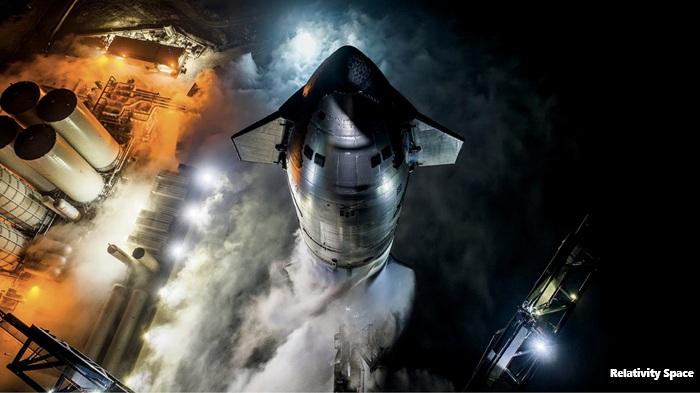 SpaceX’s Starship is designed to carry crew and cargo to Earth orbit, the Moon, Mars and beyond. The company says that establishing a self-sufficient city on Mars will require upwards of one million people and millions of tonnes of cargo to be delivered to the Red Planet and the mission objectives of the first explorers will include surveying local resources, preparing landing surfaces, setting up power generation and building habitats.
The difficult environment may also become the mother of invention as technologies adapt, change and advance. Over time, that will influence culture and governance on Mars, and eventually back home on Earth.
This kind of ‘cultural trading’ appears unlikely by itself to pay a base’s import bills, but there does appear to be a subset of human beings who will pay for the dream of Mars without any immediate prospect of getting there themselves. Crucially, SpaceX has learned that we do not need to find all the money needed to get to Mars in advance. The process of enabling Mars exploration – developing more efficient rockets and creating new industries like Starlink to pay for it – can generate immense wealth long before anybody sets off for the red planet.
Will we go to Mars?
Given our present level of knowledge, experience and technology, it is not meaningful to look much beyond getting to Mars and establishing a base similar to what we have created in Antarctica
This article has painted a generally positive and optimistic picture. Yes, it looks like we could get people to Mars if we wanted to and keep them alive between re-supply launch windows. With new rockets and spacecraft under development by SpaceX and others, the cost, though still very high, could be far less than it would have been even a decade ago. To a significant degree, we could live off the land to reduce expenses and keep groups of scientists, engineers and explorers alive for extended periods.
That said, given our present level of knowledge, experience and technology, it is not meaningful to look much beyond getting to Mars and establishing a base similar to what we have created in Antarctica. So, Elon Musk’s ‘city on Mars’ remains a question for the future.
Life has spent over four billion years relentlessly spreading over our planet. Humanity has spent tens of thousands of years exploring our planet’s surface for all manner of reasons, few of which can be defined as ‘cost effective’. There is no reason to expect either of these ancient processes to come to a screeching halt at the top of our planet’s atmosphere. Indeed, as the Space Age approaches its seventieth year, they show no signs of doing so.
About the author
Donald F Robertson is a freelance writer based in San Francisco and has published articles on many aspects of space exploration and development. He is also an angel investor or small shareholder in many of the Commercial Lunar Payload Services companies. In his spare time, Donald is a musician and performs for Scottish country dance bands.