 April 2017
Mega-challenges for mega-constellations
April 2017
Mega-challenges for mega-constellations
... infrastructure on the ground. Today, internet broadband services are rendered through telecommunication providers using satellites in geostationary orbit but their significant data latency (the amount of time it takes to send information from one...
 February 2021
In-orbit servicing and insurance – a marriage of convenience?
February 2021
In-orbit servicing and insurance – a marriage of convenience?
... issues faced by the space community today, including the increased production of space debris, the limited number of geostationary orbital slots and the general changes in space business models requiring an ever more agile approach. IOS is no longer...
 June 2022
In-orbit servicing and the future of the space industry
June 2022
In-orbit servicing and the future of the space industry
...and keeps doing so even after completing its mission, in the form of orbital debris. Orbital space is also vast: the sphere enclosed by the geostationary orbit, the highest orbit used for satellite applications, is 268 billion cubic kilometres, which...
 September 2023
Space sustainability and the global commons
September 2023
Space sustainability and the global commons
... particularly well: the International Telecommunication Union (ITU), which regulates international frequency coordination and geostationary orbital slot allocation, and the International Civil Aviation Organization (ICAO) which is responsible for...
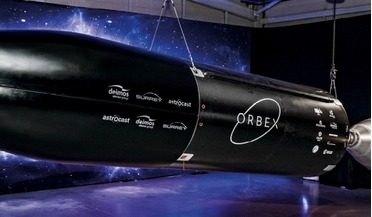 April 2019
Building the UK’s first spaceport
April 2019
Building the UK’s first spaceport
... than 7000 potential satellites. LEO satellites are designed with a shorter life expectancy than those in high orbits, such as geostationary orbit (GEO), creating a strong ongoing demand for upgrade and replenishment. Analysing why the UK should host...
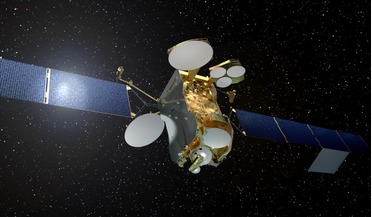 18 October 2017
Europe’s first all-electric telecom satellite breaks record
18 October 2017
Europe’s first all-electric telecom satellite breaks record
... operation strategy and the plasma thruster technology we implement, we have completed the fastest electric orbit raising ever from transfer to geostationary orbit, which will allow Eutelsat to put their electric satellite in service in a record time...