

Veteran space journalist Ken Kremer has spent decades reporting from NASA’s Kennedy Space Center. Earlier this year the Artemis II mission gave him the opportunity to witness something he had dreamed about since childhood – astronauts once again departing for the Moon. This is his personal reflection on a remarkable day in space history.
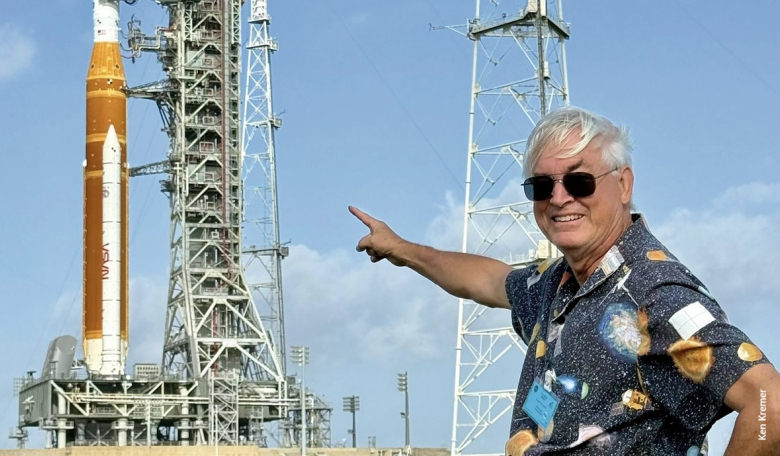
Some dreams stay with you for a lifetime. On 1 April 2026, standing beside the current iteration of NASA’s famous Countdown Clock at the Kennedy Space Center Press Site, one of mine finally came true. As Artemis II thundered into the Florida sky carrying four astronauts on humanity’s first crewed journey towards the Moon in more than half a century, I realised I was witnessing history.
This time I wasn’t watching on a television screen. I was there as a journalist – photographing, reporting and sharing one of the most significant milestones in human spaceflight since Apollo.
For me, Artemis II was much more than another launch. It was the culmination of a lifelong fascination with space exploration that began as a young boy growing up in New York during the Apollo era.
Like millions around the world, I was captivated by President Kennedy’s vision, NASA’s achievements and the extraordinary courage of the astronauts who ventured into the unknown. I watched every Mercury, Gemini, Apollo and Skylab mission, read everything I could find about space exploration and vividly remember gazing up at the Moon during the Apollo missions, imagining the explorers making history hundreds of thousands of miles away.
Those early years shaped my outlook on science, exploration and discovery. They also inspired dreams of becoming an astronaut myself. Reality, of course, had other ideas.
As the Apollo programme came to an end and NASA’s ambitions were scaled back, I turned my passion for science into a career, becoming a research chemist working in the United States, Germany, France, Switzerland, Italy and Argentina. Although my professional life took a different direction, my fascination with space never diminished and eventually it found another outlet.
For me Artemis II was much more than another launch. It was the culmination of a lifelong fascination with space exploration that began as a young boy growing up in New York
Some two decades ago I began covering launches and planetary missions from the Kennedy Space Center, combining my scientific background with journalism and photography. What started as an opportunity soon became a second career.
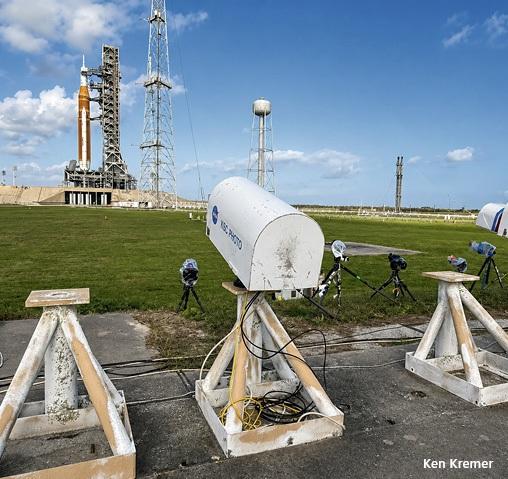
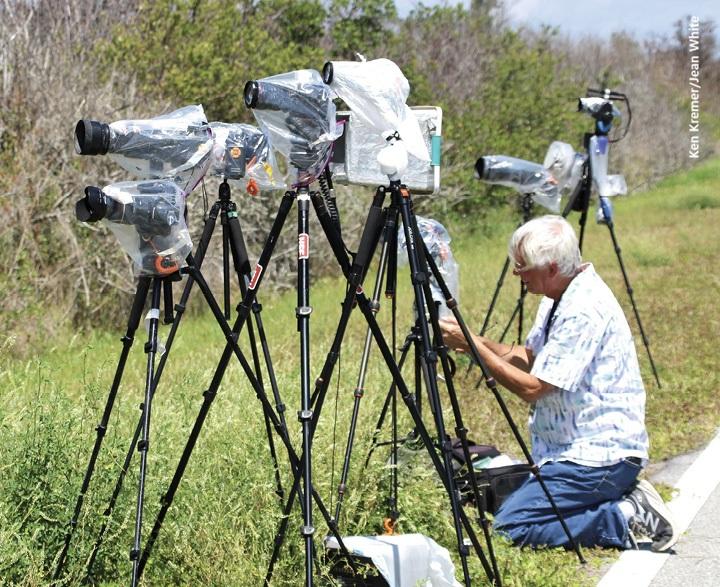 NASA’s Artemis II Space Launch System (SLS) rocket and Orion spacecraft a at Launch Complex 39B Kennedy Space Center in Florida with remote camera setups in the foreground.
The Space Shuttle era gave me a front row seat to some of NASA’s most remarkable achievements and I was privileged to report on numerous Shuttle launches and landings, witnessing first-hand the extraordinary complexity of human spaceflight and the dedication of the thousands of people who made every mission possible. It also opened doors to spacecraft processing facilities, astronaut interviews and mission briefings, providing an insider’s view of America’s space programme that I could only once have dreamed about.
Those years covering the Shuttle programme shaped my approach as a space journalist. They also reinforced an uncomfortable reality. Following the Shuttle’s retirement in 2011, the United States – at least until the human-rated SpaceX Falcon 9 came along – no longer had the capability to launch its own astronauts into deep space. The Moon once again seemed frustratingly distant.
Artemis changed that and the programme represents something unique. For the first time since Apollo 17 left the Moon in December 1972, astronauts are once again venturing beyond low Earth orbit (LEO). Artemis II was a crucial step to demonstrate the Orion spacecraft and Space Launch System could safely carry people around the Moon and back to Earth. It marked the beginning of humanity’s return to deep space.
Having followed the programme through years of development, delays, engineering challenges and countless media briefings, finally seeing the completed vehicle standing on Launch Complex 39B ready for liftoff was a deeply emotional experience.
In the days leading up to countdown I had the opportunity to meet the four Artemis II astronauts on several occasions, listen to their thoughts about the mission and ask questions during media events. Their enthusiasm was infectious and their sense of responsibility unmistakable. Together they represented not only the USA and Canada, but an entirely new generation of explorers.
Launch day itself exceeded every expectation. Watching the 98-metre-tall Space Launch System (SLS) ignite in broad daylight is an experience almost impossible to describe. The brilliant flash from the engines momentarily overwhelmed both eyes and cameras before the deep rumble arrived, building into an ear-splitting roar that shook the ground beneath us.
Slowly at first, then gathering speed, the giant rocket climbed above the launch pad, arcing gracefully into the Florida sky on its journey towards the Moon.
I had cameras positioned around the launch complex as well as several with me at the Press Site but, for a few unforgettable moments, photography became secondary. Like everyone around me, I simply watched. After waiting more than 50 years to witness astronauts depart for the Moon, I wanted to absorb every second.
Artemis II also reminds us that exploration is a long game. More than 50 years separated Apollo 17 from humanity’s return to lunar space
The mission itself surpassed expectations. During their 10-day flight the crew travelled around the far side of the Moon, returning spectacular imagery and reminding the world just how inspiring human exploration can be. Their safe return represented the culmination of years of work by thousands of engineers, technicians, scientists and support staff whose dedication made the mission possible.
As a journalist, I have always believed that space exploration is about far more than rockets and spacecraft. It is about curiosity, international cooperation, scientific discovery and inspiring future generations to look beyond today’s challenges.
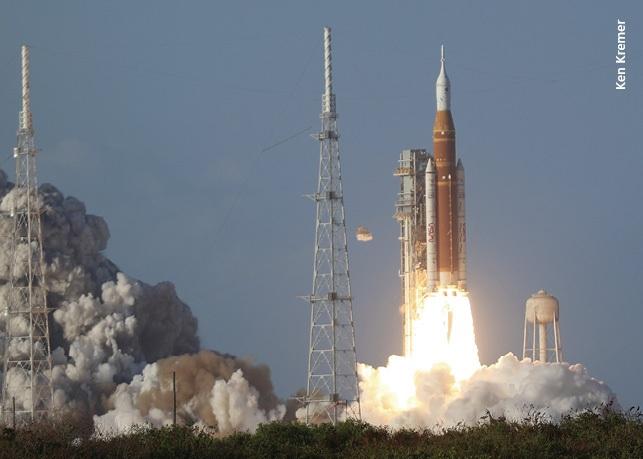 Artemis II launch photos by Ken Kremer.
Throughout my career I have tried to help tell those stories, whether reporting from launch sites, visiting spacecraft processing facilities or explaining complex missions to audiences around the world. If even a handful of young people are encouraged to pursue careers in science or engineering because of that work, I consider it time well spent.
Artemis II also reminds us that exploration is a long game. More than 50 years separated Apollo 17 from humanity’s return to lunar space. Progress has not always been straightforward and there have been many setbacks along the way. But the desire to explore has endured.
Standing at Kennedy Space Center watching the SLS disappear into the brilliant blue Florida sky, I found myself thinking back to the young boy who had watched Apollo on television all those years ago.
He could never have imagined that one day he would stand beside NASA’s iconic Countdown Clock, camera in hand, reporting humanity’s return to the Moon. After more than half a century it was a dream that had finally come true.
About the author
Dr Ken Kremer is a pharmaceutical research chemist, space journalist, photographer and Founder/Managing Editor of Space UpClose. Based on Florida’s Space Coast near NASA’s Kennedy Space Center, he has covered human and robotic spaceflight for more than two decades and has witnessed over 400 rocket launches. He has written more than 1800 articles on space exploration, contributed 14 NASA Astronomy Picture of the Day (APOD) selections and regularly provides independent commentary on spaceflight for television and radio broadcasters, including ABC, BBC, CBS, NBC, PBS, Sky News and Fox News. He holds 15 US patents, has authored more than 30 scientific publications and was awarded NASA’s Curiosity medallion for his contributions to science outreach and Mars panorama imaging.