

Our lead article in this issue (Towards a Research Roadmap for Human Reproduction Beyond Earth – see page 8) explores why an international roadmap for human reproduction in space is now needed. Here, Elena Zavadsky turns from strategy to science, examining the biological and practical challenges that must eventually be overcome before humanity can truly become a multi-planetary species. Her article is based on a recent paper by Professor Arun Holden of the School of Biomedical Sciences at the University of Leeds.
Only a few years ago, the idea of pregnancy in space belonged firmly to the realm of science fiction. Today it is becoming a legitimate subject of scientific investigation. As human spaceflight moves beyond short-duration missions towards permanent settlements on the Moon, commercial space stations and, ultimately, voyages to Mars, reproduction can no longer be regarded as a hypothetical curiosity. If people are to live beyond Earth rather than simply visit it, they must eventually be able to conceive, carry and safely deliver children there.
Prof Arun Holden, an Emeritus Professor of Computational Biology, believes pregnancy in space should not be viewed as an impossible dream nor as a reckless gamble. Instead, it should be approached as a complex biomedical problem whose individual stages can be analysed, modelled and ultimately investigated through carefully designed research.
Writing in the journal Experimental Physiology, Holden argues that if humanity is genuinely planning for long-duration missions and permanent settlements, pregnancy cannot simply be dismissed as an unforeseen accident. A Mars expedition could last two or three years and commercial habitats in Earth orbit or on the Moon may eventually host people for many months. Under those circumstances, conception may become what Holden describes as an “acceptable by-product” of human presence beyond Earth.
While this does not imply scientists are ready to encourage pregnancy in space, it does recognise that human biology may eventually present mission planners with situations they cannot simply ignore.
Calculating the odds
Human biology may eventually present mission planners with situations they cannot simply ignore
Pregnancy is already one of the most complex processes in human biology. Between fertilisation and delivery lies a remarkable sequence of developmental events, each of which must proceed successfully if a child is to be born without serious complications. Even under ideal conditions on Earth, only around one-third of all conceptions ultimately result in the birth of a healthy baby.
Holden has proposed a mathematical approach, dividing development into 10 successive biological stages, each carrying its own probability of success. These range from fertilisation and implantation through organ formation, foetal growth, birth and early neonatal development. Multiplying those probabilities together produces an overall likelihood of a healthy birth.
The equation itself is not intended to predict the first baby born in space. Instead, it provides researchers with a framework for identifying where the greatest uncertainties lie and which stages deserve the highest research priority.
The Space Pregnancy Equation
P = P0 × P1 × P2 × P3 × P4 × P5 × P6 × P7 × P8 × P9 × P10
Each stage represents a critical milestone in successful pregnancy and failure at any one stage reduces the overall probability of a healthy birth.
Throughout Holden’s review, three aspects of the space environment repeatedly emerge as the greatest threats to successful pregnancy which interact throughout every stage.
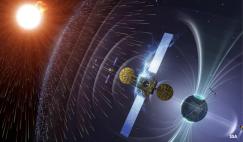
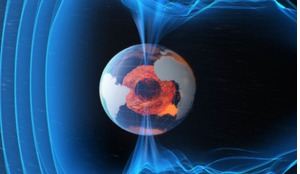
The first is cosmic radiation. Protected on Earth by both the atmosphere and magnetic field, embryos developing in deep space would instead be exposed to galactic cosmic rays capable of damaging DNA and disrupting normal cellular development.
The second challenge is microgravity. Scientists understand remarkably little about how prolonged weightlessness affects implantation, placental function, foetal growth or the physiological interaction between mother and child throughout pregnancy.
The third challenge is the spacecraft itself. A spacecraft is far more than simply a vehicle. It is a completely enclosed ecosystem where humans, microbes, recycled air and limited resources coexist continuously. Pregnancy and childbirth introduce entirely new medical, hygienic and psychological demands into that already delicate environment.
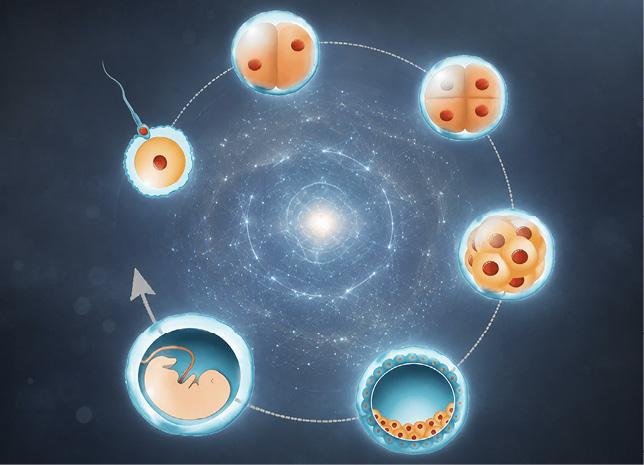 A fertilised egg will be particularly vulnerable to space conditions during the stages of division, implantation, and development of ‘building material’ for future organs and tissues.
Conception in orbit
Holden has proposed a mathematical approach, dividing development into 10 successive biological stages, each carrying its own probability of success
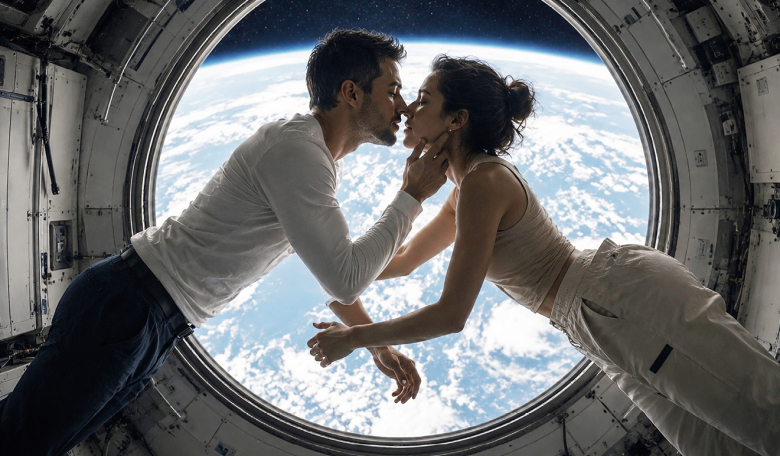
Perhaps surprisingly, conception itself may not prove to be the greatest obstacle. Though Holden notes that intimacy in microgravity would undoubtedly be different. Without gravity there is no up or down and even the slightest movement causes people to drift apart. He likens the situation to moving underwater, suggesting that restraint systems – or perhaps even a hammock – may become surprisingly useful pieces of equipment aboard future spacecraft.
Current evidence also suggests that the male reproductive function itself is unlikely to be significantly impaired by weightlessness or low gravity. Sperm remain capable of swimming and fertilising an egg.
Radiation, however, presents a more complicated picture. Human eggs are thousands of times larger in volume than sperm cells, with their haploid nuclei, the most important part containing chromosomes, being roughly 10 times larger, and therefore they present a much larger target for galactic cosmic rays. Holden argues that radiation-induced mutations may therefore occur more frequently in maternal genetic material than paternal DNA, the opposite to what we observe on Earth. Cosmic rays may also damage reproductive cells before fertilisation takes place, preventing conception altogether.
If conception succeeds, the greatest biological uncertainties may actually lie during the first few weeks of pregnancy. This is the period during which the embryo undergoes extraordinarily rapid cell division while simultaneously establishing the foundations of every future organ. Rapidly dividing cells are particularly vulnerable to radiation damage.
Although the earliest embryo is so small that gravity itself may have relatively little direct influence, implantation within the uterus could prove more problematic. Holden suggests that the fluid shifts associated with launch and weightlessness may alter the delicate processes that normally allow the embryo to implant safely within the uterine wall.
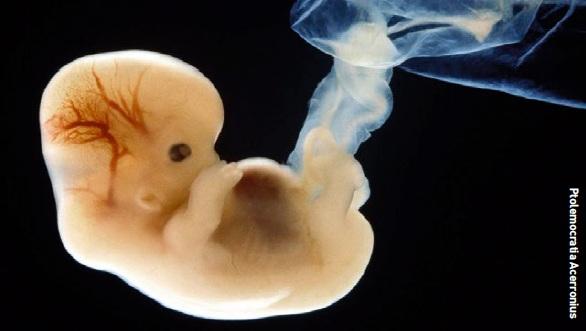 A space embryo will face a particular risk in the organogenesis process, the critical phase between the third and eighth weeks where cells specialise to form the foundational structures of the body.
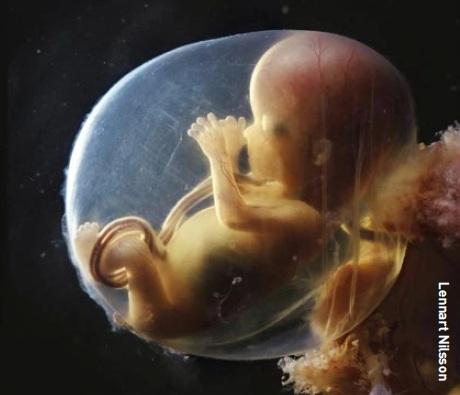 The foetus’ brain is significantly bigger than its heart and research suggests that the foetal nervous system is particularly sensitive to radiation from the eighth to the fifteenth week of pregnancy.
Animal experiments have already produced intriguing but incomplete results. Mouse embryos have continued developing successfully aboard the International Space Station under some experimental conditions, yet comparable ground-based simulations to simulate a microgravity environment on Earth have produced lower success rates. Scientists still lack sufficient evidence to understand exactly why.
For Holden, these early developmental stages represent perhaps the highest priority for future investigation.
Building a human body
As pregnancy progresses, the embryo transforms into a foetus and growth accelerates dramatically. During just a few weeks, tiny collections of cells begin forming a functioning brain, heart, lungs, kidneys and every other organ required for independent life.
The placenta develops into an extraordinarily sophisticated biological interface, transferring oxygen and nutrients from mother to child while removing waste products.
Scientists know almost nothing about how prolonged exposure to reduced gravity might influence these processes. On Earth, gravity subtly influences fluid movement throughout the body. In space, those familiar hydrodynamic forces disappear. How that affects placental circulation remains largely unknown.
Radiation continues to present a parallel concern because as the foetus grows larger, more tissue becomes exposed to high-energy particles. Damage sustained during organ formation may not become apparent until much later in pregnancy – or even after birth.
Holden argues that foetal development should therefore be assessed not simply by measuring radiation dose but by understanding its biological consequences during each stage of development.
If conception succeeds, the greatest biological uncertainties may actually lie during the first few weeks of pregnancy
Later stages of pregnancy introduce further complexities. The foetus gains weight rapidly while the mother’s cardiovascular system undergoes profound changes. Blood volume increases, the heart works harder and body fluids are redistributed.
Interestingly, astronauts adapting to weightlessness experience many of the same physiological changes. Both situations involve fluid shifts throughout the body and increased demands on the cardiovascular system. Whether pregnancy and microgravity amplify one another remains unknown.
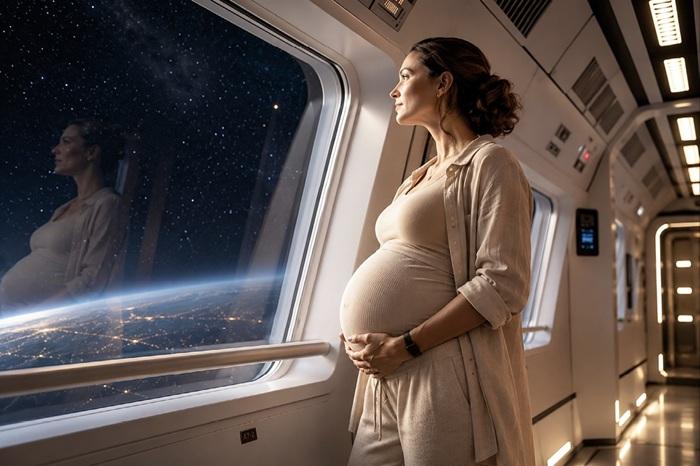 Given the uterine muscles are in a balanced state, premature birth is unlikely.
The developing brain also becomes an increasing concern. Research suggests that the foetal nervous system is particularly sensitive to radiation from the eighth to the 15th week of pregnancy. Holden notes that damage during this critical period could potentially affect later cognitive development more readily than other organs.
The kidneys, heart and other rapidly developing tissues may also experience periods of heightened vulnerability. Meanwhile, healing processes within the mother’s own body appear to slow in microgravity. Radiation promotes inflammatory responses while weightlessness alters the behaviour of collagen-producing cells involved in tissue repair. Together these effects could complicate both pregnancy and recovery following birth.
Delivering a baby in space
Childbirth itself presents an entirely different category of challenges. On Earth, gravity quietly assists labour. Medical staff also rely upon gravity to manage blood, amniotic fluid and other biological materials during delivery.
Remove gravity and the entire process changes. Every droplet of blood or amniotic fluid would float freely around the spacecraft unless carefully contained. Maintaining hygiene inside a sealed habitat would become a major engineering problem as well as a medical one.
Holden observes that childbirth is already a demanding physiological event under terrestrial conditions. Conducting it in microgravity would require specialised equipment, carefully developed medical procedures and entirely new approaches to infection control.
Even a mother’s position during labour may need to be reconsidered. Traditional upright birthing positions rely heavily upon gravity, while modern obstetric practice generally assumes a stable hospital environment. Neither assumption necessarily applies aboard a spacecraft.
A microgravity childhood
Birth would represent only the beginning. A newborn floating freely around a spacecraft would obviously require secure restraint systems, specialised sleeping arrangements and continuous medical supervision.
But the deeper questions concern development. Many of the reflexes babies acquire naturally on Earth depend upon gravity. Learning to balance, coordinate movement, stabilise vision and orient the body all rely upon continuous interaction between muscles, the inner ear and gravity itself. What happens if gravity is absent? Scientists simply do not know.
Holden suggests that development of the vestibular system – the body’s balance mechanism – may be fundamentally altered in children growing up entirely in weightlessness. A child raised in orbit might subsequently struggle to adapt when exposed to the gravity of Earth, Mars or another planetary body. These questions remain almost completely unexplored.
One aspect of infant care, however, may actually become simpler. Holden argues that breastfeeding would remain the preferred method of feeding. Unlike powdered formula, breast milk requires no preparation, no clean water and no stored supplies. It provides balanced nutrition while reducing demands upon life-support systems.
Premature infants, however, could require incubators capable of providing carefully controlled humidity and temperature. As on Earth, premature birth would almost certainly remain one of the greatest risks facing both mother and child.
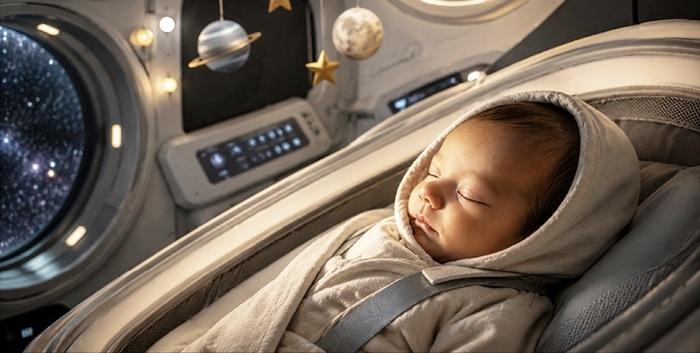 It goes without saying that a baby born in microgravity would need to be securely fastened.
More questions than answers
Reproduction must eventually become part of long-term planning rather than an awkward subject to be avoided
Perhaps the most striking conclusion of Holden’s review is not that pregnancy in space is impossible. Rather, it is that many of the challenges appear scientifically approachable. Some may eventually prove no more difficult than adapting existing obstetric practice to an unfamiliar environment. Others – particularly the combined effects of radiation and early embryonic development – remain profound unknowns requiring decades of further research.
Holden does not advocate encouraging pregnancy during current missions. Instead, he argues that if humanity genuinely intends to establish permanent settlements beyond Earth, reproduction must eventually become part of long-term planning rather than an awkward subject to be avoided.
That represents a significant shift in thinking. For decades, discussions about living beyond Earth concentrated on rockets, habitats, food production and life-support systems. Today, scientists are beginning to ask a far more fundamental question. Not simply how humans survive in space – but how future generations might one day begin there.
The first child born beyond Earth may still lie many decades in the future. Yet, as Holden’s work demonstrates, understanding that future will require much more than bigger rockets or better spacecraft. It will demand a deeper understanding of biology itself – and of how life adapts when it finally leaves the planet on which it evolved.
Editor’s note
The open access paper ‘Spaceborne and spaceborn: Physiological aspects of pregnancy and birth during interplanetary flight’ (https://physoc.onlinelibrary.wiley.com) was first published in the Journal of The Physiological Society, June 2025.
About the author
Elena Zavadsky holds a BA degree from Moscow State University in Russian Language and Literature and a MA degree from Miami University of Ohio in Spanish Language and Literature. She joined Asgardia in 2019 as a news correspondent and translator. Her latest contributions cover the Space Nation’s core priorities, such as space childbirth, cosmic radiation and microgravity.