

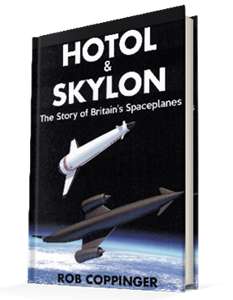
Ask most members of the international space community to name a ‘spaceplane’ and they will probably say “space shuttle?”. Ask a British space enthusiast, however, and they will likely offer “HOTOL and Skylon”. It is this disparity that led journalist Rob Coppinger to write the story of Britain’s spaceplanes.
It’s no great spoiler to reveal that neither HOTOL (an acronym for horizontal take-off and landing) or Skylon has ever flown; indeed that is generally the story for spaceplane concepts, as the author describes in his second chapter. According to the cover blurb, “proponents of reusability, like the HOTOL and Skylon designers, have had to fight against short-term thinking”, an affliction, I would suggest, that remains relevant in the sector today.
Over three chapters, the book covers the rise and fall of the HOTOL project at the Stevenage home of satellite manufacturer British Aerospace. It then transitions to the formation of Reaction Engines, the British firm that would develop the air-breathing engine technology for the proposed Skylon… before finally giving up the ghost in 2024. A concluding chapter summarises other relevant projects, such as ESA’s Space Rider, the US military X-37B and Sierra Nevada’s Dream Chaser, and looks to the future. The book is illustrated with a small number of monochrome photos and benefits from a 12-page reference section and six-page index.
Based on interviews with some of the leading protagonists, this is a well-researched and extremely accessible history of two far-sighted UK space projects that should be more widely appreciated around the world. However, as someone who worked at BAe-Stevenage during the inception of HOTOL, this reviewer is left with mixed feelings: although most engineers outside the project considered it little more than a dream, good for public relations but not for selling communications satellites, many of us hoped we were wrong and that Britain would pioneer reusable launch technology. As Coppinger succinctly puts it, “the story… is another example of British perseverance in the face of institutional adversity”.