

Why does space taxation matter? Put simply: because the space economy is no longer a distant prospect, it is a rapidly expanding commercial reality. Private companies are launching satellites, planning in-orbit services, and exploring the economic potential of lunar and asteroid resources. As this activity accelerates toward a projected value of over one trillion US dollars by 2040, a fundamental question can no longer be avoided: where - and how - should these activities be taxed?
For a long time, taxation has remained largely absent from discussions about space. This is not because it is irrelevant, but because it is difficult. The legal and fiscal frameworks we rely on were designed for a terrestrial economy, where value is created within identifiable borders. In space, those assumptions begin to break down. Yet ignoring the issue is no longer an option. As commercial activity expands beyond Earth, taxation will inevitably become part of the conversation.
This article argues that space taxation should not be seen merely as a technical or administrative issue. Properly designed, it can play a central role in shaping the development of the space economy, providing not only a source of revenue, but also legal certainty, investment incentives, and tools to address collective challenges such as orbital congestion.
Why has space taxation been underrated?
The commercial segment now accounts for approximately 78 percent of the global space economy, a proportion that continues to grow
Three structural factors explain why the taxation of space activities has, until very recently, attracted remarkably little attention from policymakers and industry alike.
First, the non-appropriation principle. Article II of the 1967 Outer Space Treaty (OST) establishes that outer space is not subject to national appropriation by any means. The rationale behind this provision was to ensure peaceful usage of outer space by each party involved. Given that provision, because no state may claim sovereignty over outer space, the conventional assumption has been that there is no jurisdictional basis on which to levy tax there.
This conclusion, however, is more superficial than it may first appear. Sovereignty and jurisdiction are distinct concepts, and - as scholars have increasingly argued - a state’s inability to claim territorial ownership of outer space does not automatically extinguish its right to tax the income of its residents or of activities connected to objects registered under its authority.
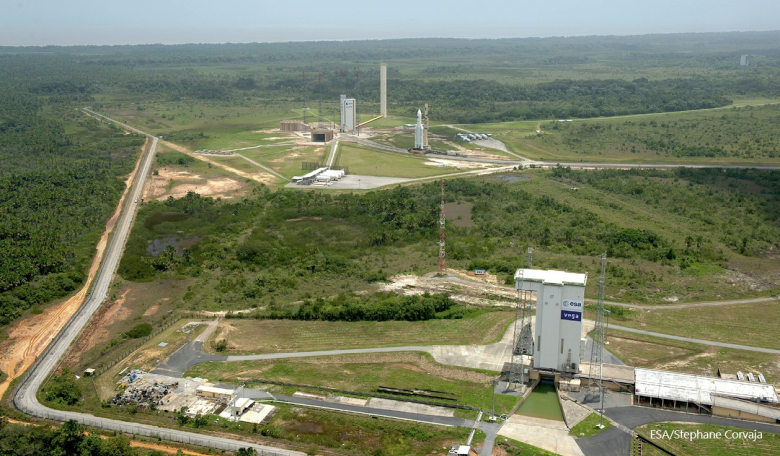
 Europe’s Spaceport at Kourou, French Guiana. Although France has no space-specific tax regime, companies operating from French Guiana can benefit from enhanced research tax credits, illustrating how taxation is already influencing the commercial space sector.
Second, the historical dominance of public actors. For decades, space exploration was dominated by government and intergovernmental actors, whose general exemption from corporate income tax meant that tax issues were largely absent. This position is no longer tenable. The growing participation of private enterprises has transformed the sector, underpinning sustained expansion of the space economy. Revenue streams from satellite communications, Earth observation, space missions, and developing fields such as in-orbit servicing and space mining are already material, and they are expected to grow significantly in the coming years. As observed by the Space Foundation in its last report, the commercial segment now accounts for approximately 78 percent of the global space economy, a proportion that continues to grow.
Third, the inadequacy of traditional tax factors. Domestic tax systems are designed around two foundational criteria: residence (taxing a person on their worldwide income because they are connected to the state by tax domicile, citizenship, seat, or place of effective management) and source (taxing income because it arises within the state’s territory).
Both criteria are inherently terrestrial. When business is conducted in space - whether via satellites, orbital habitats, or on celestial bodies - traditional tax principles begin to show their limitations. Determining where value is created becomes less straightforward, and also familiar concepts like ‘permanent establishment’ no longer map neatly onto these activities. Rules conceived for a terrestrial economy risk being unevenly applied in the context of space-based operations.
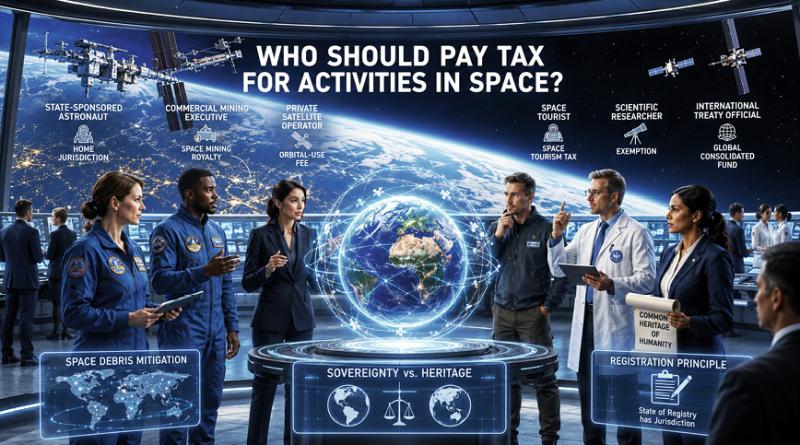 Commercial interest in extracting lunar and asteroid resources raises entirely new questions about where value is created – and which nation, if any, has the right to tax it.
While the taxation of the digital economy has featured prominently on international and national agendas for over two decades, the space economy has received comparatively limited attention. The rapid proliferation of private actors in the space sector has fundamentally altered this landscape. Today, the question of how to tax space-related activities has become urgent and demands the same level of coordinated international attention and dedicated regulatory effort that characterised the global response to the challenges of digital taxation.
The different roles of taxation in the space economy
Taxation is often seen as a constraint. In reality, it can serve several distinct - and complementary - functions.
1. Taxing income from space activities
At its most basic level, taxation is about revenue. But in the context of space, even this seemingly straightforward function becomes complex. Income generated by private companies from space-based activities is, in principle, taxable under existing domestic rules. The difficulty lies in determining how that income should be classified - and, crucially, where it should be taxed.
Yet when economic activity takes place in orbit - through satellites, space stations or future operations on celestial bodies – the traditional tax concepts of residence and source begin to lose their clarity. Where is value actually created? Where does the activity take place? And which state, if any, has the strongest claim to tax it?
A review of domestic tax legislation in several major jurisdictions reveals the absence of a specific category of space income. In the United States, Section 863(d) of the Internal Revenue Code does define “space income”, but solely for the purpose of establishing sourcing rules: where such income is derived by a US person, it is treated as US-source income and thus subject to federal (and potentially state) taxation. This means that the United States has employed a legal fiction – among other reasons – to prevent space income from becoming ‘stateless’, and thus non-taxable.
Across European jurisdictions, no specific source rule has been introduced for income generated in outer space. As a result, income sourced in space by resident taxpayers may (possibly) be treated as foreign-source income. From this point of view, a particular case-study could be France. France has a territorial tax system: French-resident companies are generally taxed on profits attributable to activities conducted in France, while foreign-source profits may fall outside the scope of French corporate income tax.
Aggressive fiscal competition among states to attract space companies carries risks: a ‘race to the bottom’ can erode the tax base without generating genuine value
This circumstance has led to profits derived from the operation of communication satellites by French-based companies being treated as not realised within France - and therefore falling outside the scope of French corporate income tax. While potentially advantageous in the short term, this approach entails material risks, including legal uncertainty in cross-border contexts, exposure to double non-taxation (which could trigger challenges by the competent tax authorities), and the emergence of forms of fiscal arbitrage that may erode competitiveness.
Beyond revenue, a clear framework for taxing space income provides something arguably even more valuable: certainty. Private companies planning multi-year missions and capital-intensive investments need to know, in advance, how a particular income stream will be classified and where it will be taxed. Clarity on this front reinforces the stability of a country’s regulatory environment and allows operators to organise their activities without the risk of unexpected or disproportionate tax liabilities materialising in the future.
2. Taxation as a driver of investment
Perhaps the most underappreciated role of taxation in the space context is its capacity to stimulate investment, attract companies and accelerate the growth of the industry.
Tax incentives - tools through which governments reduce the tax burden on specific activities to encourage particular behaviours - can take several forms: tax credits, enhanced deductions, accelerated depreciation, or reduced rates on qualifying income. In the space sector, their relevance is particularly acute because of the industry’s defining characteristics: long development cycles, elevated technological risk and the need for substantial up-front capital investment.
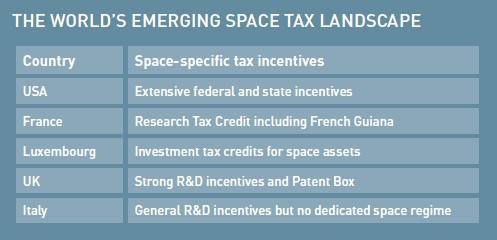
The United States stands as a forerunner in this sector as well, owing to the high concentration of space companies located within its borders. Several American states have enacted measures specifically targeting the space industry: exemptions from sales and use taxes on launch equipment, the California Compete tax credit, and Virginia’s Zero G Zero Tax Act, which offers targeted relief to attract commercial space ventures. However, the European landscape is also of considerable interest.
In Europe, no space-specific tax reliefs exist. Notwithstanding this, some Member States have amended their regulatory frameworks with the aim of making their legal and tax environments more attractive to the space sector. In this context, Luxembourg is noteworthy for having amended its tax code through the 2020 Space Act to extend investment tax credits to space assets, while France offers a Research Tax Credit (of up to 30 percent of qualifying R&D expenditures), with a higher rate for companies located in overseas territories - as is precisely the case with French Guiana, where the Kourou spaceport is located.
Although these appear, to date, to be the most space-focused measures adopted within the EU, it should be noted that other European jurisdictions - including non-EU countries - have implemented tax provisions that are attractive to space companies, even if not specifically designed for them.
For example, the United Kingdom provides a rich mix of innovation incentives applicable to space operators. Since April 2024, a reformed R&D tax relief system offers a merged R&D expenditure credit at 20 percent of qualifying costs, with additional support for loss-making, R&D-intensive small and medium-sized business enterprises (SMEs) through the Enhanced R&D Intensive Support (ERIS) regime. The qualifying-activity test aligns well with space sector R&D, including developments in satellite systems, propulsion and advanced materials. On the commercialisation side, the UK’s Patent Box allows companies to benefit from a reduced 10 percent corporation tax rate on profits derived from qualifying patents, complementing R&D incentives for businesses bringing new space technologies to market.
With reference to Italy, despite being an emerging space-faring nation – with a growing industrial base and the recent enactment of Law No. 89/2025 on the space economy – Italy has yet to introduce any space-specific fiscal measures. Two existing general-purpose incentives, available to all Italian tax-resident companies, are abstractly applicable to space operators.
The R&D tax credit provides a tax credit - at different rates depending on the type of R&D activity carried out - for qualifying expenditure relating to fundamental research, industrial research and experimental development. To qualify, activities must meet the innovation criteria set out in the OECD Frascati Manual, and companies may request an independent expert assessment to confirm the eligibility of the relevant activities for R&D tax credit purposes. An important feature is that the R&D tax credit may remain available even where the intended technological advancement is ultimately not achieved, providing a valuable safeguard for high-risk space programmes.
The Patent Box regime operates as a ‘super-deduction’ allowing companies to deduct 110 percent of R&D costs incurred in connection with qualifying intellectual property (IP) - software protected by copyright, industrial patents and registered designs - used in the company’s own business. The two measures are cumulative: the same qualifying expenditure can benefit from both the tax credit and the super-deduction, an effect that makes Italy’s existing framework, for example, already competitive with the targeted incentives offered by Luxembourg or France.
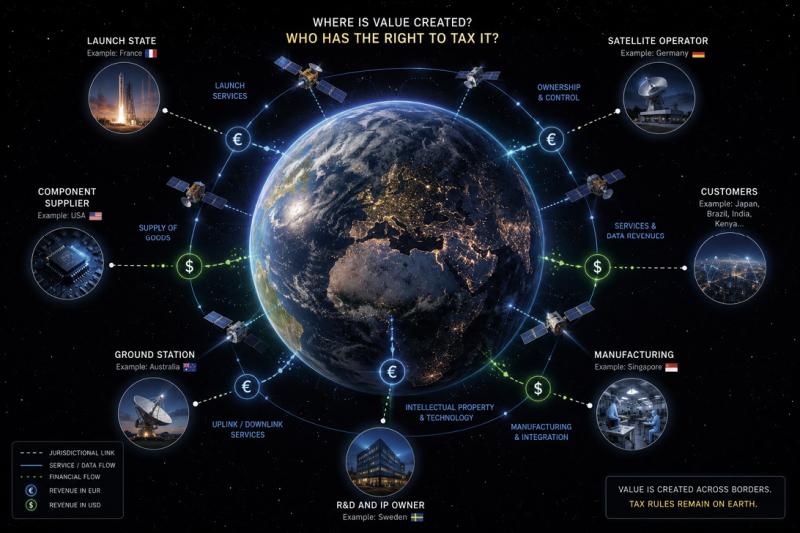 At its most basic level, taxation is about revenue. But in the context of space, even this seemingly straightforward function becomes complex.
The critical gap, however, remains the absence of any tailored framework acknowledging the specificities of the space sector: the exceptionally long development cycles, elevated technological risk and front-loaded capital investment. No sector-specific guidance yet confirms that characteristic aerospace expenditures – e.g. payload design, satellite integration and testing, ground-segment development, or debris-removal R&D – fall within the eligible perimeter. A targeted legislative intervention could clarify the application of existing incentives and determine whether further measures – including enhanced R&D tax credits for space activities, accelerated depreciation schemes for launch infrastructure, or specific incentives for sustainable orbital technologies – should be introduced.
A note of caution is in order. Aggressive fiscal competition among states to attract space companies carries risks: a ‘race to the bottom’ can erode the tax base without generating genuine value. Moreover, under the OECD’s Pillar Two framework (Global Anti-Base Erosion rules), participation in generous incentive programmes may reduce a multinational group’s effective tax rate below the agreed 15-percent minimum, triggering top-up taxes in other jurisdictions and neutralising the intended benefit.
3. Taxation as a policy tool
Taxation can operate as a regulatory instrument, shaping private behaviour toward collectively beneficial outcomes
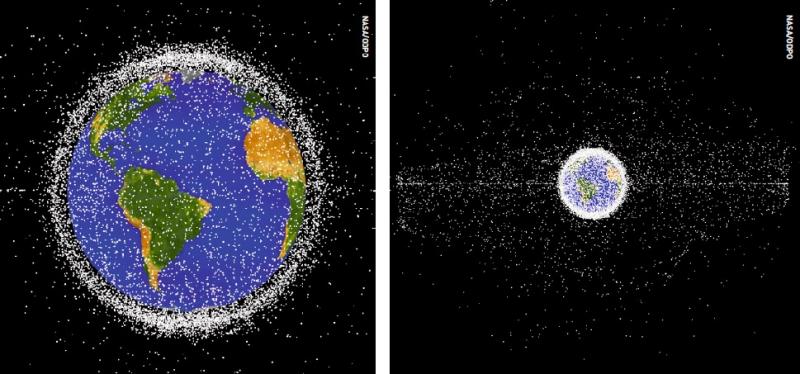
Beyond its revenue-raising and incentive functions, taxation can also operate as a regulatory instrument, shaping private behaviour toward collectively beneficial outcomes. In the context of outer space, its most pressing application relates to space debris: fragments from defunct satellites and spent rocket stages increasingly threaten active missions, while voluntary mitigation guidelines have proved insufficient. At the heart of the issue lies not technology but incentives, as operators confront a classic ‘tragedy of the commons’, where each additional satellite increases the collision risk for all.
Scholars have therefore proposed a range of fiscal mechanisms, from orbital-use fees modelled as ‘Pigouvian’ taxes to hybrid systems combining launch levies with refundable credits for end-of-life disposal or active debris removal. One influential study estimates that a globally coordinated orbital-use fee could quadruple the net present value of the space industry by internalising congestion costs. Any such measure would nonetheless need to comply with Article I of the Outer Space Treaty – which guarantees free and non-discriminatory access to outer space – and would require strong international coordination to avoid simply shifting launches to less regulated jurisdictions.
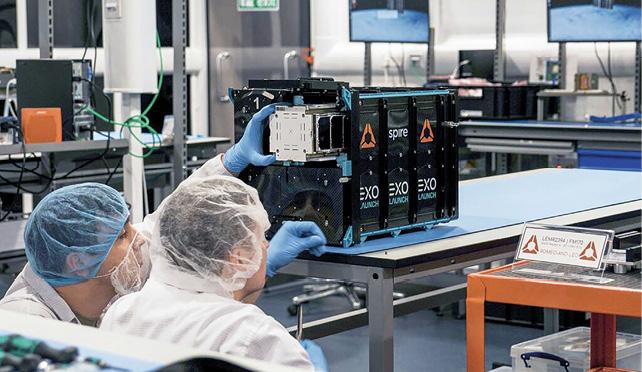 Spire engineers in the firm’s Glasgow cleanroom. The rapid growth of commercial satellite manufacturing and operations is transforming space into a major global industry, bringing taxation and fiscal policy into areas that were once dominated by governments.
How can taxation be designed to support, rather than hinder, the development of the space economy?
The analysis above suggests that the issue is not whether space activities should be taxed, but how fiscal systems can be shaped to enable rather than constrain a rapidly evolving sector. From this perspective, several guiding principles emerge.
First, clarity and predictability are essential. Whether through domestic source rules, treaty adjustments or coordinated action at OECD level, tax systems must answer basic questions for operators: where income is taxed, how it is characterised and at what rate. The US approach under Section 863(d), despite its imperfections, illustrates how even a single clear rule can significantly reduce uncertainty.
Second, incentive design should reflect the specific nature of the industry. The space industry is characterised by long development cycles, high upfront costs, uncertain returns and strong spillover effects. While existing R&D credits provide a foundation, more targeted recognition of space-specific activities - such as payload development, in-orbit testing and ground infrastructure - would better align tax policy with industrial reality.
Third, international coordination is crucial. Given the cross-border nature of space activity and the non-appropriation principle under the OST, unilateral approaches are inherently constrained. Progress is therefore more likely through OECD-level guidance, treaty-based coordination, or potentially a dedicated multilateral framework for space taxation.
Finally, environmental or sustainability-oriented fiscal tools merit careful consideration. Orbital-use charges, if combined with credits for debris mitigation and responsible de-orbiting, could internalise congestion costs and contribute to preserving the orbital environment on which the entire industry depends.
The space economy is approaching a structural turning point. Jurisdictions that act early by adopting coherent, transparent and forward-looking tax frameworks stand to benefit not only in terms of revenue, but also in terms of investment attractiveness and strategic positioning. In this sense, the future of space taxation is not merely about taxing space, it is about deciding what kind of space economy we want to build.
About the author
Gaia Baroni is a tax lawyer at Italian law firm PedersoliGattai, based in Milan, Italy. She specialises in international and business taxation, with a particular focus on the tax dimensions of the space economy. Her research explores the intersection of international tax law and space law and she has authored articles advancing initial proposals for an Italian space taxation policy.