

Humanity has always looked upward. Long before rockets, satellites or telescopes, our ancestors raised their eyes to the night sky and imagined meaning among the stars. They navigated by constellations, built myths around celestial movements and sought answers in the silence of the cosmos. Today, after centuries of scientific discovery, we stand closer than ever to transforming those ancient dreams into reality. Governments plan lunar settlements, private companies envision missions to Mars, and engineers speak openly about humanity becoming a multi-planetary species. Amid this extraordinary momentum, another question surfaces – one less technological but perhaps far more important.
We speak often of propulsion systems, artificial intelligence, habitats and survival technologies. We discuss asteroid mining, commercial space stations and permanent human communities beyond our planet. But far less attention is given to the psychological and moral inheritance humanity may carry into the Solar System.
Will we arrive among the stars still governed by the same fears and rivalries that shaped our earliest survival on Earth? Or might space demand that we become something wiser? Humanity may master the engineering required to reach the stars long before it learns how to live among them.
The question is important because becoming a spacefaring civilisation may require far more than technological achievement. It may ultimately demand a different relationship with power, cooperation and even with ourselves.
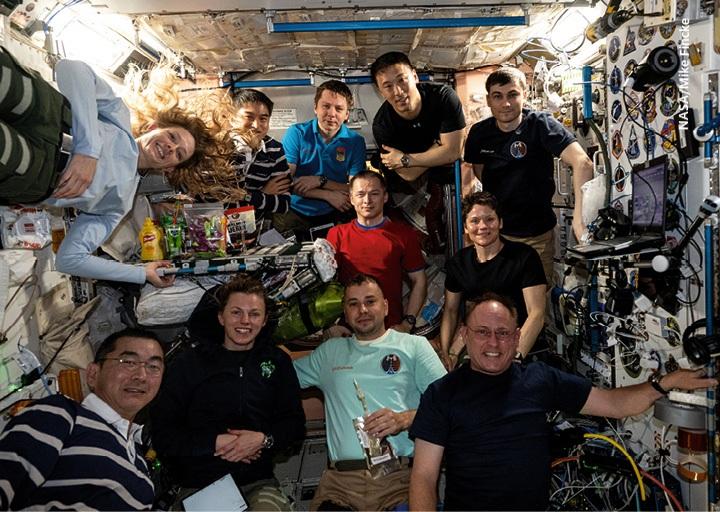 Life aboard the International Space Stationd depends on global cooperation, with astronauts from different nations relying on one another in one of the most challenging environments humans have ever inhabited. Pictured here in August 2025 are (front from left): Kimiya Yui (JAXA), Zena Cardman (NASA), Oleg Platonov (Roscosmos) and Mike Fincke (NASA). Second row: Nichole Ayers (NASA), Sergey Ryzhikov (Roscosmos) and Anne McClain (NASA). Back: Takuya Onishi (JAXA), Kirill Peskov (Roscosmos), Jonny Kim (NASA) and Alexey Zubritsky (Roscosmos).
The primitive mind in a modern age
Human history repeatedly demonstrates scientific brilliance existing alongside violence, inequality and environmental destruction
Human intelligence did not emerge in peaceful conditions. Our earliest ancestors survived because they learned to anticipate danger, defend themselves, cooperate within groups and compete for scarce resources. Hunger sharpened awareness. Fear heightened vigilance. Survival depended upon recognising threats quickly and responding decisively.
In this sense, intelligence itself was born through necessity. The human brain became powerful because it adapted. Those who learned to solve problems and work collectively often survived long enough to pass knowledge forward and, over thousands of years, this gradual accumulation of learning helped shape the species we now call Homo Sapiens.
Yet evolution leaves traces and many scientists argue that despite civilisation’s extraordinary advances, human beings still carry emotional reflexes formed in harsher environments. We may live in technologically sophisticated societies, but parts of our psychology remain deeply shaped by ancient survival instincts.
Territorial defence transforms into conflict over resources. Fear becomes distrust between nations, cultures and ideologies. In the modern world competition becomes geopolitical rivalry and, in some ways, humanity is both ancient and modern at once. We possess extraordinary technological power while still carrying emotional memories of vulnerability. And perhaps nowhere does this paradox become more visible than in humanity’s dream of living beyond Earth.
If settlements are eventually established on the Moon or Mars, they will not just transport people into new environments. They will transfer our behaviour, systems and fears with them. The uncomfortable question that follows is: will we carry old conflicts into new worlds?
History offers reasons for caution. Human progress has often walked alongside conquest. Exploration brought extraordinary scientific and cultural exchange, but also exploitation, inequality and struggles for dominance. Civilisations expanded, but not always wisely.
Space offers the possibility of something different – but there is no guarantee humanity will choose it. Already, for example, nations are competing for strategic positions on the Moon. Private companies are exploring future access to extraterrestrial resources. Any discussion surrounding lunar governance increasingly reveals familiar tensions in the areas of sovereignty, ownership and advantage.
Will future settlements become extensions of terrestrial rivalries? Will disputes over water ice, strategic locations or energy systems reproduce the divisions we already know on Earth?
Or could the experience of space itself force humanity to rethink how it cooperates?
Why survival in space may demand cooperation
A civilisation unable to sustain the ecosystems of its home planet may struggle to sustain fragile worlds elsewhere
Life beyond Earth will be unforgiving. On the Moon or Mars, survival will depend upon delicate systems functioning together: air recycling, water purification, energy generation, food production and radiation protection. Every element of life will exist within fragile balance.
In such environments, survival becomes collective and failure in one area may threaten everyone. Space offers no special protection for division and damaged habitats will not distinguish between nationality, ideology or politics. Perhaps, for the first time in human history, long-term survival may depend less upon competition and more upon cooperation.
The suggestion is not entirely new as across centuries and cultures, many philosophical traditions reached similar conclusions about the nature of human existence. Stoic thinkers understood humanity as part of a shared moral order. Eastern traditions often described interconnectedness between life and cosmos. Indigenous cultures frequently recognised human beings as inseparable from the ecosystems that sustained them.
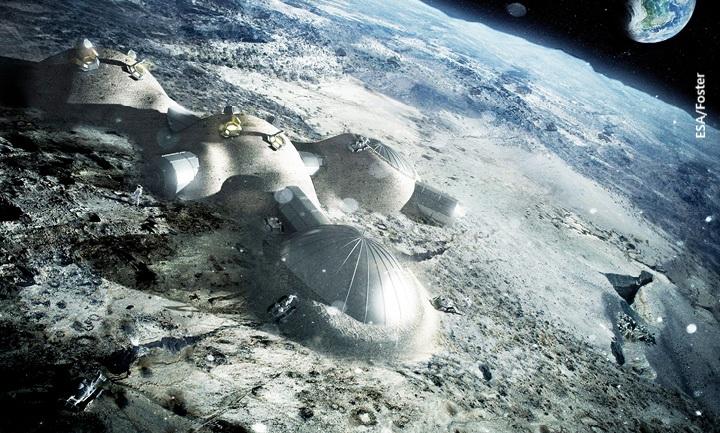 Future lunar settlements may become the first permanent communities beyond Earth, raising profound questions about governance, sustainability and how humanity chooses to live together. In this illustration a multi-dome lunar base being constructed based on a 3D printing concept. Once assembled, inflated domes are covered with a layer of 3D-printed lunar regolith by robots to help protect occupants against space radiation and micrometeoroids.
Although expressed differently, many arrived at a shared insight: survival is collective. Humanity has often struggled to live by that principle and today we continue to build borders while sharing the same environment. We pursue technological progress while struggling to overcome fear and mistrust. Even now, on a planet increasingly defined by interconnected systems, cooperation often struggles against division.
Yet space may leave us little alternative. Maybe one of the greatest lessons of becoming spacefaring is that survival itself may finally teach us what philosophy has long attempted to explain: no civilisation thrives alone.
Earth as the training ground for civilisation
To become a true space civilisation may require more than engineering prowess. It may require emotional and cultural maturity. A technologically advanced civilisation is not automatically a wise one.
Human history repeatedly demonstrates scientific brilliance existing alongside violence, inequality and environmental destruction. We developed medicines that transformed lives while building weapons capable of ending them. We created systems of global communication while continuing to struggle with distrust and division. We mapped the human genome while often failing to govern our oldest fears.
This contradiction invites an uncomfortable possibility: perhaps humanity’s greatest challenge is not technological progress, but psychological evolution.
The Earth itself offers an important lesson. Climate instability, biodiversity loss and ecological degradation are often framed as political or economic problems. Yet they also reveal something deeper – a civilisation still learning how to balance power with responsibility.
For centuries, humanity approached nature largely as something to control, extract from or overcome. Progress frequently meant expansion: more land, more resources, greater dominance over the environment.
Future settlements beyond Earth may demand an entirely different mindset. Nothing can be wasted on the Moon or Mars. Water will need to be recycled. Energy carefully managed. Food systems sustained through precision and patience. Communities may survive only through trust, collaboration and the careful stewardship of limited resources.
In such environments, sustainability may cease to be an ethical aspiration and become a condition of survival. The Earth, then, is not merely the place humanity leaves behind. It is the first teacher of everything we may someday become.
A civilisation unable to sustain the ecosystems of its home planet may struggle to sustain fragile worlds elsewhere. Before learning how to inhabit Mars, perhaps humanity must first rediscover how to inhabit Earth more wisely. Becoming spacefaring may ultimately require learning to think less like conquerors and more like caretakers.
Can space help humanity grow up?
The stars are no longer beyond our reach. What matters now is whether we meet them carrying only our technologies – or something better of ourselves as well
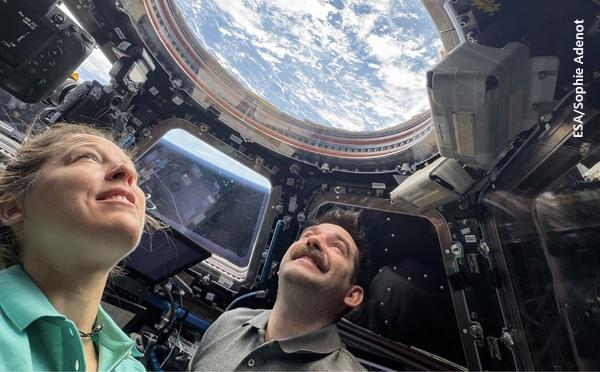
Despite the challenges, there are reasons for optimism. Space exploration has already revealed moments of humanity at its best. Scientific collaborations routinely transcend borders. International partnerships have sustained major missions and astronauts frequently describe seeing Earth from orbit as profoundly transformative – an experience that reshapes how they understand identity and belonging.
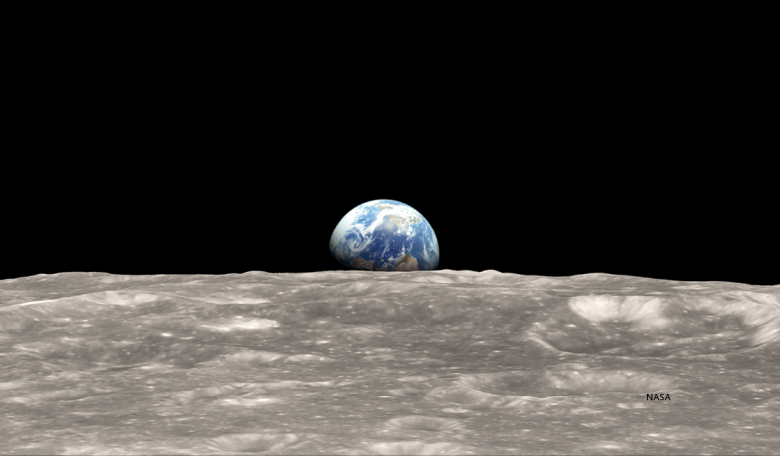
From space, borders disappear. Political conflicts that feel overwhelming on Earth suddenly seem temporary against the vastness surrounding our planet. What becomes visible instead is something astonishingly fragile: a small world suspended in darkness, carrying every language, memory, hope and conflict humanity has ever known.
Many astronauts describe this shift in perspective as the Overview Effect – a profound awareness that humanity shares not only a planet, but a destiny. Perhaps this experience offers an important clue about our future. The challenge is not abandoning our primitive instincts entirely. Fear, competition and self-preservation once ensured survival and remain deeply human. We cannot erase them, nor should we entirely wish to.
But perhaps we can learn to govern them. Human civilisation advanced when communities recognised that force alone could not sustain long-term stability. Laws emerged. Ethics developed. Systems of cooperation evolved because survival eventually required more than strength.
The civilisation we choose to become
The future of space exploration will not be decided solely by rockets, habitats or technological breakthroughs. It will also be shaped by values and in the end a successful space civilisation may demand another evolutionary step – not biological this time but cultural.
So, do we approach space as another arena for competition and extraction? Or as an opportunity to rethink how humanity cooperates? Will future generations inherit settlements built upon rivalry and scarcity – or communities grounded in stewardship, resilience and shared responsibility?
These questions may sound idealistic. Yet history repeatedly reminds us that civilisations are shaped not just by technology. Humanity once learned how to survive; now we need to learn how to live wisely.
The stars are no longer beyond our reach. What matters now is whether we meet them carrying only our technologies – or something better of ourselves as well. The real measure of human progress is not whether we leave Earth, but whether, in doing so, we finally learn how to care for one another – and for the worlds we choose to inhabit.
About the author
Ariadne Gallardo Figueroa studied communication sciences and has worked extensively across Mexico’s broadcasting industry. She has also worked in ethno-anthropological research and taught muralist and symbolic art workshops to children and in Indigenous communities. Currently she is dedicated to literary work of various kinds and participation in Asgardia the Space Nation as a parliamentarian.