

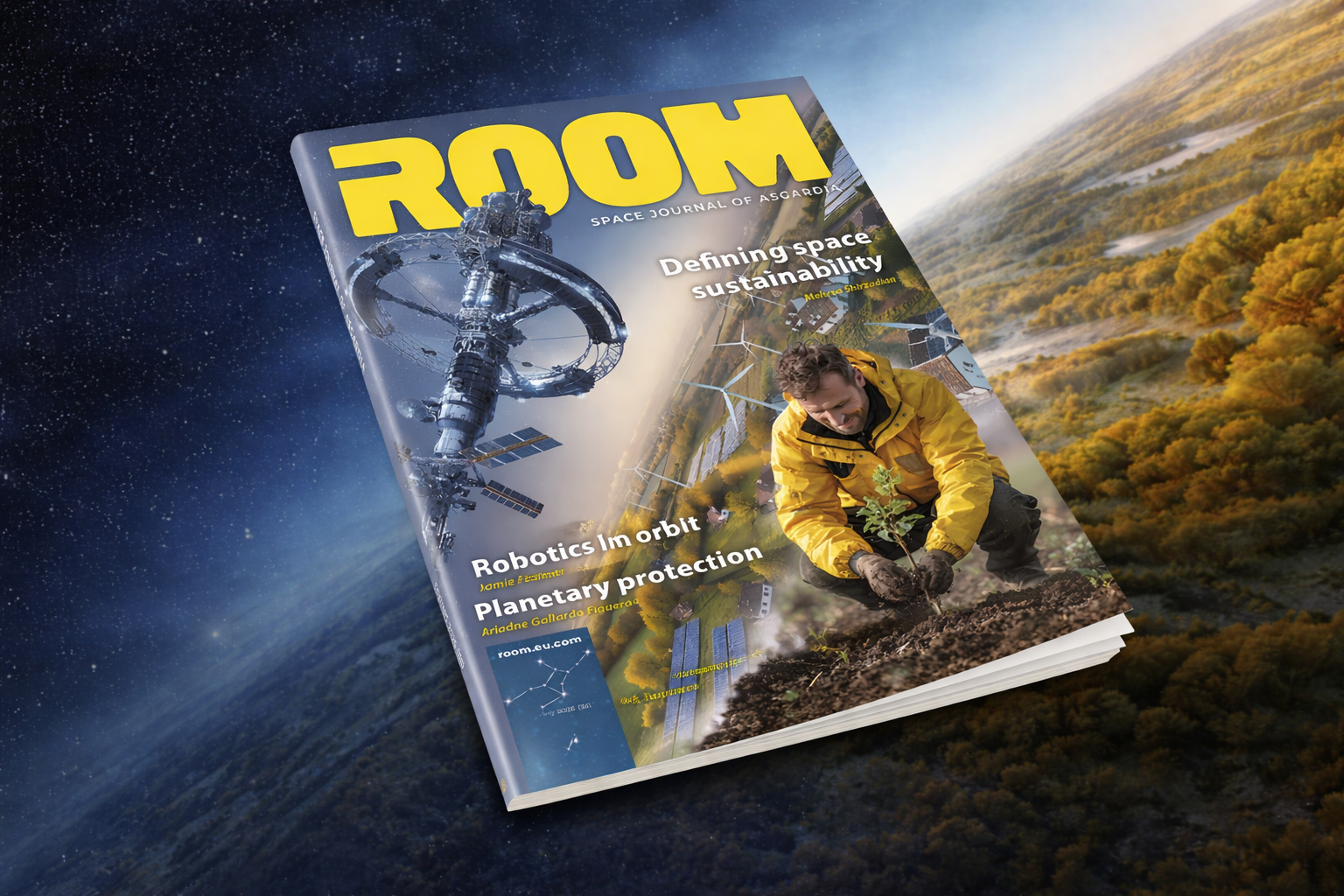
Our Spring 2026 issue has just been released, bringing together leading voices from across the global space sector at a time when the industry itself is entering a decisive new phase. Founded by Dr Igor Ashurbeyli in 2014, the international space magazine has become a recognised platform for knowledge, debate and cooperation within the aerospace community, connecting scientists, engineers, policy makers and entrepreneurs who are shaping humanity’s future beyond Earth.
This issue opens with a powerful foreword by Editor-in-Chief Clive Simpson, who argues that something fundamental is changing in the global space sector. The bold narratives that once defined the industry – rapid expansion, trillion-dollar space economies and permanent settlement beyond Earth – are now being reassessed. Political realities, economic pressures and growing concerns about sustainability are forcing space organisations to move from ambition alone toward long-term discipline and credible architecture. Rather than focusing only on who reaches the Moon or Mars first, Simpson highlights that the real challenge now is building systems that can endure, govern space responsibly and support humanity’s long-term presence beyond Earth.
At the heart of the foreword is a reflection that resonates deeply with the vision of Asgardia. Simpson writes that the industry is now asking a deeper question: how will humanity organise itself beyond Earth? As he notes, “Asgardia, approaching its tenth anniversary in October, was once dismissed as fanciful. Yet as sovereignty and responsibility become central to space activity, the idea of a space nation appears less indulgent and more prescient – an early attempt to confront the governance questions that expansion will inevitably demand.”
The Spring issue brings together a wide range of articles that explore the new stage of space development from multiple perspectives. The astronautics section examines humanity’s long-term future in space, including the strategic importance of extending life beyond Earth, the growing role of robotics and artificial intelligence in space operations, and new approaches to sustainable Mars exploration. The environment section focuses on the responsibility that comes with expanding into space, addressing challenges such as satellite brightness, orbital sustainability, space traffic management and the broader ethical question of how to ensure that the benefits of space remain accessible to all.
Industry-focused contributions analyse the lessons learned from decades of space missions and propose new ways to design equipment and systems that support human activity beyond Earth. The science section looks ahead to the future of Mars exploration and presents new theoretical perspectives in astrophysics, while additional sections dedicated to art and book reviews provide a cultural dimension that complements the issue.
The journal remains a fully independent, cross-disciplinary publication covering all aspects of space exploration, from science and engineering to law, sustainability and business. It also continues to serve as a media partner for major international aerospace events, including the International Astronautical Congress (IAC), the SWF Summit for Space Sustainability and the upcoming IAF Global Space Conference on Climate Change (GLOC).
As always, ROOM offers a unique blend of perspectives from across the global space ecosystem, reflecting the interdisciplinary nature of space activity today.
Residents of Asgardia receive a special benefit: all Asgardian Residents can access a free digital subscription to ROOM Space Journal of Asgardia. This gives members of the world’s first space nation direct access to the ideas, research and debates shaping humanity’s future beyond Earth.
The Spring issue is now available, and Asgardian readers are invited to explore the latest edition and join the conversation about how the space sector — and humanity itself — is evolving in orbit and beyond.