

For much of human history, the drivers of exploration have remained remarkably consistent: power, pride, profit, security and scientific discovery. Whether seeking new lands, trade routes or strategic advantages, these motivations shaped humanity’s early ventures - and space exploration has been no exception. But something has changed. The twenty-first century has ushered in new paradigms and shifting priorities. In this extract from his book Why Space? The Purpose of People, space entrepreneur and advocate for space expansion Rick Tumlinson discusses how emerging realities have resulted in fresh justifications for opening space. Some are rooted in survival, others in economics, and some in the sheer potential of what humanity can become.
What excites me today is that the early dreamers who launched the Space Revolution are becoming its leaders. The struggle was long and hard-fought. But we moved from the giggle zone to serious policy and financial backing. That’s the other key: pragmatism combined with economic reality to support our grand dream.
One important note: the industries and advancements I discuss here are means, not ends. They are tools that will help us save Earth, increase abundance, and open the Solar System.
The Space Shuttle and the International Space Station (ISS) were not, in themselves, our purpose. That comes later.
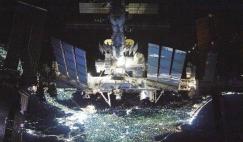
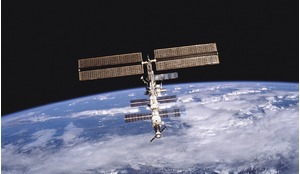
The Space Shuttle and the ISS provided early opportunities to explore commercial applications of space. Astronauts and cosmonauts conducted thousands of experiments in industrial science and technology development, making breakthroughs in biological research, metallurgy, agriculture, and physics. Partnerships with private companies enabled intriguing projects, from additive manufacturing in microgravity to the development of vaccines and even the aging of whisky in orbit. While these efforts provided valuable insights, they didn’t reach industrial-scale production. That, however, is about to change.
The emergence of commercial space stations promises a new wave of products via space-based manufacturing. Ultrapure fibre optics, advanced computer chips and innovative alloys are among the materials benefiting from microgravity, which eliminates defects caused by full Earth gravity. Beyond materials, the biological and medical applications of space-based research will be revolutionary. Microgravity accelerates the study of osteoporosis and muscular atrophy, enabling scientists to test treatments in months rather than years. Lab-grown organs, improved drug formulations and other medical innovations could emerge from this work.
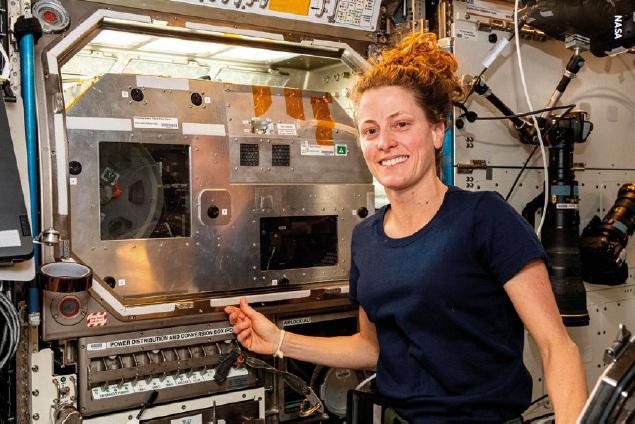 NASA astronaut Loral O’Hara conducting Flawless Space Fibers operations in the Microgravity Science Glovebox (MSG) on the International Space Station. Parabolic research showed that optical fibres produced in microgravity can be higher quality than those made in normal gravity, and the ISS provides a potential platform for commercial production of these fibres.
Beyond the traditional
The stage is set for a new generation of visionaries to transform space resource utilization into a cornerstone of human progress
Space’s potential extends beyond traditional science and technology. Entirely new industries are emerging, driven by the unique properties of the space environment. In-orbit manufacturing allows for the production of biological structures, such as human tissues and advanced biopharmaceuticals, that would be impossible to create on Earth. Private space travel and hospitality are becoming realities, laying the groundwork for pioneers. Early private astronauts are, in many ways, paying to be test subjects, helping us learn how to build and operate safe, comfortable space transportation and accommodations. Companies like SpaceX, Virgin Galactic, Blue Origin, and Axiom Space are making space accessible to non-professionals, bringing the long-held dream of spaceflight closer to reality.
Energy generation is another critical development. Space-based solar power stations could provide clean, virtually unlimited energy by collecting sunlight and beaming it back to Earth. Resource extraction from the Moon and asteroids could transform the availability of rare metals and other valuable materials, as we move to an electric economy.
Robotic systems are advancing in-space assembly and repair, allowing satellites and large structures like telescopes to be built, maintained, and upgraded in orbit. Given that in space we can build anything as large as we want, eventually, these capabilities will enable the construction of massive free-floating space habitats that can sustain human life indefinitely.
As these industries mature, they will reshape the global economy and redefine humanity’s relationship with space. Space is no longer just a domain for exploration or scientific inquiry. It is becoming an integral part of our economic, social, and environmental future.
Space resources
I sometimes encounter opposition to space resource utilisation. Critics’ arguments range from completely whacky - “What about the space ecosystem?” (Note: The original use of the word ‘ecosystem’ refers to a living system of interconnected organisms. As far as we know, the places we plan to go are very dead) - to arguing that mining the Moon or asteroids is akin to plundering the MotherWorld.
I try to be patient with people like this, but this logic baffles me. I often counter with a simple question: “Would you rather rip the heart out of a mountain ecosystem on Earth or get the same resources from a dead rock in space?” I am not trying to be clever here. These are the (new) real choices. There is no place on Earth where extraction does not add pressure to an already overstressed world.
For example, recently, we’ve seen the rise of deep-sea mining - massive dredges scraping the ocean floor for rare metals. Why risk Earth’s fragile seabeds when a single asteroid could provide comparable resources without harming any ecosystem? Imagine moving all mining and resource extraction off Earth entirely and never having to resort to such savage approaches again. We’re not there yet, but we will be soon.
Humanity’s hunger for resources is relentless. Advanced tools have allowed us to push past natural ecological limits, often with devastating consequences. Space offers an alternative.
By shifting heavy industry into orbit and sourcing materials from space, we can mitigate environmental degradation, preserve the MotherWorld and support the demands of a growing civilisation. Critical metals like platinum, nickel, and cobalt - vital for electronics and green energy technologies - can be sourced from space, ending destructive mining practices on Earth.
As we expand into space, we will learn to ‘live off the land’, using solar energy, vacuum conditions and extraterrestrial resources to build new worlds. Water, one of the most valuable space resources, is found in abundance on asteroids, the Moon and Mars. It can be split into hydrogen and oxygen for rocket fuel or used directly for sustaining human life and agriculture.
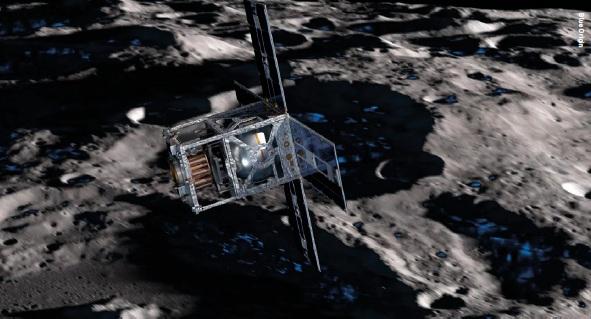 In September 2025 Blue Origin and its Luxembourg partners announced Project Oasis, a multi-phase initiative to identify key lunar resources from orbit, assess them on the ground, and harness them in situ. Oasis-1, the first mission in the campaign, will create the most detailed high-resolution maps to date of lunar water ice, Helium-3, radionuclides, rare earth elements, precious metals and other materials essential for humanity’s expansion into space.
From fantasy to reality
Moving from scarcity to abundance will not automatically solve deep-seated social inequities
In 2012, I cofounded Deep Space Industries (DSI), one of two asteroid mining companies launched that year. At the time, asteroid mining was widely dismissed as science fiction. But working with an incredible team of cofounders, we helped make it ‘legit’. The same seriousness was being applied by our friends at Planetary Resources, the other company with a similar goal but different strategy. Together, these efforts brought credibility to the field, shifting the concept from a fringe idea to a legitimate commercial opportunity.
Our work gained momentum with the backing of Luxembourg, a small but visionary nation that provided substantial financial and policy support. Luxembourg’s SpaceResources.lu initiative positioned the country as a leader in space resource development, establishing legal frameworks that inspired other nations.
Today, space resources are no longer speculative. Governments and private firms are actively developing technologies to identify, extract, and process extraterrestrial materials. Companies are designing spacecraft capable of prospecting asteroids, while others explore 3D printing for space-based construction. With advancements in transportation systems like SpaceX’s Starship, the cost of accessing these resources is dropping, making space mining economically viable. The stage is set for a new generation of visionaries to transform space resource utilisation into a cornerstone of human progress.
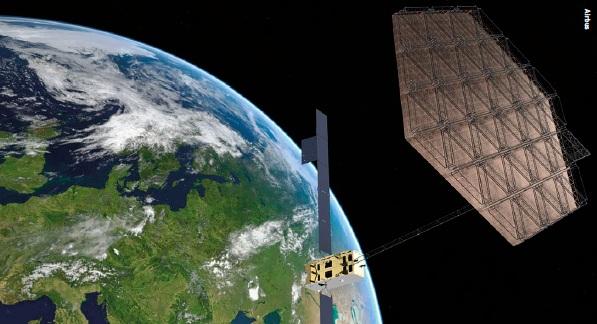 Artist’s impression of a reflector made in space. Robotic systems are advancing in-space assembly and repair, allowing satellites and large structures like telescopes to be built, maintained and upgraded in orbit.
Sun machine
Another critical resource in space is energy. One of the most ambitious space industry visions is space-based solar power (SBSP). In theory, large solar arrays in orbit could collect sunlight and beam energy back to Earth using microwaves or lasers. Unlike terrestrial solar farms, space-based panels receive continuous sunlight, unaffected by night cycles, weather, or atmospheric interference, enabling far greater power generation.
I am both sceptical and hopeful about SBSP, given its technical, economic, and strategic challenges. However, it remains in the race with fusion power as a potential large-scale energy source. Nations like Japan and projects like Caltech’s Space Solar Power Project continue to explore its feasibility. As I write this, at least one group may have cracked the code for making SBSP viable. By the time you read this, tests may already be underway. If realised, SBSP could supply limitless clean energy, significantly reducing our dependence on fossil fuels.
Another underexplored sun-related space resource may soon prove crucial - shade. I’ve long considered the idea of Earth Shades - massive orbital sunshades - as a last-ditch measure to counteract global warming. Studies suggest that blocking even a small fraction of sunlight - less than two percent - could slow or reverse climate change without noticeable changes in natural light levels. While such a project would require unprecedented global cooperation and engineering, its estimated cost would be what the US has spent on recent wars. And, crucially, completing it would leave us with the infrastructure of a truly spacefaring civilisation.
Our investment
Each settlement represents a seed of life preserved, ensuring even if catastrophe strikes Earth, humanity’s story will continue
Space resources offer a dual benefit. They enable humanity’s expansion while providing sustainable solutions to Earth’s environmental and economic challenges. By harnessing the wealth of the Solar System, we can balance progress with preservation, ensuring a future where both humanity and the MotherWorld thrive. It’s all about expanding our options.
The High Frontier holds the promise of abundance - a future where humanity transcends the zero-sum struggle dictated by Earth’s finite resources. In this vision, scarcity becomes a relic of the past, much like in Star Trek. However, moving from scarcity to abundance will not automatically solve deep-seated social inequities.
Space grants access to virtually unlimited resources – metals and rare elements from the Moon and asteroids, and boundless solar energy. Even the lack of gravity and the vacuum of space are useful resources, enabling new products and processes to be developed. In the long term, these resources could elevate global living standards without devastating Earth’s ecosystems. Without space resources, raising the entire human population to a middle-class standard would overwhelm our planet’s environmental capacity. Space development enables sustainable growth on a planetary scale.
Some critics argue space investment diverts resources from pressing Earthly concerns. This is ridiculous. First, it assumes if funds were not going into space development, they would magically be redirected toward other areas of need (as determined by who?). Second, government investment in space is tiny relative to our overall expenditures - especially when compared to what we spend on weapons and death machines. Third, no one has ever invested money into space itself. Any investments in space-related projects or companies are spent here on Earth, creating jobs and spurring economic activities down here. Fourth, when it comes to those wealthy private citizens investing the most money in space, they are doing so to help save the planet and humanity.
Finally, aside from the fact that most of these same people are pouring millions into ‘good causes’ here on Earth, wouldn’t you rather see some of the profits they’ve made in their other businesses go into helping ensure our future rather than just buying sports teams or other extravagances?
In reality, space commerce and industry generate jobs, drive economic expansion and provide solutions to global challenges. The investments made today in reusable rockets, resource extraction and off-world infrastructure are laying the foundation for an economic landscape that extends beyond Earth.
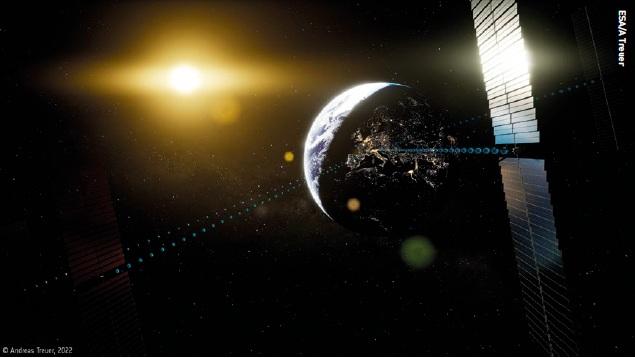 One of the most ambitious space industry visions is Space-Based Solar Power, which involves harvesting sunlight from Earth orbit then beaming it down to the surface where it is needed. If realised, SBSP could supply limitless clean energy, significantly reducing our dependence on fossil fuels.
Breaking old structures
Why wouldn’t we ensure that humanity, and the ecosystem that sustains us, has more than one home?
The opening of the High Frontier presents an opportunity to disrupt entrenched power systems. For centuries, control of limited yet important resources has dictated economic and political structures, many of which have calcified. By introducing vast and essentially endless new sources of energy and materials, as well as new centres of economic dynamism, widely opening space can decentralise power and foster innovation.
If you need evidence of this, just look at how much finding and controlling sources of oil has dominated global politics, including military confrontations and spending since it was discovered. Case in point - the Middle East. How many billions of dollars and how many lives have been wasted fighting to control or protect oil fields? Also, how many governments, dictatorships, kleptocracies and other illicit enterprises exist today because of the centralised control of energy and resource deposits?
Yet a critical question remains: Will we use these new capabilities to create a more equitable world, or will we repeat the cycles of inequality and exploitation that defined history?
Abundance alone does not guarantee fairness. It must be wielded with wisdom and intent.
Space expansion allows us to rethink economic systems. As scarcity gives way to abundance, we have the chance to design frameworks emphasising sustainability and equity. By expanding our resource base beyond Earth’s limits, we can mitigate competition for finite assets and redefine wealth as something that uplifts all, rather than just a privileged few.
The High Frontier is more than an economic opportunity. It is a chance to create a more just, sustainable, and prosperous civilisation. But that future depends on the choices we make now. Do we rinse and repeat the way we have opened frontiers in the past, or do we learn?
Humanity’s insurance policy
The goal is not to escape but to seed the Solar System with life while preserving and protecting the MotherWorld
Our story is one of survival. For millennia, we have adapted to and overcome challenges, but we are now aware of existential threats capable of erasing civilisation as we know it. Asteroid impacts, supervolcanoes, nuclear war, pandemics, and climate change all loom over our future. While their probabilities vary, one fact remains: Earth is not a permanent sanctuary.
It’s interesting that people insure their cars, their homes, and their health, but insuring civilisation sounds far-fetched. Using space as an insurance policy or backup plan may sound pessimistic, but it is a rational response to our precarious position. Establishing self-sustaining human settlements beyond Earth - on the Moon, Mars, or free-floating space habitats - provides a hedge against extinction. Each settlement represents a seed of life preserved, ensuring even if catastrophe strikes Earth, humanity’s story will continue.
Throughout history, redundancy has been a cornerstone of survival. From surplus food storage to engineering fail-safes, having backups has always been a key to resilience. Extending this principle to the species level is both logical and necessary. Why wouldn’t we ensure that humanity, and the ecosystem that sustains us, has more than one home?
As I discussed earlier, Elon Musk has framed this philosophy as SpaceX’s central mission: making humanity a multiplanet species within his lifetime, with Mars as the first step. Jeff Bezos, inspired by Gerard K O’Neill’s vision, has a complementary dream of building vast space habitats to host more people than Earth itself. His approach focuses on moving heavy industry off-world, allowing Earth to return to its natural state.
Detractors often dismiss these ambitions as escapism, suggesting proponents of space expansion seek to abandon Earth’s problems rather than solve them. This is a misunderstanding. The goal is not to escape but to seed the Solar System with life while preserving and protecting the MotherWorld, even as we learn new lessons about how to do so out there.
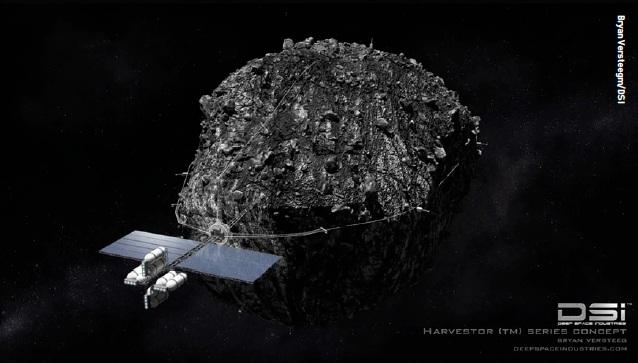 Artist’s concept from 2013 showing the Deep Space Industries’ Harvestor class spacecraft for asteroid mining.
Beyond existential security, space offers immediate solutions to planetary crises. Lunar and asteroid mining could reduce the environmental destruction caused by Earth-based extraction industries. Sourcing rare metals from space, rather than Earth’s fragile ecosystems, supports the development of green technologies without further depleting our planet.
Space-based solar power can provide a virtually unlimited, clean energy source, reducing reliance on fossil fuels. Reflective sunshades in orbit could help regulate global temperatures, buying time to transition toward more sustainable systems.
These solutions are not science fiction; they are technologically feasible today. What remains missing is the collective will to prioritise and implement them.
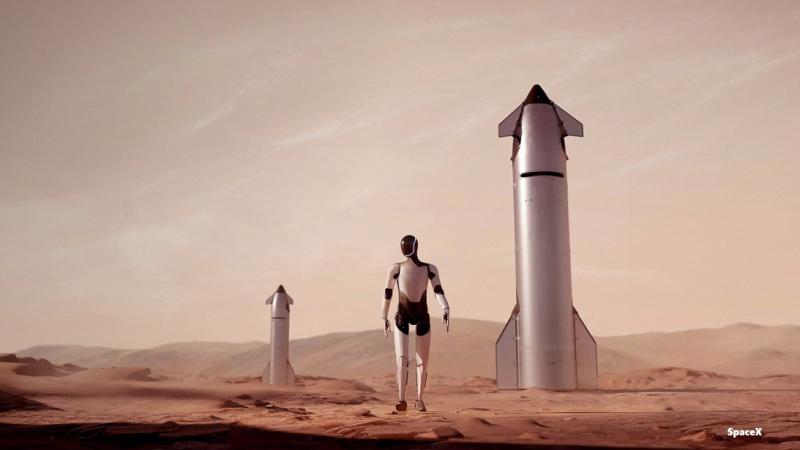 SpaceX is planning to launch the first Starships to Mars in 2026. These first vehicles will gather critical data on entry and landing, serving as the forerunners to future crew and cargo deliveries to the Martian surface with the ultimate aim of making humanity a multiplanetary species.
A principle of survival
The steps we take today in space will shape the trajectory of human civilization for generations to come
Space is not just a frontier; it is an opportunity to redefine survival. By extending life beyond Earth, we gain not only security but also a chance to evolve as a species - one that learns from its past and strives for a sustainable, abundant future. This vision combines survival with aspiration, creating a narrative of hope that reaches far beyond the challenges of today.
Opening the frontier of space to humanity and life makes sense. It’s not just about industry, security, or even survival. It’s about something much larger - our Purpose. The steps we take today in space will shape the trajectory of human civilisation for generations to come.
By moving beyond Earth, we are not abandoning our home. We are protecting it. We are not seeking to conquer new worlds but to ensure that life - our life, all life - continues to thrive.
This is the new reason for space. Not just to go but to build, to expand, to create a future of limitless possibility. To take our MotherWorld’s most precious gift - life - and carry it forward into the cosmos. Because the alternative - the stagnation, the depletion, the slow decay of a civilisation trapped within finite limits - is unthinkable.
We must rise to this moment. The High Frontier is opening. The Solar System is waiting. And our future is calling.
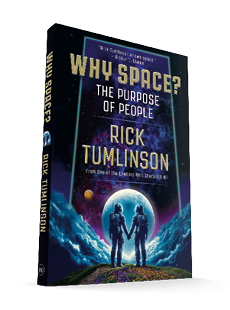 This article, published with permission, is based on an edited extract from Why Space? The Purpose of People, by Rick Tumlinson, published by Manuscripts Press (2025), ISBN: 979-8-88926-421-7 Paperback; 979-8-88926-422-4 Hardback; 979-8-88926-420-0 Ebook.
About the author
Rick Tumlinson has been called the “godfather of commercial space” and is credited with helping start the space revolution of Elon Musk and Jeff Bezos. A global thought leader and six-time Congressional witness, he won the World Technology Award with Craig Venter of the Human Genome Project in 2015, led the team that tried to turn Russian Mir space station into the world’s first commercial space facility, signed the first private space traveller, co-founded the Space Frontier Foundation, and was a founding board member of the X-Prize. He founded SpaceFund, an investment firm for space startups. His current focus is the EarthLight Foundation, a nonprofit dedicated to shaping humanity’s next giant leap.