

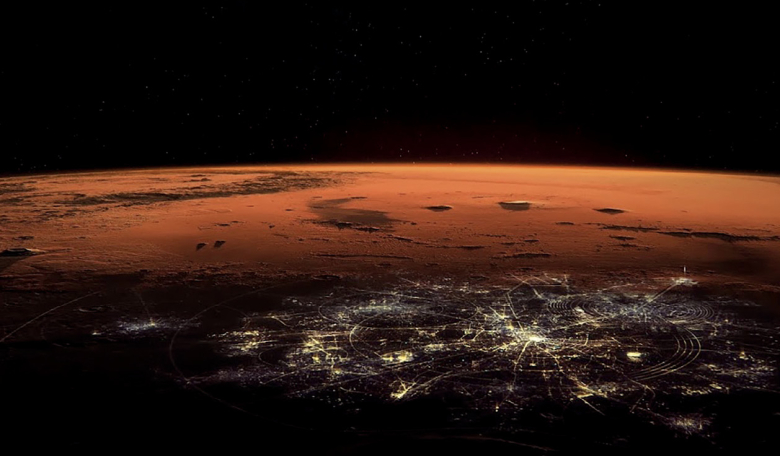
Space sustainability has become a big topic across the space sector in the past decade and seems likely to remain at the core of space development. Here, the author discusses the fundamentals of the subject in relation to building a spacefaring civilisation.
When the topic of sustainability comes up in space sector settings, it is usually in reference to orbital debris, space traffic management or space applications that support development and security goals around the world. Sometimes it relates to logistical sustainability or supply chain resilience in light of disruptions like war or a pandemic. But as significant as these issues are, they only comprise a fraction of the full sustainability story.
On the global stage, sustainability broadly refers to the ability to maintain or support something over the long term. Sustainable development, on the other hand, is a framework that allows us to map goals and chart progress toward sustainability. Sustainable development has three core elements: environmental protection, social inclusion and economic growth. This has consistently defined UN-level global agendas and driven worldwide decision-making for nearly four decades now.
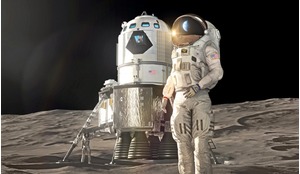
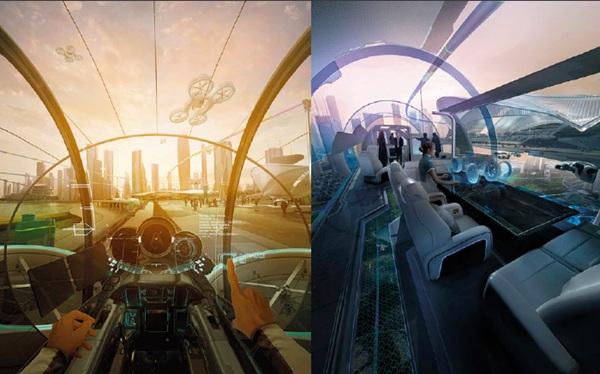 The 2017 HP Mars Home Planet rendering challenge invited engineers, architects, designers, artists and students to consider what life on Mars could look like to support a human population of one million through Virtual Reality.
Defining sustainability
The terms ‘sustainability’ and ‘sustainable development’ are closely related but not interchangeable. Many of us in the space sector will be familiar with sustainability: there is, after all, no shortage of corporate objectives, policy or social responsibility initiatives in the sector. But when we think about going to space to live and work long-term on the Moon and beyond, we need to think much more strategically - much more intentionally - than the guiding principle of sustainability itself can facilitate. We need to think about how sustainable development can and should guide us in space exploration endeavours.
Sustainable development has three core elements: environmental protection, social inclusion and economic growth
By definition, sustainability is a concern centred on future generations, and this is acutely true in the context of space. But what would lead us to believe we will be better, or do better, in space than we do on Earth without some intentionality? We need to put ourselves in the shoes of those future generations who will live and work in space after we develop the technology and infrastructure to make off-Earth migration possible.
Their questions might include: what about our environment do we take for granted on Earth? What do we assume will be in place for us in space? What do we wish those who came before us had considered when building upon the society, culture and economic realities they then passed down to us?
SDGs for space
The 17 globally-agreed UN Sustainable Development Goals (SDGs) are acknowledged as goals for achieving sustainable development here on Earth. It is interesting to consider how this sustainability framework can be adapted to space, in order to help us consider the needs of those future, off-Earth generations.
Some may argue that the sustainable development framework is in reference to life on Earth and that there is not much we can transfer from it to the space context. However, although the SDGs are acutely Earth-centric at first glance, they are only Earth-centric because this is where we live now.
As stated in ‘Our Common Future - the cradle of the sustainable development framework’, also known as the Brundtland Report, published in October 1987 - sustainable development is about “interrelationships between people, resources, environment and development”. The question isn’t who is best placed to address this, but what components of sustainability are we able to influence? Where might we be unwittingly contributing to setbacks or maintaining an unhelpful status quo? What can we do to participate in advancements?
Humanity’s push for a long-term presence off-Earth is not exploration; it is civilisation-building, and our common inheritance demands we act with intention.
One of the most regular arguments concerning sustainability in space is that it is a regulatory problem, because no part of a fair, free, just society - resilient infrastructure, human rights and so on - can take shape unless it is regulated. While not unrealistic, this viewpoint is fatalistic, but easily challenged. For example, the global community has agreed - on paper, anyway - that slavery is intolerable. The Universal Declaration of Human Rights (UDHR) states: “No one shall be held in slavery or servitude; slavery and the slave trade shall be prohibited in all their forms”.
Moreover, on the global scale, there are also the Supplementary Convention on the Abolition of Slavery, the Slave Trade and Institutions and Practices Similar to Slavery and the International Covenant on Civil and Political Rights, which reiterate that slavery must be prohibited. And many countries have in place stringent domestic anti-slavery laws and regulations addressing slavery crimes in-country as well as slavery-tainted imported goods. Yet slavery persists on a large scale.
Recent research estimates that 49.6 million people live in modern slavery today and, in our globalised economy, slavery is not a problem ‘somewhere else’. For example, a 2022 report examining forced labour risks in solar panel supply chains found that “around 40 percent of [the] global supply of polysilicon – a critical component of solar panels – comes from Xinjiang Uyghur Autonomous Region, where it may be made with state-sponsored forced labour. And between 15 percent and 30 percent of the cobalt used in lithium-ion batteries, in which solar energy is stored, comes from artisanal mines in Democratic Republic of Congo – where forced and child labour is common”. Some of the world’s biggest companies purchase that cobalt and polysilicon, perhaps unwittingly, for use in manufacturing the batteries or solar panels that they sell to other companies or end users. One estimate suggests that 97 percent of the photovoltaic solar panels in the world are tainted by slavery.
So, the presence of regulations - no matter how robust - is only one of the drivers of social improvements and sustainability. Laws and regulations matter, but intentionality, culture and collective responsibility drive the progress (or regression) people will experience long before regulations are deliberated.
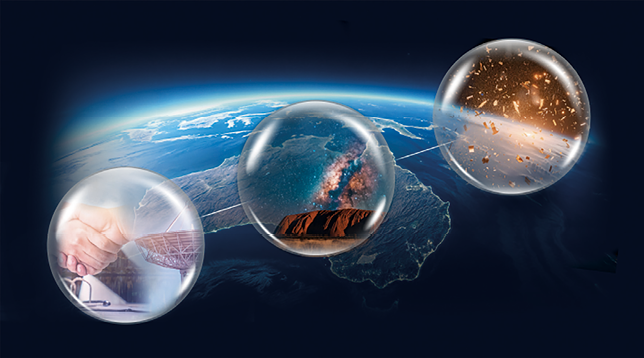 Australian Space Agency’s sustainability framework graphic. Its definition of sustainable space activities calls for space activities to be conducted in a manner that considers environmental, social and economic impacts across their lifecycle and preserves the space environment for current and future generations, while providing ongoing access to downstream benefits from space activity (based on the UN Guidelines for the Long-term Sustainability of Outer Space Activities).
Towards a solution
The terms ‘sustainability’ and ‘sustainable development’ are closely related but not interchangeable
Primarily, we need to start seeing our long-term space habitation ambitions for what they are - civilisation-building - and use the substantial assets we already have to set future generations on a sustainable trajectory. These assets include the capital and ambition of the NewSpace economy, rapid technological developments, the potential of policy and law, and the UDHR itself.
The inclusion of space in the UN Pact for the Future - the most wide-ranging international agreement in decades - is also important, as it lays the groundwork for space to be fully considered in the next global agenda and offers a jumping off point for a more global conversation about our future in space. These assets and the concept of sustainable development itself represent the best of us, as defined by previous and present generations.
Importantly, these assets should inform both how we get to space and how we relate to one another, and to the environment, once we are there. Born from a recognition that the status quo was unjust and untenable, they encapsulate the world as our global community desires it to be. For the sake of the future, we must be willing to take these visions seriously.
Space has never been non-political; power has never been equally distributed and nor have resources. But the beauty of taking a sustainability approach to space exploration is that we - the present generation - get to decide how to secure not only our ability to meet our needs in space but how to preserve the capability of future generations to meet their needs. This is the nub of the sustainability ethic.
Space treaties, ethos, technology and access have been leveraged for some incredible moments of human solidarity and success. Their manipulation, at times, has also widened the chasm between spacefaring and non-spacefaring nations, or driven power imbalances that play out in geopolitical dynamics on Earth. But the commonality between the shining moments and the dubious ones is that decisions were made in the name of the contemporary interests of the decisionmakers and their conceptions of how the future ought to be shaped.
It is worthwhile considering the question of what right we have to make decisions that future generations will be bound by, especially when those individuals will be living in contexts so vastly different than our own. The fact is that humans collectively have always built civilisations. It takes only a glance at present-day realities to see how interconnected our experience of the world is with the decisions made by those who came before us.
This is true at any level. Think of the people who raised you and how their treatment of you has shaped how you treat others. Think of the political processes in the city or country where you live and how they have been directly shaped by philosophies spanning literally thousands of years. Think of climate change and how communities that experience increased wildfires or floods are experiencing the direct effects of others’ decisions. Now we are the decisionmakers.
Building a space civilisation
Intentionality, culture and collective responsibility drive the progress (or regression) people will experience long before regulations are deliberated
At this moment in history, it is crucial that we understand a parallel reality: our decisions will not only affect future generations on Earth, but in space. As the present generation of the human race, we are continuing the inevitable and invariable work of building civilisation, and as soon as we succeed in sending the first long-term residents into space, we will have begun the work of building entirely new worlds.
A previous generation emphasised that we share a ‘common future’. They also said we have a ‘common heritage’ and enshrined this in the Outer Space Treaty and other aspects of space governance, such as the consensus mechanism practiced at the UN Committee on the Peaceful Uses of Outer Space. Taken together, this ethos and the assets we have inherited hold immense latent power for expanding civilisation and building new worlds.
Those treaties, that ethos, the perpetual motion of technological developments, the exploratory footholds we already have beyond our atmosphere - these are the assets we have been given by previous generations to leverage as we now step into our common inheritance. What remains is not merely to act - for we are already acting, however passively - but to decide how we will act, with what intention, and toward what future.
Establishing a long-term human presence off-Earth is not just exploration - it is civilisation-building - and the question before us is how we will use our common inheritance to ensure that future generations can thrive using what we give to them. This moment in history - right before we become a multi-planetary species - is characterised by an opportunity that few have ever been given: the opportunity to build a new world as generations of us have agreed the world should be.
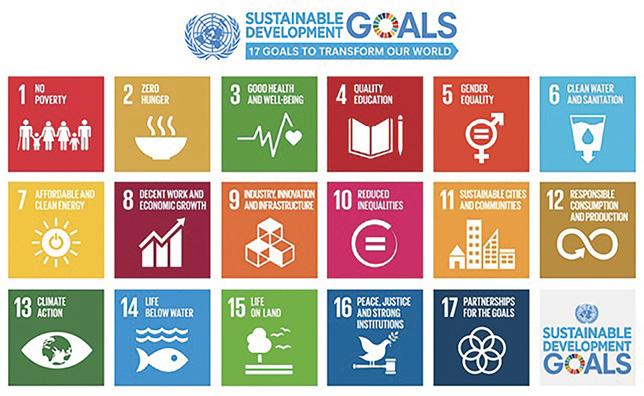 The 17 globally agreed UN SDGs) are acknowledged as goals for achieving sustainable development here on Earth but it is interesting to consider how this sustainability framework can be adapted to space, in order to help us consider the needs of those future, off-Earth generations.
About the author
Dr Juliana Rinaldi Semione is Research Fellow in Future Worlds & Freedom at the Nottingham University Business School. Her research centres on applied space ethics from a Sustainable Development Goals (SDGs) framework, including applications for off-Earth governance and social structures, and she leads the SDGs in Space project. Juliana delivers curriculum design and teaching to integrate the SDGs in the Faculty of Engineering and the Business School, and designs pathways for evidence uptake among policy and industry stakeholders across the Faculties of Engineering and Social Sciences. Originally from California, Juliana holds an MA from King’s College London and a PhD from the University of Nottingham.