

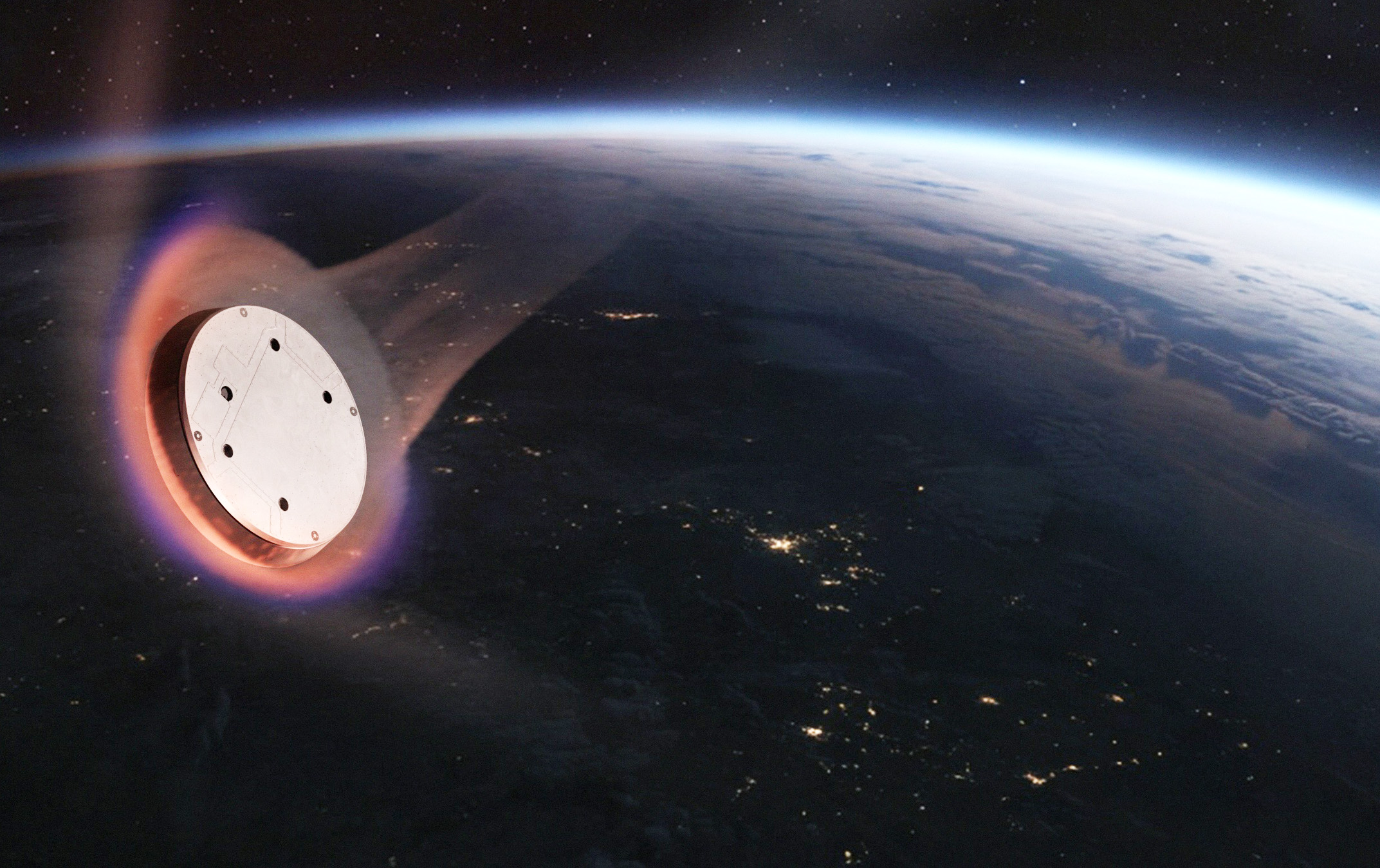
Space Cargo Unlimited has announced plans to launch a one-tonne space factory aboard SpaceX’s Starfall re-entry vehicle in 2028, marking a significant step towards larger-scale commercial manufacturing in microgravity.
The mission, which is due to launch on a SpaceX Starship rocket, would increase Space Cargo Unlimited’s current manufacturing capacity by an order of magnitude, scaling up from existing 100 kg missions to tonne-scale production.
The company sees the increased capacity as an important step in moving in-space manufacturing beyond experimental and small-scale missions towards routine commercial production.
Space Cargo Unlimited provides an end-to-end service for companies seeking to manufacture products in microgravity, handling the specialist spaceflight requirements from pre-launch integration and launch through to in-orbit operations and return to Earth.
The approach is intended to allow companies to use space-based manufacturing without having to develop their own spacecraft or specialist flight hardware.
Potential applications include pharmaceuticals, biotechnology and advanced materials, where the microgravity environment can enable manufacturing processes and material properties that are difficult or impossible to achieve on Earth.
The 2028 mission also forms part of wider strategy to develop a fleet of increasingly capable orbital factories for Luxembourg-based Space Cargo Unlimited.
Beyond its current 100 kg platform and planned one-tonne capability, the company is developing REV1, a larger autonomous orbital factory and re-entry vehicle with Thales Alenia Space, based on technology developed for ESA’s Space Rider programme.
Nicolas Gaume, co-founder and CEO of Space Cargo Unlimited, says the challenge facing microgravity manufacturing is increasingly one of commercial access and scale rather than scientific feasibility.
“For more than 30 years, we've known that manufacturing in microgravity can create materials and products that simply cannot be produced on Earth,” he said. “The challenge has never been the science. The challenge has been making access commercially practical, repeatable and scalable.
“We believe space is reaching that moment. By leveraging SpaceX's launch capabilities for our next-generation space factories, we're building a true assembly line for microgravity, supporting our customers as the layer between launch providers and manufacturers.”
Ahead of the planned launch, Space Cargo Unlimited says it is in discussions with more than 100 customers and prospective customers, with around 40 percent coming from the life sciences and biotechnology sectors.
If realised as planned, the mission would represent a substantial increase in commercially available microgravity manufacturing capacity and another step in the emerging transition from individual experimental payloads towards larger, repeatable industrial operations in low Earth orbit.