 October 2015
Green cosmonautics: an ideal to strive for
October 2015
Green cosmonautics: an ideal to strive for
... become impossible because the risk of collision with space debris will be too great. This is what the Kessler syndrome, also known as the cascading effect7, warns us about. Every orbit has its own “critical density” for...
 March 2015
Congested, contested, and invested: of space debris, risky launches and private initiative
March 2015
Congested, contested, and invested: of space debris, risky launches and private initiative
... interfered with its attitude controls so that it was able to successfully transmit data for only seven days. Kessler Syndrome Scientists believe that there is enough human-generated space debris in the critical low-Earth orbit to enable...
 April 2019
Cleaning up space
April 2019
Cleaning up space
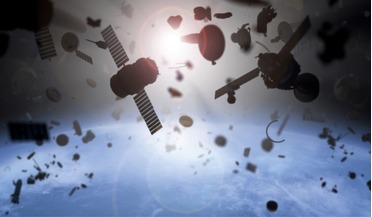
... other satellites. This concept of a cascading increase in debris is not new. NASA scientist Donald Kessler originated a theory – now known as the Kessler Syndrome - in 1978 describing a self-sustaining, cascading collision of space debris in LEO...
 February 2018
Are we asking the right questions about space debris?
February 2018
Are we asking the right questions about space debris?
... create another interesting, potentially cross-contaminating hazard that is now being studied very carefully. References 1 Kessler, D. “Collision Frequency of Artificial Satellites: The Creation of a Debris Belt”, Journal of Geophysical Research, Vol...
 October 2021
Congested, contested... under-regulated and unplanned
October 2021
Congested, contested... under-regulated and unplanned
...the density of material above a certain threshold in specific orbits can create a situation (later known as the Kessler Syndrome) in which a self-sustaining chain of collisions can take place. Obviously, all the mega-constellation operators recognise...
 June 2015
The new space ethics: COSPAR, Planetary Protection and beyond
June 2015
The new space ethics: COSPAR, Planetary Protection and beyond
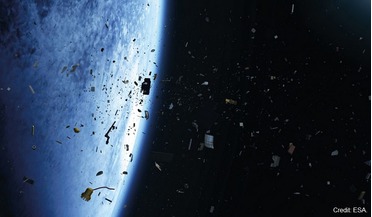
... discussion on the potential risk to space activity in Earth orbit from a cascade effect of space debris known as the Kessler Syndrome. 4: Claude Lafleur, Costs of US piloted programs , The Space Review, March 8, 2010. Lafleur states that the Shuttle...