• Subscribe
  • News
  • Astronautics
  • Science
  • Environment
  • Security
  • Specials
  • Opinion
  • Lounge
  • Reviews
  • Quick subscription
  • Board
  • Team
  • Advertising
  • Contributors
  • Industry
  • Foreword
  • Partners
  • Log in
  • Subscribe
  • Log in
  • Home
  • News
  • Astronautics
  • Science
  • Environment
  • Security
  • Specials
  • Opinion
  • Lounge
  • Reviews

Articles tagged: Lagrange point L2

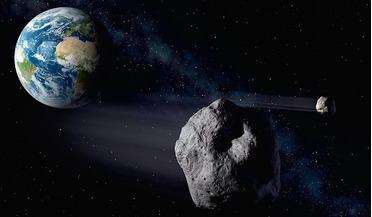
  • Chelyabinsk meteorite, Large Synoptic Survey Telescope, Near Earth Objects, potentially hazardous asteroids (PHAs), Sentry December 2014 Finding NEO

    ...-based survey, Near-Earth Object Camera (NEOCam), would use a 0.5-metre telescope orbiting at the Sun–Earth L1 Lagrange point (about 0.01 AU from Earth towards the Sun). During a five-year baseline mission, it would aim to discover about...
    • Chelyabinsk meteorite
    • Large Synoptic Survey Telescope
    • Near Earth Objects
    • potentially hazardous asteroids (PHAs)
    • Sentry
    Authors: Lynne Jones     Mario Juric     Zeljko Ivezic    
  • cislunar, NEO, space resources, transport January 2018 Creating a viable cislunar economy

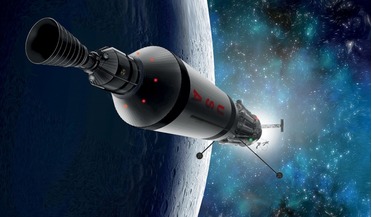
    ... in various locations. The key locations are low Earth orbit (LEO), geosynchronous orbit (GEO), Earth-moon Lagrange point number one (EML1), low lunar orbit (LLO), the lunar surface or a near Earth object (NEO) or asteroid...

    • cislunar
    • NEO
    • space resources
    • transport
    Authors: George Sowers    
  • CME, Coronal mass ejection, solar atmosphere, solar storms August 2019 Lessons from the Sun

    ... of two possible future space weather missions, positioning spacecraft in orbit at the Sun-Earth L1 and L5 Lagrange points. About the author Dr Delores Knipp is a Research Professor at University of Colorado (CU), Boulder and at CU’s Space Weather...
    • CME
    • Coronal mass ejection
    • solar atmosphere
    • solar storms
    Authors: Delores J Knipp    
  • Reaction Engines Skylon, reusable space launch, Scorpion, single-stage-to-orbit spaceplane August 2020 Scorpion – a study of the possible

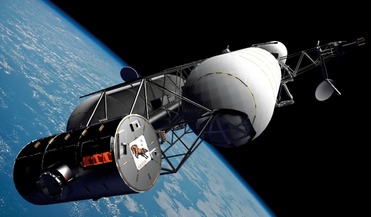
    ... near-Earth space. The Scorpion can deliver over 500 tonnes to geostationary orbit or the Earth/Moon Lagrange points on each mission and, in addition to the payload, it also delivers the crew and equipment that allows assembly...

    • Reaction Engines Skylon
    • reusable space launch
    • Scorpion
    • single-stage-to-orbit spaceplane
    Authors: Mark Hempsell    
  • radiation mitigation, radiation shielding, space radiation, Spaceflight April 2026 Spaceflight and the radiation problem

    ... spec demanded a radiation dose of close to that experienced at sea level on Earth. The colony was intended to be placed at a Lagrange Point, far beyond the Van Allen belts, and shielding was to be achieved using just under two metres...
    • radiation mitigation
    • radiation shielding
    • space radiation
    • Spaceflight
    Authors: Steven Cutts    
  • 01 December 2015 LISA Pathfinder set for liftoff

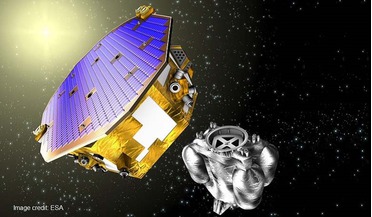
    ...as possible in order to conduct its experiments. Accordingly LISA Pathfinder is heading for an orbit around the L1 Lagrange point, a gravitationally-stable location 930,000 miles (1.5 million kilometres), from Earth in a sunward direction. Once there...


    • «
    • 1
    • 2
    • 3
    • 4
    • 5
    • 6
    • »

ROOM Space Journal Trends

Room Space

astronomy magazine

air and space magazine

air space magazine

air and space magazine subscription

air and space smithsonian magazine

airplane magazine

all about space

air & space magazine subscription

astronomy magazines list

  • Home
  • Board
  • Team
  • Vacancies
  • Advertising
  • Contributors
  • Foreword
  • Partners
  • Contents
  • Archives
  • Reviews
  • Submit an article
  • Terms of Service
  • Privacy Policy
  • Cookie Notice
  • Imprint
  • Quick subscription
  • Submit an article
  • Terms of Service
  • Privacy Policy
  • Cookie Notice
  • Imprint
  • ROOM, Space Magazine Cover
  • Contact us: subscription@room.eu.com
  • Phone: +44 7977 469 741
  • Follow us:
© 2026 Copyright beta version "Room The Space Journal of Asgardia". ISSN 2412 - 4311. All Rights reserved