 30 October 2020
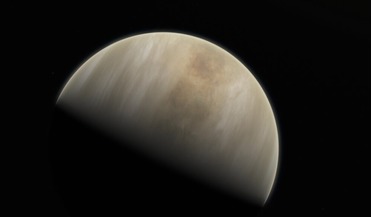
It seems there might not be life on Venus after all, say two new studies
...phosphine detection in the data collected by the two telescope facilities. One such team, based in the ...conventionally used when examining data collected by an array of telescopes. Greaves and colleagues used a statistical approach called a polynomial...
 October 2026
Pilgrimage of Light - an artist’s exploration in astronomy and geology
... a relatively brief period in geologic timescales. James Webb Space Telescope’s image of NGC 63 57 (NASA/ESA/CSA/STScI) ... galaxy is a massive black hole Sagittarius A*. Event Horizon Telescope captured its photo, which is the second black hole ever...
 03 July 2019
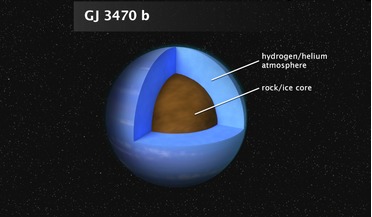
New study reveals detailed exoplanet atmosphere
... of a new type of study that uses the combined multi-wavelength capabilities of NASA's Hubble snd Spitzer space telescopes to understand its chemical make-up. Gliese 3470 b (also known as GJ 3470 b), is a sub-Neptune/Super-Earth hybrid exoplanet...
 13 August 2020
Fastest star in the galaxy is found, and potentially its a “squeezar”
... A* at speeds of 24, 000 kilometres per second, have been found by a team of European scientists using the Very Large Telescope (VLT) in Chile. Circling Sgr A* from a distance that is comparable to the size of our Solar System, is a small cluster...
 15 April 2020
Scientists discover most brightest and energetic supernova yet
... 2016aps was first detected in data from the Panoramic Survey Telescope and Rapid Response System (Pan-STARRS), a large-scale ... programme. The team also used data from the Hubble Space Telescope, the Keck and Gemini Observatories, in Hawaii, and the ...
 14 October 2016
Observable Universe is populated with 10 times as many galaxies as previously thought
... using data from the NASA/ESA Hubble Space Telescopes and other telescopes have shown that this figure is at least ...technical limitations cannot be observed by the current generation of telescopes in use today. The results were startling and the team...