 December 2014
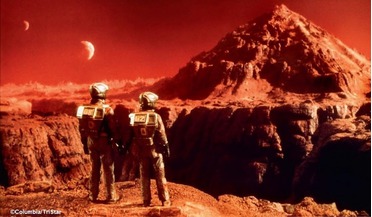
Terraforming Mars: from CFCs to Total Recall
December 2014
Terraforming Mars: from CFCs to Total Recall
...lifestyle is actually sustainable, most notably because of the high flux of ionising radiation (galactic and solar cosmic rays) incident on the surface of Mars. Such radiation is almost entirely blocked on Earth by the combination of Earth’s magnetic...
 January 2017
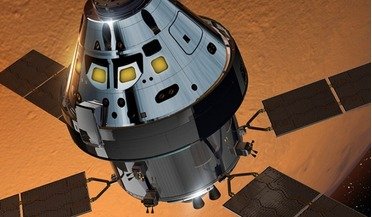
Blueprint for NASA’s journey to Mars
January 2017
Blueprint for NASA’s journey to Mars
... an excellent storm shelter for Solar Particle Events, and a partial but significant attenuation of the galactic cosmic ray environment during sleep and rest periods. Orion is also designed to function as a radiation shelter. An artist’s rendering...
 March 2017
Planetary nebulae may hold clue in search of helium-3
March 2017
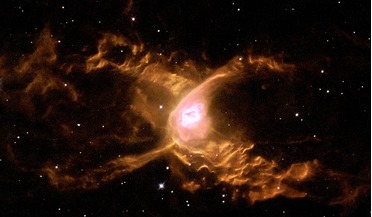
Planetary nebulae may hold clue in search of helium-3
... 3He and release it to the interstellar medium but that it is destroyed via processes such as spallation from cosmic rays. At present, this latter theory is totally speculative and has yet to be tested, so it is unknown as to whether this mechanism...
 October 2018
Sustainable ways of living on the Moon and Mars
October 2018
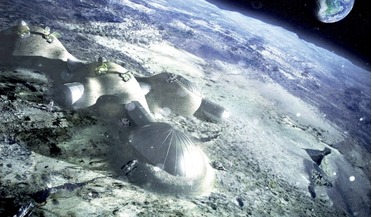
Sustainable ways of living on the Moon and Mars
... soil will be vital for protecting future research bases and colonies from both solar storms and cosmic rays, plus micrometeoroids. Working with diggers and excavators in the harsh airless worlds will require great astronaut...
 October 2018
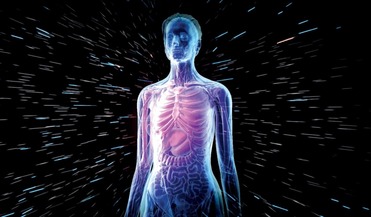
Radiation study paves way for safe deep space exploration
October 2018
Radiation study paves way for safe deep space exploration
... to the Moon or Mars face three sources of naturally occurring radiation which can threaten their health: galactic cosmic rays (GCR), solar particle events (SPE), and trapped radiation in the Van Allen belts. Depending on a variety of factors...
 April 2020
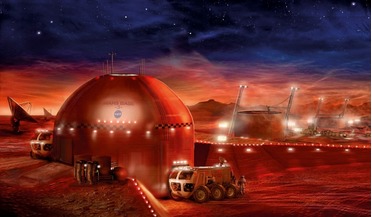
Evolutionary lessons for an interplanetary future
April 2020
Evolutionary lessons for an interplanetary future
... protected from space radiation by the Earth’s magnetosphere. Mars has no magnetosphere and a very thin atmosphere, so galactic cosmic rays, solar particles, and ultraviolet radiation hit its surface at nearly full strength. All serious designs for...