

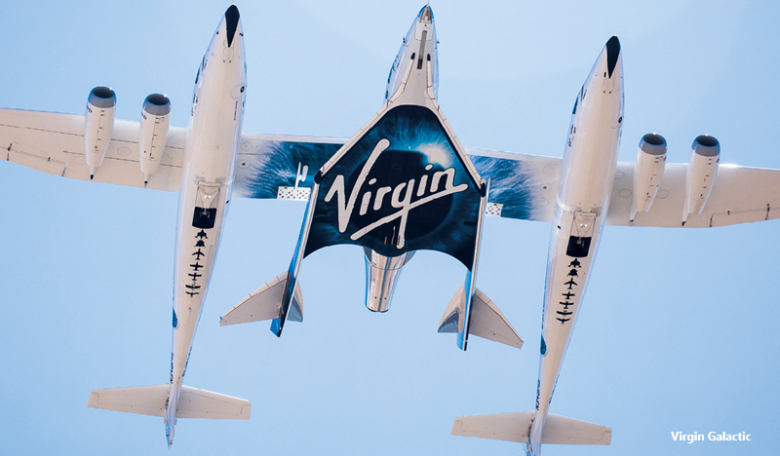
No-one doubts that spaceflight is difficult and potentially dangerous. Here, the former Chief Pilot for Virgin Galactic provides a personal account of some of the lessons learned in cooperation, collaboration and risk reduction in the preparation and operation of a spaceflight system.
My career journey took me through the Royal Air Force, flying fast jets and working as a test pilot, to the airline industry, where I was a captain on the Boeing 747 and the Airbus 340, and on to Virgin Galactic, initially as its Chief Test Pilot. Along the way, I was also an historic aircraft display pilot and, briefly, airfield manager at Old warden Airfield (home of the Shuttleworth Collection) in Bedfordshire, England.
Those experiences were wonderfully rewarding, but also very challenging. Most painful of all, there were too many examples of how dangerous, even deadly, not just test and development but even ‘routine’ operations can be - especially if you are not respectful of the risks, cognizant of the the dangers, humble enough to actively listen to others and to proactively seek their counsel.
Given the importance to the space industry of costs, timescales and risks - especially those associated with preparing and operating launch vehicles - I offer here a little of what I have learned and what, I believe, is relevant to space systems development and operations.
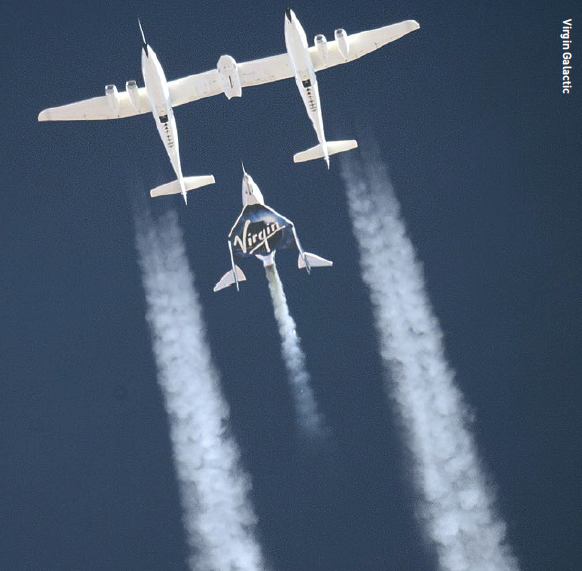
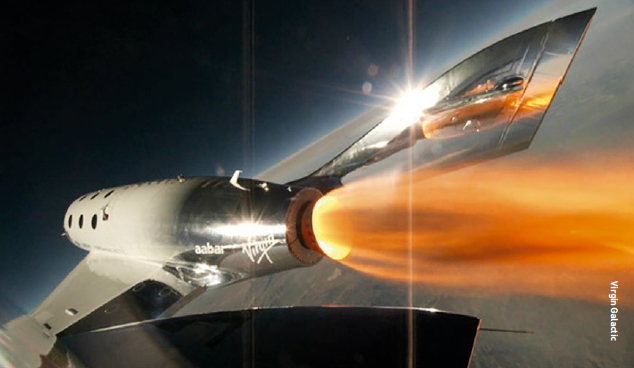 VSS Unity powering its way to space.
First spaceflight
Although flying regularly every month is good, it’s not good enough commercially
My first spaceflight in early 2019 was a milestone test that had taken many months of very careful and thorough preparation. It featured the first full-duration rocket motor burn and, for the first time, the motor was deliberately misaligned in order to evaluate the vehicle’s controllability in that condition. The spaceship has a fixed ablative nozzle and, although we’d never seen evidence of asymmetric ablation, we wanted to know how it might affect the handling if it did occur.
In addition, for the first time, one of our engineers, Beth Moses, was in the cabin to assess the viability and safety of our planned customer experience and became the first person in history to unstrap on a sub-orbital spaceflight. To do so on such a brief spaceflight, on the assumption that you can safely strap back in again in time for re-entry, has become common practice in recent years but, until this flight, it had never been done.
As it turned out, even with the offset thrust line, handling was very good and we achieved the highest apogee Virgin Galactic had ever flown.
Although the flight achieved all of its objectives, there were also many important lessons learned, not least for me. This was my fifth powered flight in SpaceShipTwo (the previous having been short duration burns) and I felt that this time, the spaceship’s handling and performance were so good that the changes we had made in our piloting technique had finally solved the challenges faced earlier in the programme. It turned out I was wrong and my thinking was biased by my previous limited experience, as I’ll explain below.
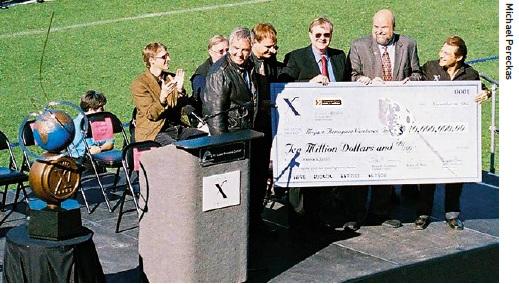 Below and left: The Ansari X Prize was awarded to Burt Rutan and Paul Allen of Mojave Aerospace Ventures on November 6, 2004, for SpaceShipOne, the first privately crewed craft to reach space twice in two weeks. The technology was licensed by Virgin Galactic, paving the way for commercial space tourism and culminating in VG’s first service mission in 2023.
Design for operators
After more test and development, including Richard Branson’s flight, Virgin Galactic finally entered commercial service in 2023 with mission Galactic 01, which carried two people from the Italian Air Force, one from their National Research Council and a host of experiments. This was followed by five further flights - making an historic run of six spaceflights in six consecutive months, with the same vehicle, flown on the planned day, at the planned time.
Although flying regularly every month is good, it’s not good enough commercially. A one-month turnaround for a commercial vehicle is inefficient. It is one thing to design a vehicle to fly and operate in flight; it is another to design it to be easily inspectable and maintainable.
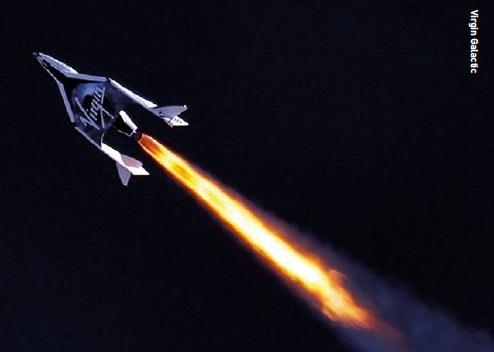 Virgin Galactic’s first SpaceShipTwo during its first supersonic powered flight.
The lesson here is that anyone required to interact with a vehicle must be considered at the design stage. Too often, the operators - especially ground handlers and maintainers - are not considered sufficiently, and the price paid is inefficient operation.
Inspecting and verifying a vehicle’s fitness for flight, or re-flight, can be very time-consuming if access to areas of the vehicle have not been properly considered at the design stage. Preparing rockets for launch is usually a very careful and delicate operation involving volatile liquids at extreme temperatures and pressures. A mistake made due to human factors - caused by poor design or mis-operation - can be extremely costly.
Virgin Galactic is now in the process of building spaceships designed to be turned around and flown every few days, possibly twice a week. This Delta Class spaceship should be in test in 2026.
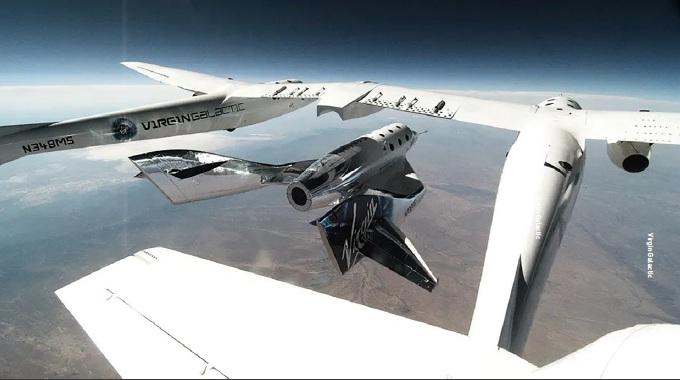 Virgin Galactic’s VSS Unity spaceplane is released from its VMS Eve mothership on a glide flight in New Mexico.
Creating the right environment
The lesson here is that anyone required to interact with a vehicle must be considered at the design stage
To allow the Virgin Galactic spaceflight system or other commercial space systems to operate successfully, an environment that allows innovation must be created and nurtured. Aside from the availability of funding, I believe the reason that commercial spaceflight has been so successful in the US is primarily because of the regulations and the regulators. In this regard, the US has set, if not the benchmark, then at least a very good example of how to allow innovation to take place in a controlled and safe fashion.
In creating the legislation which ultimately became the Commercial Space Launch Act, the US Congress had the foresight to realise that if the rules and regulations applied to aircraft and aircraft operations were rigorously applied to commercial space operations, it would very likely fail before it could even begin. In keeping with this, the Act states that its purpose is “...to encourage the private sector, and to create and nurture an environment in which innovation can take place...”. The importance of these words cannot be over-stated; I believe they are the key enablers for the development of the commercial launch industry in the US.
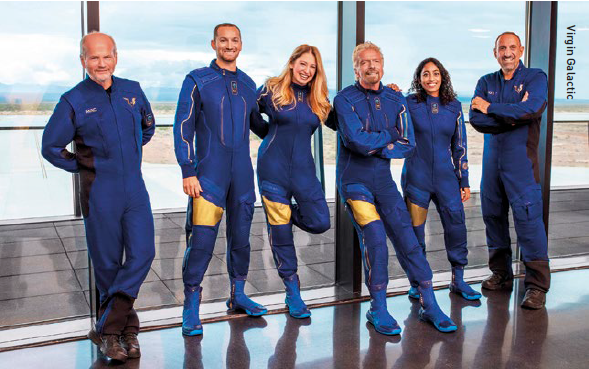 The Unity 22 mission in August 2021 was Virgin Galactic’s first fully crewed spaceflight. The crew comprised (from left) Commander Dave Mackay, Colin Bennett (Lead Operations Engineer), Beth Moses (Chief Astronaut Instructor), and passengers Sir Richard Branson, and Sirisha Bandla (VP Government Affairs and Research Operations) and Pilot Michael Masucci.
The Act was amended in 2004 and signed into law just after SpaceShipOne won the Ansari X-Prize. The amendment created the regulatory framework for commercial human spaceflight. Again, the first words state its purpose: “to promote the development of the emerging commercial human space flight industry…”. The Act also instructed the FAA that the “…regulatory standards governing human space flight must evolve as the industry matures so that regulations neither stifle technology development nor expose crew or space flight participants to avoidable risk…”.
Again, in very few words, very important directives were laid out. Of course, words are all well and good, but how is it in practice? Well, in my experience, the regulators were very approachable, easy to work with and proactive. For example, after we moved from Mojave, California, where our test airspace was huge, to New Mexico, where it was a small fraction of the size, on one of our early powered test flights we inadvertently left our cleared airspace for a few seconds due to unforeseen strong winds. After explaining to the FAA what had happened, why it happened and what we were going to do to make sure it never happened again, I asked for questions. Their only question was “what can we do to help you?”, followed by “we think we can give you more airspace”. Having that sort of relationship was one of the keys to the ultimate success of the test and development programme.
In the UK, the government has identified space as part of the critical national infrastructure. Surely, then, it is in our collective interest - industry and regulators alike - to work, as a team, to ensure success.
Competition and collaboration
To allow the Virgin Galactic spaceflight system or other commercial space systems to operate successfully, an environment that allows innovation must be created and nurtured
Competition is healthy… but so is collaboration. Competition is often a major impetus to innovation and efficiency. Indeed, it was through a competition - the Ansari X-Prize - that the prototype technology for Virgin Galactic’s spaceflight system was proved.
What is not good is accidents, especially for a new industry. Public confidence can be shaken, investors may lose faith, and accident investigations can cast doubts over the whole industry.
For example, even the accident suffered by the Oceangate Titan submersible, which imploded in 2023 on its way to the wreck of the Titanic, was bad for spaceflight. So many people - and some ill-informed journalists - thought there were strong similarities with the construction of Virgin Galactic’s spaceship, despite the fact that VG’s approach to engineering and safety was totally different, and its spacecraft operated in a totally different pressure environment, orders of magnitude less severe.
But why and how would competitors want to collaborate? Because an industrial sector can become much stronger when individual companies group together to protect their collective interests with a united voice – by lobbying legislators, for example.
There are also professional associations where useful information can be shared to everyone’s mutual benefit. The Society of Experimental Test Pilots is one organisation that Virgin Galactic supports, and its pilots regularly present papers at its symposia on the test programme and lessons learned, sharing both the good news and the not so good.
The Society was established in the 1950s to address the horrendous accident rate and loss of life in experimental aircraft flight testing. Today the aim is the same: to make test and development as safe and efficient as reasonably practical through the sharing of lessons learned and best practices.
Companies such as Boeing and Airbus have together presented joint papers to the Society, showing that even rival, competitive companies can successfully cooperate, on at least some levels, for the benefit of all.
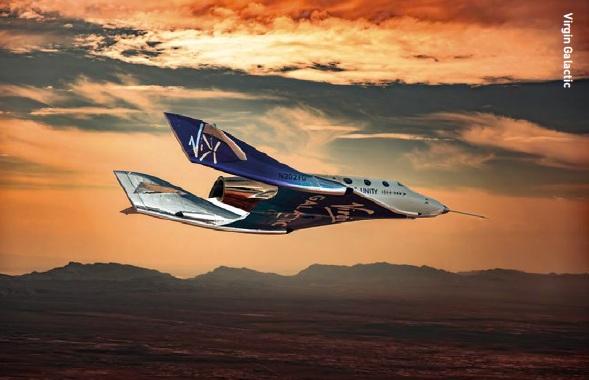 The VSS Unity was developed by Virgin Galactic to take paying passengers on brief trips to the edge of space. It was retired from commercial service after completing its final mission, Galactic 07, in June 2024.
Unknown unknowns
Donald Rumsfeld, US Secretary of Defense in the mid-1970s, is famous for saying “There are things we know we know; there are things we know we don’t know; but there are also things we don’t know that we don’t know”. If, like me, your brain struggles a little with that final phrase, another way of saying much the same thing is “A little knowledge is a dangerous thing”. It was many years before I fully understood its true importance, but this is something I’ve witnessed time and again in aerospace - in myself and in others.
You may have knowledge and experience of a system or vehicle and you might even consider yourself to be experienced and knowledgeable. But it often turns out that there are things you were not aware of or had not yet experienced. This means you are working under a false sense of confidence.
As mentioned earlier, an example of this occurred when, after my first spaceflight, I thought we had mastered the handling challenges of flying the spaceship in boost, only to find out later in the programme that there were still some challenges that we hadn’t yet encountered.
An extreme example occurred in 2007. US aerospace company Scaled Composites was testing its new large composite over-wrapped pressure vessel for nitrous oxide. It was a simple cold flow test - load the tank with nitrous and ‘cold flow’ it out (without igniting it) to measure flow rates, pressures and temperatures.
An industrial sector can become much stronger when individual companies group together to protect their collective interests with a united voice
Scaled had successfully used nitrous oxide on SpaceShipOne, and felt they had a good understanding of it. Nitrous was benign - used extensively in dental surgeries and hospitals - and colloquially known as laughing gas. How dangerous could it possibly be with a name like that?
Tragically, the tank exploded, three engineers were killed and three others were seriously injured.
In the post-accident investigation, everyone quickly learned a lot more about handling large quantities of high-pressure nitrous oxide. What made the tragedy worse was that there were already some people who knew that nitrous in large quantities and in certain conditions could be volatile and needed careful handling - but it was mostly hidden away in obscure technical publications.
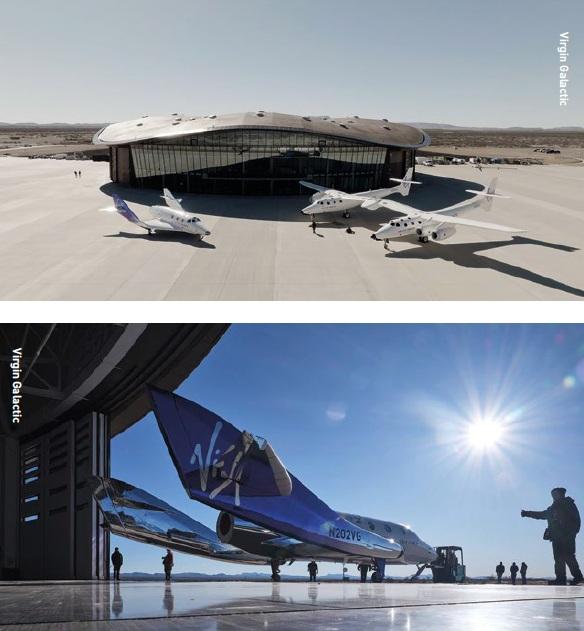 VSS Unity in the hanger at Spaceport America.
External reviews
There will always be a risk of ‘unknown unknowns’, but how do you get to know more of what you don’t know? First, you can do your own research, read technical papers, talk to experienced people in your company, attend symposia and conferences, etc. But another method is to invite external subject matter experts to participate, preferably at key points in a programme such as safety reviews, flight readiness reviews and other milestone events.
Typically, these people are experienced industry experts, but importantly they are unbiased. They are not involved in the day-to-day work of the company, but are sufficiently well-informed to understand the system and its aims and objectives. They are also free to ask questions, often challenging questions, about safety, risk mitigation, programmatic logic, training and readiness.
Essentially, this is a confidential independent health check on the company and its programme. The aim is to try to prevent failures, or programmes running down a rabbit hole, with the resulting cost of schedule delays.
Subject matter experts are also important as a source of investment risk advice
Virgin Galactic did this in its return-to-flight process. A team of highly experienced industry experts was invited to the milestone meetings, where they were free to ask anyone any question and encouraged to offer advice.
The questioning of decision logic, the sharing of experiences, of lessons learned and the discussion around best practices is hugely beneficial in all sorts of industries, but is especially important in aerospace, where mistakes can be very costly and, sometimes, deadly. By contrast, operating secretively and in silos can lead to a blinkered view of the world.
Subject matter experts are also important as a source of investment risk advice. Venture Capital funds are increasingly using experienced industry experts to give unbiased, independent and informed opinions on the risks and the potential benefits associated with investments in aerospace. This approach is equally applicable to government agency investment.
Moreover, after funding is provided, the ongoing oversight, monitoring of progress, guidance and advice should continue, in the interests of the investors and of the company. Of course, opening oneself up to unbiased, independent questioning can take extra time and effort. But, as the saying goes, ‘if you think safety is expensive, try having an accident!’
About the author
David Mackay is a former Virgin Galactic VP of Flight & Test Operations and Chief Pilot. David studied Aeronautical Engineering at the University of Glasgow before joining the Royal Air Force and flew the Harrier before being selected as an exchange student at the French Test Pilot School. He retired from the RAF as Principal Fixed Wing Tutor at the Empire Test Pilots School, following which he joined Virgin Atlantic, becoming a captain on the Boeing 747 and, later, the Airbus 340. He joined Virgin Galactic as its Chief Test Pilot in 2005 and led the Flight Operations team through the test and development programme to an historic run of successful spaceflights.