

Issue #2(12) 2017 Astronautics

India’s dynamic ecosystem for space entrepreneurship

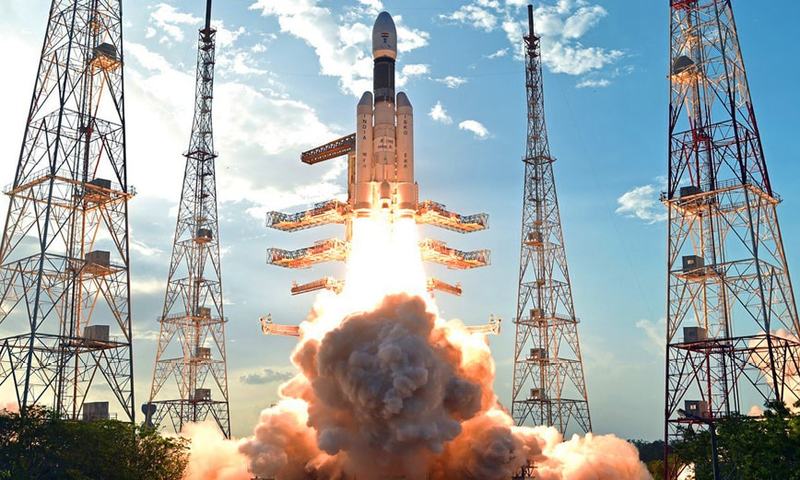
The first developmental flight (GSLV MkIII-D1) of India’s heavy lift launch vehicle GSLV Mk-III was successfully conducted on 5 June 2017 from Satish Dhawan Space Centre SHAR, Sriharikota, with the launch of GSAT-19.
Narayan Prasad Satsearch.co, Delft, The Netherlands

India’s blossoming NewSpace movement is slowly beginning to synch with the firebrand entrepreneurs starting companies around the world and targeting commercial opportunities for innovative space products/services. In a global context they are being backed mainly by private risk capital (mostly venture firms) with an expectation that the innovation pursued by these entrepreneurs will integrate into the economy here on the Earth, creating value towards a meaningful exit. Narayan Prasad analyses the industry trends across the world and looks at how India is jumping onboard.

Today, NewSpace companies are springing up almost on a weekly basis and there is strong reason to believe that there are over 1,000 such companies spread around the world. They are embedding themselves across the value chain from upstream to downstream, with each attempting to bring a new layer of innovation by different methods such as low-cost, commercial off-the-shelf (COTS), agile-mass manufacturing, and data fusion combined with machine learning.

With a possible success rate of five percent in startups across tech industry, the world could potentially see a cultural shift in space business through a community of entrepreneurial space ventures who target their customers with global business-to-business and consumer-to-consumer models.

Most of the NewSpace ventures orient the innovations they are bringing into space products/ services towards establishing capacities across verticals where there could be network effects that can be exploited.

Read more about India's NewSpace movement in the full version of the article, available now to our subscribers.
If you already have a login and password to access www.room.eu.com - Please log in to be able to read all the articles of the site.

Popular articles

See also

Environment

Data may be the new oil... but its real value is in actionable information

Astronautics

Battle for the night sky - from telescopes to ad-breaks

Astronautics

Robotics is the future of space labour

Popular articles

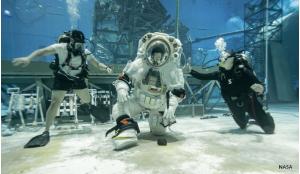
NASA astronaut Loral O’Hara kneels to pick up a rock while testing the mobility of Axiom Space’s lunar spacesuit. NASA and Axiom Space teams held the first dual spacesuit run at the Neutral Buoyancy Laboratory in Houston in September 2025 with astronauts Stan Love and Loral O’Hara. This was the final integration test in the pool, proving both the spacesuit and facility are prepped and ready for Artemis mission training. Astronautics

Who will build humanity’s future in space?

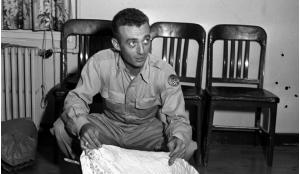
Space agencies and the armed forces are susceptible to conspiracy theories, largely due to the perceived lack of transparency concerning their activities. Above: Major Jesse A. Marcel holds a piece of foil-lined material related to the Roswell, New Mexico, UFO incident at Fort Worth Army Airfield, 8 July 1947 (Photo: University of Texas at Arlington Libraries Special Collections Division). Astronautics

Winning the Space Race at home