

Space law is one of those topics often ignored by other professionals in the space community, including engineers and entrepreneurs who appear to feel that they can develop space applications without recourse to international agreements, policies, guidelines and other standards or ‘norms’. Of course, space law is not alone is this: the same individuals are as likely to ignore the lessons of space history, the need for sustainability and protection of the space environment, and space insurance (at least until the later stages of development).
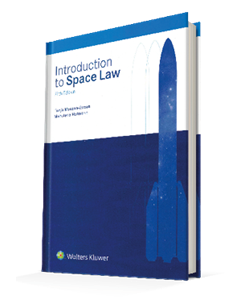
There are a number of reasons why space law is not high on the interest list, such as a perceived lack of relevance, but an overriding disadvantage of the topic is the obscurity and opacity of its texts to those not trained to penetrate their obfuscating language. The resolution of this issue is, in effect, the raison d’etre for this book, which, according to its preface, presents to students and the general public “an idea of the rules and the latest developments in space law”.
It begins with an excellent overview of space law as a concept and a branch of international law and continues with an exposition of the five United Nations treaties on outer space, which are included in full as an appendix. It is, however, following discussions of other sources of space law and a focus on the European angle, that the book gets onto the arguably more interesting practical aspects. These include the issues surrounding space militarisation, situational awareness and cybersecurity; human spaceflight; the divisive topic of space resources (commercial mining vs. the ‘province of all mankind’ principle); and a number of other space applications. Importantly, there are also chapters on space debris and long-term sustainability, and on planetary protection, although they provide only an overview of these topics.
Does this book penetrate the veil of obscurity surrounding space law? In a word, yes; the text is certainly ‘accessible’ to an intelligent reader, while providing for serious space law students the plethora of footnote references so beloved by lawyers. As one would expect, there is also a bibliography and an index.