

As humanity moves beyond short missions towards permanent bases on the Moon and Mars, the question is no longer simply who can reach space but who can live and work there. Drawing on her own experience as a scientific diver alongside insights from astronaut training, Christina Daumann suggests that tomorrow’s space workforce may look very different from today’s typical astronaut corps. Future space settlements will need practical operators, technicians and problem-solvers who can thrive in extreme environments, combining technical expertise with resilience, adaptability and the mindset required to live in isolation far from Earth.
By the time I had squeezed into a dry suit that seemed specifically tailored to strangle me, stuffed 18 kilograms of lead around my waist and into my pockets, strapped a heavy tank to my back and borrowed a camera worth more than my car, I already felt exhausted.
So why, exactly, was I voluntarily about to jump into the White Sea, where the water hovered around just one degree Celsius? To revive experimental science and naturalism after laboratory work stole the spotlight? To pave the way for students or to build my career?
My motivations had become oddly abstract in the freezing and, somewhat ironically, dark waters of the White Sea. At this point, I have only one goal: not to do anything stupid. Fingers trapped inside bulky gloves can barely find the record button on the camera as I clumsily try to photograph a tiny jellyfish, blissfully unaware of all the trouble curiosity and ambition causes primates.
If it’s any consolation, astronauts must feel something like this too, athough they’re usually accompanied by fewer mesmerising invertebrates during their extravehicular activities (EVAs).
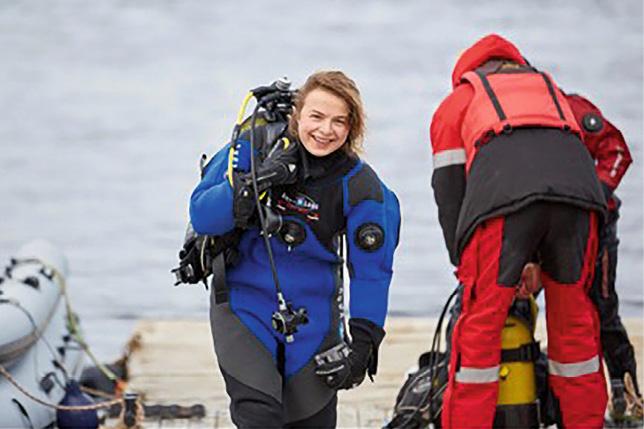 The author, Christina Daumann, after a dive at the White Sea Biological Station.
Learning to walk in space
The closest analogue to that future workforce may be beneath the surface of the ocean. Strip away job titles and the operational overlap is striking
During eighteen months of basic training, pilots, scientists, engineers and physicians acquire a common foundation in human spaceflight: orbital mechanics, spacecraft systems, Earth observation, data and communications, medical operations, survival training and more. The objective is to harmonise the capabilities and expertise of professionals arriving from different backgrounds, enabling every astronaut to contribute beyond their original specialty.
Only then do astronaut candidates enter one of the most demanding phases of the programme.
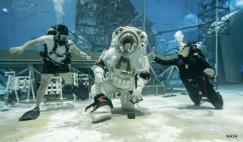
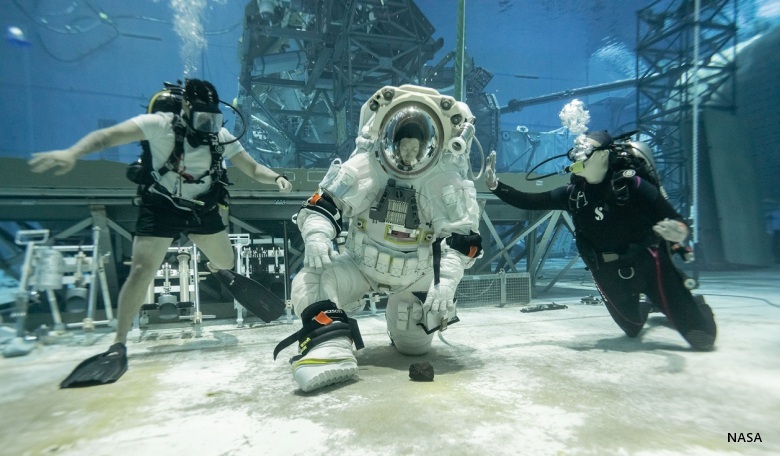
Underwater training offers the closest practical approximation of weightlessness on Earth, allowing astronauts to rehearse six-hour EVAs inside full-scale International Space Station (ISS) mock-ups at NASA’s Neutral Buoyancy Laboratory, where they develop procedural discipline, muscle memory and teamwork.
“The first time you are in the suit, you feel like a baby trying to walk,” says spacewalk instructor Hervé Stevenin, one of ESA’s leading specialists in astronaut training.
According to Stevenin, who has everything from aircraft piloting to parabolic flights under his belt, EVA training presents the steepest learning curve in an astronaut’s training. Initial tasks – such as transferring a box from one place to another while wearing a stiff, pressurised suit – are deceptively simple. However, only once these are mastered do candidates progress to handling tools and more complex operations.
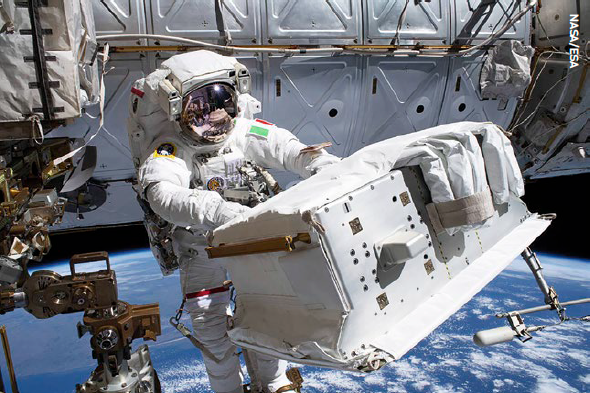 ESA Italian astronaut Luca Parmitano, attached to the Canadarm2 robotic arm, carries a new thermal pump system that was installed on the Alpha Magnetic Spectrometer (AMS) during a spacewalk to upgrade the Space Station’s cosmic particle detector.
Typical EVAs begin with several hours of preparation after which an astronaut can spend up to six hours working outside the spacecraft – so around nine hours inside the spacesuit in total. Cumulative physical fatigue is considerable and, as Stevenin puts it: “The more fatigued you are, the less aware you become, which is when mistakes creep in.”
Errors come at a high price. Losing a wrench during a spacewalk is more than an inconvenience. If no spare is available aboard the ISS, an operation may have to wait months for the next cargo mission. Meanwhile, the lost tool becomes a threatening piece of orbital debris, capable of damaging a spacecraft.
As Stevenin explains, working inside a spacesuit is also a psychological challenge: “You feel like being closed in a box with just a small window in front of your head. We try to make astronauts switch their mindset – to love their suit and consider it their cocoon.”
Unfortunately, even the safest cocoon can fail. On 16 July 2013, Italy’s Luca Parmitano’s spacesuit cooling system began leaking during a spacewalk. Water quickly accumulated inside his helmet, impairing his hearing, preventing communication and obscuring his vision. He came dangerously close to drowning, but remained remarkably calm and, relying on training and judgment, made his way back to the Station’s airlock.
Astronauts spend years rehearsing failures they hope never to encounter, while recognising that the unexpected can never be fully rehearsed. That is perhaps why experience in genuinely hazardous operational environments is already regarded as an asset during astronaut selection. Simulations train procedures. Reality tests judgment.
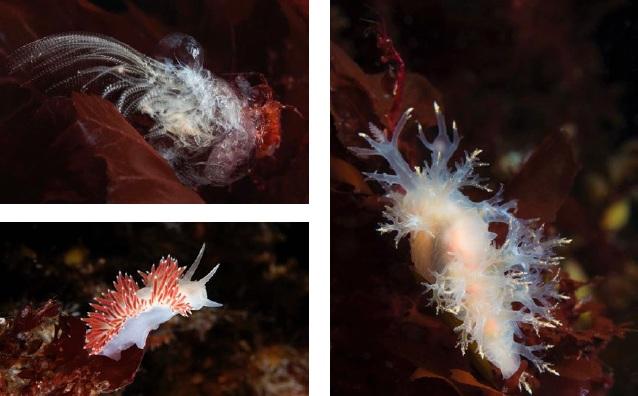 White Sea underwater macrophotography. Photos by Christina Daumann.
Vacancy for a space handyman
People living in space can become just as lost as those living on Earth, carrying the same baggage with less cargo space
For most of the Space Age, astronauts have been recruited from so-called elite professions, starting with test pilots but then expanding to include scientists, engineers and physicians as the demands of spaceflight evolved.
But what happens when space stops being a destination and becomes a workplace?
Orbital construction. Commercial space stations. Asteroid mining. Lunar and Martian habitats. Suddenly, space begins to look less like a frontier reserved for an elite few and far more like Monday morning on an offshore drilling platform.
The future profile of astronauts is likely to move ever further away from the traditional pilot-scientist model. Perhaps the future will also require workers with practical operational experience in extreme environments to support the maintenance and construction of space infrastructure.
Today, the closest analogue to that future workforce may be beneath the surface of the ocean. Strip away job titles and the operational overlap is striking. Commercial divers already spend their working lives inside life-support systems, operating in hostile environments with restricted mobility, handling tools in bulky gloves, communicating with discipline, carrying out maintenance and repairs, responding to emergencies and relying on trust and teamwork.
Even within ESA’s 2022 astronaut class, some candidates arrived with hundreds of dives already behind them, while others who had never worn scuba gear first had to complete an intensive commercial diving course before beginning EVA training. Extensive diving experience – whether commercial, scientific or technical – is already considered an asset during astronaut selection because it demonstrates, as Hervé Stevenin puts it, “the capability to get out of your comfort zone, to be exposed to challenges and to cope with them,” while operating in situations where mistakes can endanger both your own life and that of your partner.
I asked Stevenin whether, as the space economy grows, experienced commercial or scientific divers might eventually become astronauts – perhaps even representing one of the fastest routes to developing a workforce for increasingly frequent EVAs.
His answer was carefully qualified: “If your job were to go outside every week and do EVAs, then of course this would be the best profile. But if you have EVAs once every six months, and all the rest is about engineering, science, or testing equipment, then the profile may be different. That’s the reason why the profile is different so far.”
Current astronaut training brings professionals from different backgrounds to a common operational standard. As the space economy matures, that logic may increasingly reverse: organisations may recruit experienced operators first, then teach them to work in space.
There is a great difference between Roald Amundsen’s South Pole expedition crew and today’s McMurdo Station staff. Scientists now represent only a fraction of the remote community. The majority keep the station running: mechanics, electricians, plumbers, cooks, communications specialists, heavy-equipment operators. Without their labour, day-to-day scientific research would be impossible. Future space stations and settlements on the Moon or Mars may prove remarkably similar.
Of course, robotics cannot be ignored. Automation will undoubtedly replace much manual labour, especially in space. Even so, it is unlikely to eliminate the need for skilled people operating, maintaining and repairing increasingly complex infrastructure.
Another factor is space radiation. Workers performing regular EVAs – and therefore spending more time outside shielding systems – would likely have to follow strict rotational schedules to remain within acceptable radiation exposure limits. Ironically, this could increase demand for trained personnel: the challenge will no longer be selecting a handful of exceptional astronauts, but building large, rotating teams of operational specialists.
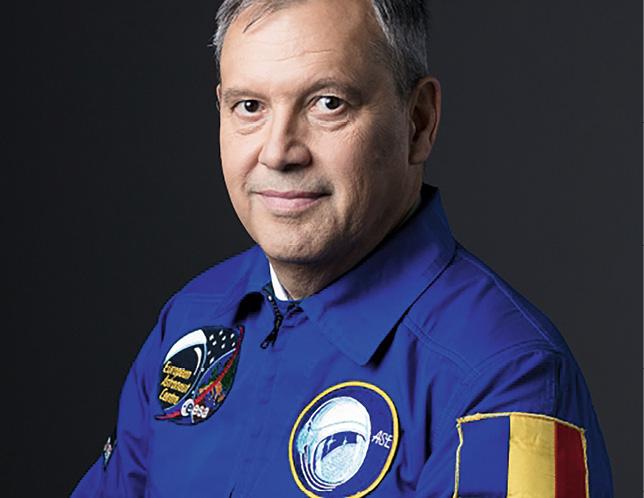 Dumitru-Dorin Prunariu – the first and so far only Romanian astronaut – who is a Global Ambassador for Blue Abyss.
Romanian cosmonaut Dumitru Dorin Prunariu, who flew to the Salyut 6 space station in 1981, believes this broader workforce is a natural consequence of the transition from exploration to permanent operations. While he expects future missions to retain a relatively small cadre of highly cross-trained commanders, flight engineers and mission specialists, he believes they will increasingly be supported by a much larger operational workforce.
“The selection standards will remain demanding because the environment is unforgiving,” he says. “But the emphasis may move from prestige and exceptionalism towards competence, reliability, adaptability and teamwork.” Rather than seeking people defined solely by traditional astronaut credentials, future employers may increasingly value those who have already demonstrated that they can work safely and effectively in hostile or technically complex environments.
“The more fatigued you are, the less aware you become, which is when mistakes creep in”
Prunariu argues that commercial and scientific divers offer an obvious example. “They understand life-support dependency, restricted mobility, disciplined communication and the principle that one person’s mistake may endanger the entire team.” The important distinction, he says, is not simply a willingness to accept danger but the professional ability to manage risk. “Space organisations should seek the second quality.”
Today, serving as a Global Ambassador for Blue Abyss – the extreme-environment research and training facility being developed in the UK for astronaut preparation, subsea robotics and marine technology – Prunariu believes tomorrow’s space worker may begin their career not as a traditional astronaut but as an engineer, technician, diver, physician or field scientist.
“The future space economy will still require exceptional people,” he says. “What makes them exceptional may increasingly be not their professional title but their judgment, versatility, emotional stability and ability to remain useful when conditions are difficult and assistance is far away.”
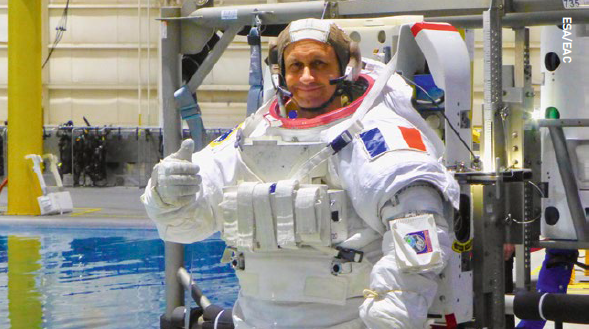 Hervé Stevenin, a spacewalk instructor for European astronauts. He leads ESA Neutral Buoyancy Facility Operations and the EVA Training Unit at the European Astronaut Centre (EAC), Cologne, Germany.
Mindset vs Skillset
Future space settlers will have to learn to inhabit their own inner world long before reaching an alien one, a form of mental self-sufficiency that could become just as valuable as performing flawless EVAs. Borrowing human resources (HR) terminology, this is where soft skills may become just as important as hard skills.
Countless isolation studies have documented the psychological demands of confined living and long-duration missions will inevitably narrow the range of daily experiences and social interactions.
Yet some people repeatedly choose to live and work in demanding, isolated environments: polar stations, research vessels, remote observatories and long-duration field expeditions. They do so because this way of life offers something that a world of constant stimulation cannot. Such a mindset and accumulated experience may prove surprisingly valuable when we begin building communities beyond Earth.
The line between solitude and confinement is thin, yet tangible. To compensate for the limitations of outer life, a future space settler may need to cultivate a rich inner world through a more integrated approach to human development — one that values interdisciplinary thinking, creativity, craftsmanship and contemplation.
Exercising the mind as deliberately as the body may foster an understanding that true discipline is not sacrifice but a form of freedom — and, ultimately, a source of comfort. Such ideas may sound suspiciously like a self-help seminar today, until we discover that people living in space can become just as lost as those living on Earth, carrying the same baggage with less cargo space.
A space settlement will require countless breakthroughs. Yet not every wheel needs to be reinvented. Some of the old ones are still waiting for us to learn how to use them well.
Of course, this may be my humble way of reflecting on whether I could contribute firsthand to the next chapter of human expansion. I would hardly turn down the opportunity.
Until then, however, I’ll settle for a different goal. Perhaps, decades from now, an HR manager at an orbital construction company will find themselves facing a shortage of skilled workers during a period of rapid expansion. Looking beyond the traditional astronaut profile, they may discover that the people capable of building humanity’s future in space have been hiding in plain sight.
If that small shift in perspective helps build the workforce needed to support humanity beyond Earth – and perhaps even earns a future HR manager a well-deserved bonus – I’ll consider my mission accomplished.
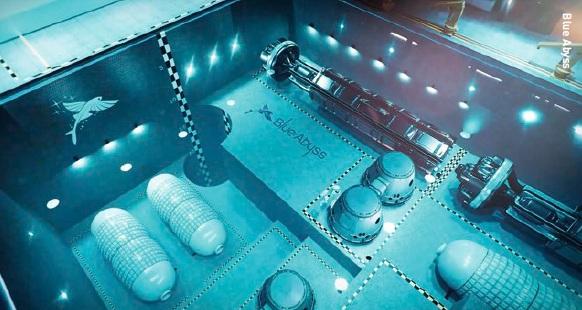 Computer generated graphic representing the extreme-environment research and training facility being developed by Blue Abyss for astronaut preparation, subsea robotics and marine technology.
About the author
Christina Daumann is an interdisciplinary author and researcher based in Montenegro whose background spans mathematics, marine biology, journalism and the arts. After graduating from one of Moscow’s leading mathematics schools, she studied marine biology at Lomonosov Moscow State University, where she joined the scientific diving team at the White Sea Biological Station. She later studied journalism and public relations at South Ural State University and served as Editor-in-Chief of Asgardia.space, covering developments in space science, policy and exploration. Beyond editorial work, she collaborates with international brands as a creative copywriter and strategist.